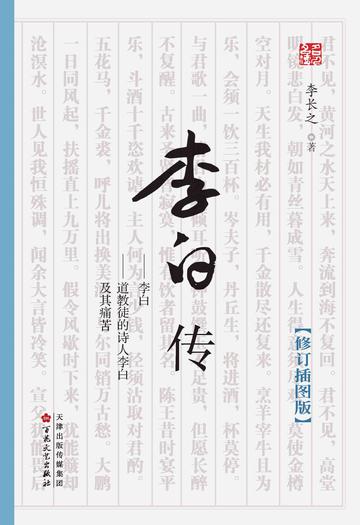
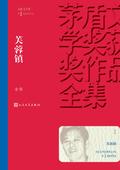
"The Biography of Li Bai" is a collection of two books, "The Taoist Poet Li Bai and His Pain" and "Li Bai" by the famous literary historian Li Changzhi. They are two books about Li Bai's life written by Li Changzhi at different times. The former is an analysis of Li Bai using German classical literary aesthetics as a sharp tool, which is not without the influence of Nietzsche's Superman philosophy, so it emphasizes the analysis of Li Bai's spiritual personality. The latter sketches Li Bai's portrait from a broader perspective. Generally speaking, Li Changzhi takes Li Bai's traveling life as a guide and Li Bai's spirit of trying to get rid of the fetters of the world as a weft. He deeply understands the full vitality and inner pain of the poet Li Bai, and analyzes the formation of his Taoist poetry and language style. Li Changzhi used sharp observation and understanding to portray a vivid and vivid image of Li Bai. In a sense, the two books complement each other and complement each other, and more accurately and richly outline the role of Li Bai's face from different aspects.
Reader comments
A good book is a good book, but the generation gap is indeed a problem. People who are willing can read it carefully. If you want to read alternative novels for fun, there is no need to torture yourself. If you want to divide the disciplines, this book should be placed in philosophy.
This book made me understand: Concubine Yang had three sisters. The one who married the Cui family was called Mrs. Korea, the one who married the Pei family was called Mrs. Guoguo, and the one who married the Liu family was called Mrs. Qin. Emperor Ming of Tang called them aunts. These three aunts specialize in taking bribes and are extravagant. They can easily spend tens of millions to build a house. When he sees someone else building a good building, he takes down what he has built and builds another one. They often occupy houses owned by others. Yang Guozhong worked as a cashier for such people.
How did An Lushan gain power? That's because Li Linfu deliberately cultivated it as a capital for his political struggle. He used it to fight against Yang Guozhong. These are all internal struggles of the ruling class, which result in external disasters and disasters for the people.
The writing is very good. It analyzes Li Bai at that time from various aspects. Most of the interpretation is based on poetry. It feels more inclined to philosophical debate. If I had read this in high school, I would have been very excited. Now it is too impetuous. Although I can still read it, I always feel that it is not so attractive.
Li Changzhi is a famous modern writer, literary critic and literary historian in China. This book collects his two important works "The Taoist Poet Li Bai and His Pain" and "Li Bai". The author uses German classical literary aesthetics as a sharp tool to analyze Li Bai, especially the analysis of Li Bai's spiritual personality. It shows Li Bai's Taoist thoughts, pursuit of Confucian politics, explores Li Bai's artistic achievements from Western philosophical theories, and understands Li Bai's thoughts from an idealist perspective and a realistic perspective. The two books complement each other and completely show Li Bai's life.
He not only deeply analyzed Li Bai's spiritual world, but also sketched his image from different angles, giving me a more comprehensive understanding of Li Bai. Moreover, the author's sharp observation and understanding are really admirable! It feels like discussing Li Bai's life with the author, which is very enjoyable. I especially like the analysis of Li Bai's poems and language style in the book, which allows me to better understand the charm of Li Bai's poems. In short, this book gave me a new understanding of Li Bai and made me appreciate the author's talent even more!
There are many books about Li Bai, and this book is very good! First, the author is Li Changzhi, a well-known literary critic. His rich knowledge and professional background can provide professional guarantee. The author has been studying classical culture for many years. This book is a major research achievement of the author. Second, this book is rich in historical data, and the documents cited are verified and authentic, with no hearsay examples. Third, the author not only has the accumulation of traditional culture, but also is influenced by Western philosophy and draws on the strengths of others to make his interpretation more three-dimensional and full.
As a biography, this book sometimes provides explanations when quoting texts, or translates classical Chinese into vernacular. This largely takes care of people who are not used to reading ancient books. Therefore, readers who do not understand classical Chinese can also read with confidence without worrying about being troubled by the classical Chinese in the text. Furthermore, the author added some annotations to the book, which also explains the source of the materials and the reasons for the selection, which facilitates further discussion by readers. The text also adds a large number of illustrations and literati poems. This book is a good read for those who are interested in history and culture.
This book has a high level of authority and a powerful writing style. The author is full of passion and interprets Li Bai's life from the perspective of life and life. He uses Li Bai's poems to connect different periods, allowing readers to have a comprehensive and new understanding and perception of Li Bai. Friends who like it can enjoy it!
This book quotes many poems as supporting evidence, allowing us to see Li Bai's vivid personality. He wants to accomplish his feats with a thunderbolt and then retire; he also wants to be a knight-errant, killing a person in ten steps without leaving a trace; he also wants to pursue the ethereal gods and be free and easy. Unfortunately, everything backfired, and all the urgent demands were quickly disillusioned.
Reminds me of a saying... A gentleman's style is as high as the mountains and as long as the rivers are.
Good books are worth reading.
It is more interesting to read Chang'an Thirty Thousand Miles. This book is good as an academic study, but it is still a bit boring to read.
Read it again and again, very good popular science article
Very good, I learned about Li Bai's life.
Well, it's vivid and vivid. It's worthy of being an old-timer.
A good book is a good book, but the generation gap is indeed a problem. People who are willing can read it carefully. If you want to read alternative novels for fun, there is no need to torture yourself. If you want to divide the disciplines, this book should be placed in philosophy.
This book made me understand: Concubine Yang had three sisters. The one who married the Cui family was called Mrs. Korea, the one who married the Pei family was called Mrs. Guoguo, and the one who married the Liu family was called Mrs. Qin. Emperor Ming of Tang called them aunts. These three aunts specialize in taking bribes and are extravagant. They can easily spend tens of millions to build a house. When he sees someone else building a good building, he takes down what he has built and builds another one. They often occupy houses owned by others. Yang Guozhong worked as a cashier for such people. How did An Lushan gain power? That's because Li Linfu deliberately cultivated it as a capital for his political struggle. He used it to fight against Yang Guozhong. These are all internal struggles of the ruling class, which result in external disasters and disasters for the people.
The writing is very good. It analyzes Li Bai at that time from various aspects. Most of the interpretation is based on poetry. It feels more inclined to philosophical debate. If I had read this in high school, I would have been very excited. Now it is too impetuous. Although I can still read it, I always feel that it is not so attractive.
Li Changzhi is a famous modern writer, literary critic and literary historian in China. This book collects his two important works "The Taoist Poet Li Bai and His Pain" and "Li Bai". The author uses German classical literary aesthetics as a sharp tool to analyze Li Bai, especially the analysis of Li Bai's spiritual personality. It shows Li Bai's Taoist thoughts, pursuit of Confucian politics, explores Li Bai's artistic achievements from Western philosophical theories, and understands Li Bai's thoughts from an idealist perspective and a realistic perspective. The two books complement each other and completely show Li Bai's life.
He not only deeply analyzed Li Bai's spiritual world, but also sketched his image from different angles, giving me a more comprehensive understanding of Li Bai. Moreover, the author's sharp observation and understanding are really admirable! It feels like discussing Li Bai's life with the author, which is very enjoyable. I especially like the analysis of Li Bai's poems and language style in the book, which allows me to better understand the charm of Li Bai's poems. In short, this book gave me a new understanding of Li Bai and made me appreciate the author's talent even more!
There are many books about Li Bai, and this book is very good! First, the author is Li Changzhi, a well-known literary critic. His rich knowledge and professional background can provide professional guarantee. The author has been studying classical culture for many years. This book is a major research achievement of the author. Second, this book is rich in historical data, and the documents cited are verified and authentic, with no hearsay examples. Third, the author not only has the accumulation of traditional culture, but also is influenced by Western philosophy and draws on the strengths of others to make his interpretation more three-dimensional and full.
As a biography, this book sometimes provides explanations when quoting texts, or translates classical Chinese into vernacular. This largely takes care of people who are not used to reading ancient books. Therefore, readers who do not understand classical Chinese can also read with confidence without worrying about being troubled by the classical Chinese in the text. Furthermore, the author added some annotations to the book, which also explains the source of the materials and the reasons for the selection, which facilitates further discussion by readers. The text also adds a large number of illustrations and literati poems. This book is a good read for those who are interested in history and culture.
This book has a high level of authority and a powerful writing style. The author is full of passion and interprets Li Bai's life from the perspective of life and life. He uses Li Bai's poems to connect different periods, allowing readers to have a comprehensive and new understanding and perception of Li Bai. Friends who like it can enjoy it!
This book quotes many poems as supporting evidence, allowing us to see Li Bai's vivid personality. He wants to accomplish his feats with a thunderbolt and then retire; he also wants to be a knight-errant, killing a person in ten steps without leaving a trace; he also wants to pursue the ethereal gods and be free and easy. Unfortunately, everything backfired, and all the urgent demands were quickly disillusioned.
Reminds me of a saying... A gentleman's style is as high as the mountains and as long as the rivers are.
Good books are worth reading.
It is more interesting to read Chang'an Thirty Thousand Miles. This book is good as an academic study, but it is still a bit boring to read.
Read it again and again, very good popular science article
Very good, I learned about Li Bai's life.
Well, it's vivid and vivid. It's worthy of being an old-timer.
It deepened my understanding of Li Bai