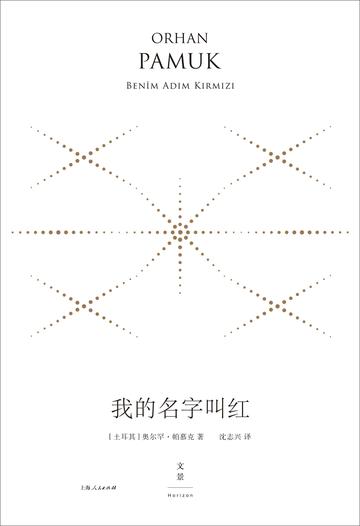
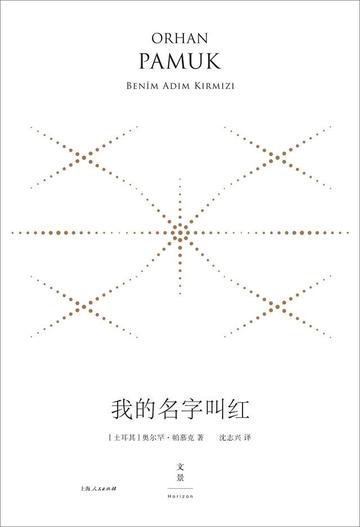
The story takes place in the Ottoman Empire in the late 1590s, when the Sultan secretly commissioned a great book to celebrate his life and empire. Four outstanding miniaturists of the day gathered in Istanbul to paint a book that was said to shake up religion and society. At this time, young Hei, who had been away from home for twelve years for love, finally returned at the call of his lover's father. What greeted him was not only love, but also murders that followed, and the clues were hidden somewhere in the unfinished pictures in the book...
Reader comments
After reading the first few chapters, I felt confused, but the master's delicate brushwork, gorgeous words, and grand historical background... Made me fall into it unknowingly. After that, I couldn't wait to buy the paper book and read them all in one go. Only then did I realize that there was really a lot of foreshadowing in the first few chapters. There were many places where the murderer's words and the murderer's confession could complement each other. The climax is particularly cleverly designed. Olive, who narrowly escapes being captured by Hei, runs to Haikou and is accidentally killed by Hassan, who happens to be working at the customs. This plot is very clever. It seems to be an accident, but in fact it is inevitable. Once again, I am impressed by the author's meticulous logic. Likewise, his theme is thought-provoking. The end result of styles and labels is not to be replaced, nor to remain intact, but to be forgotten. Master Osman stabbing himself in the eyes was not announcing the end of an era, a glorious ending - the legends, beautiful stories and precious books of the past will eventually be sealed in the king's treasury. As time goes by, they will gradually turn into a daydream point in people's memory. Only the bright red will last forever and still maintain the color of life.
The story is wonderful and the writing is unique. It is also an excellent book for understanding the history and culture of the Ottoman Turkish Empire.
Good book, really good
Very very beautiful
If you don't know what to say, it's better not to say anything.
Hey, how should I put it? Hey, I can't understand it. It feels like I'm resisting cultural invasion.
After reading the first few chapters, I felt confused, but the master's delicate brushwork, gorgeous words, and grand historical background... Made me fall into it unknowingly. After that, I couldn't wait to buy the paper book and read them all in one go. Only then did I realize that there was really a lot of foreshadowing in the first few chapters. There were many places where the murderer's words and the murderer's confession could complement each other. The climax is particularly cleverly designed. Olive, who narrowly escapes being captured by Hei, runs to Haikou and is accidentally killed by Hassan, who happens to be working at the customs. This plot is very clever. It seems to be an accident, but in fact it is inevitable. Once again, I am impressed by the author's meticulous logic. Likewise, his theme is thought-provoking. The end result of styles and labels is not to be replaced, nor to remain intact, but to be forgotten. Master Osman stabbing himself in the eyes was not announcing the end of an era, a glorious ending - the legends, beautiful stories and precious books of the past will eventually be sealed in the king's treasury. As time goes by, they will gradually turn into a daydream point in people's memory. Only the bright red will last forever and still maintain the color of life.
The story is wonderful and the writing is unique. It is also an excellent book for understanding the history and culture of the Ottoman Turkish Empire.
Good book, really good
Very very beautiful
If you don't know what to say, it's better not to say anything.
Hey, how should I put it? Hey, I can't understand it. It feels like I'm resisting cultural invasion.