Stats
9.5Score
29Chapters
Tags
Synopsis
Reader comments
In booklists 8


Nobel Prize for Literature, Mao Dun Literature Prize, Lu Xun Literature Prize and Other Literary Works
I want to read a book similar to "One Sentence is Worth Ten Thousand Sentences: Collector's Edition".
122.1MViews701Books2dUpdated


A Book That Can Help You Learn and Increase Your Knowledge
Knowledge that can increase (useful, practical), interesting and not boring
68.5MViews674Books16hUpdated

Why Not Read Classics?
Recommend some good books that are meaningful, influential and well-written.
54.6MViews881Books9hUpdated

Worth Reading Literary Works
Keep it for the record and look at it again when you have time.
48.1MViews651Books2dUpdated



Are There Any... Math Books, English Books, Chinese Books...🌚🌝
My parents always say that all my books are novels, and there are no novels about learning🌚🌝
38.3MViews542Books1dUpdated



Looking for Literary Works That Can Improve My Writing Skills! ! !
29.7MViews501Books1dUpdated

A Must-Read for Chinese Language and Literature Majors
Are there any books that can actually help improve your writing and expression skills?
4.8MViews565Books19hUpdated





Looking for Books Suitable for Students in the Second and Third Grade of Junior High Schoolᶻz ₍^_ ̫ _^₎
Now that I'm in my second year of junior high school, I'll look for some academic or literature books, which cover all subjects, preferably ones that junior high school students can understand.
1.2MViews926Books13hUpdated
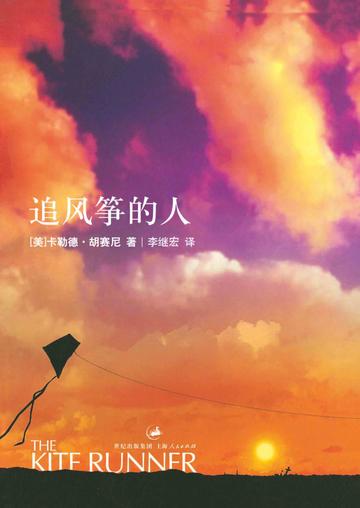
The perspective of the novel is Amir. There is a clear contrast between the characters of Amir and Hassan. At first I even hated Amir for his cowardice. Hassan is so beautiful that people dare not touch her. However, I don't know when, I suddenly realized that the description of Hassan in the novel was actually Amir's memory. The book is similar to an autobiography or memoir. There is very little description of Amir's heart in the article, and it only emphasizes the despicable side of his character. It feels like he doesn't care about Hassan at all. But as soon as you realize that the entire text is Amir's memory, you will find out how much Amir cares about Hassan, and he even hates himself a little. I couldn't help but burst into tears several times. I loved Hassan, Amir, Ali, Amir's father, Hassan's son... Don't be afraid of making mistakes, and be indifferent to the things you are afraid of.
After reading it, I wrote the sentence: For you, thousands of times, and it still lingers in my mind. From the sins I committed when I was young, to the atonement when I grew up, and the rise and fall of hatred of my family and country, the author described it vividly. In fact, I don't have many gorgeous words. Maybe I only understood a little of his meaning, but this is definitely a literary work that shocked me. It is extremely relevant to today's human nature. There are no cumbersome paragraphs, concise and relieved. The past will creep up on itself. The physical book I read may be a little short [top post]
Among them, I dare not comment on religion, but Afghanistan is still very differentiated between races, and the conflicts between races have deepened into conflicts between people between ethnic groups. The book always implements "for you, thousands of times." It is also a self-repentance for the mistakes Amir made before, not being able to bravely face resistance. This incident as a child became a knot in his mind, even throughout his adult life. His insomnia, his exposure to memories about him, and his escape all illustrate the great impact this incident had on him, as well as the depth of his subsequent repentance. In the book, Amir's weak character as a child is portrayed, and his tenacity and bravery when he did not dare to resist and confessed to him were portrayed. Later, he did not escape, but sincerely repented of the mistakes he had made before. He knew that he was sorry for Hassan. He even imagined that if Hassan had not been driven out of his home, would Hassan have a happy ending? He wouldn't dare to fight back when others bully his wife, and he wouldn't let such a beautiful person die miserably due to unfair treatment. I hope we can all be like Hassan and be like Amir. Becoming Hassan, he is upright, brave, positive and optimistic, and dares to look directly at injustice; becoming Amir, he has the courage to face the past, dare to self-reflect, and even make amends and repent. "For you, thousands of times."
What is hidden on the other side of the kite is not just childhood When I first read "The Kite Runner", I thought it was a light-hearted adventure story. After all, the introduction mentioned the scene of two children chasing a kite, which looked very peaceful. As soon as I opened the results, I saw that this guy was dragged directly into Afghanistan. The protagonist Amir and his friend Hassan, one is a young master whose family owns a mine, and the other is a son who works as a servant. Their identities are very different, but their friendship is too real. When watching the scene of the two of them chasing a kite, everyone would sigh with emotion: "Well, they are childhood sweethearts with a double-boy plot." But as soon as the kite landed, the story began to derail. Amir's inner tangle and selfishness suddenly emerged. When faced with Hassan being bullied, he chose to be a coward. I was so anxious at that time that I wanted to get in, grab him by the neck and shout: "Hey, that's it for you, you are such a loser." But calm down and think about it, who didn't have a little bit of cowardice in their childhood? Besides, the description is so vivid, it is a masterpiece, it feels like I am not reading a book, but wearing VR glasses and walking through the streets of Afghanistan. From the market to the manor to the war-torn battlefield, the changes unfold one by one under the author's pen. Issues about race, class, and war are like thorns in the story and in the hearts of readers. As the story develops, Amir grows up, but the shadow of the past keeps haunting him (Hassan seems to be dead, but he has always been alive; Amir seems to be alive and well, but in fact he has not been alive for half a day). He embarks on the road of self-redemption, and he can feel a lot of thrills and excitement in this process. It's like fighting monsters, if you take two steps, you'll get two. He returns to the devastated Afghanistan to look for Hassan's son. Along the way, he not only has to face external dangers, but also faces his own inner fear and guilt. The book "The Kite Runner" seems to be about chasing kites, but in fact, it is about chasing the kindness, courage, and redemption hidden deep in our hearts. It uses a warm writing style to gently place those serious topics in front of us, allowing us to have a deeper understanding of human nature, friendship, and feelings of family and country while crying and laughing. Finally, I want to say that this book is absolutely amazing [like]
The story begins with Hassan saying to Amir, "For you, a thousand times." The story ends with Amir saying "for you, a thousand times" to Hassan's son Sohrab. When he was young, Amir was cowardly and selfish, unwilling to face problems when he encountered them. He would even frame Hassan, who was insulted and hurt for him, in order to stop himself from thinking about what he had done. And Hassan is a man who is brave, kind and all the good words can be applied to him. It is a pity that a good person like Hassan has also experienced many bad experiences, even his son. Their experiences really make me angry. The world has too much malice towards them, but they still maintain their true intentions. At first, I didn't understand why Amir's father treated Amir so coldly, but then I understood that they are really similar to each other. But their spirit is still worth learning from, taking the essence and discarding the dross. The author's writing style is very good and echoes from beginning to end. I hope we can all catch our own kites.
I was shocked and got to know Afghanistan again. I hope there will be no more wars and the world will always be peaceful. For you thousands of times, you and I are still the kite runner.
In the first person, there is an immersive feeling. As Amir grows up, he shows his courageous father, the respectable Rahimhan and Ali, and Hassan, who is loyal to Amir, and spends his life telling "For you, thousands of times." Taking Amir, the son of a highly respected and capable father, as the first perspective, accompanied by Ali, a servant of the Halazar descent and his father's brother, and Hassan, an optimistic and cheerful man who has been loyal to Amir throughout his life, a series of twists and turns are unfolded to get a glimpse of the straightforward temperament of Afghans in the past, as well as the process from "crime" to atonement by my father and me. From the time Hassan's first word was "Amir" when he was born, to the time when the party in power ended Hassan's life on the street in order to protect Amir's hometown. I found that people will always make many mistakes in life and have unforgettable regrets. When he was young and frivolous, he was the enemy of the whole world. When he was pursuing happiness, he indirectly hurt the people who loved him most. Thinking about it at the time, it might be the most unforgivable thing. Looking back, it leaves scars in my heart. What will you do at this time? Hassan has completed reconciliation with himself from beginning to end, even though Amir was unwilling to stand up when he was beaten. He has always been jealous and hated that he would not resist and disobey Amir, even though Amir secretly placed his expensive birthday gift in the room of the most upright servant to frame the fault. Hassan has been working hard to reconcile. He loved the childhood when they played together and were like brothers. At the same time, he also loved Amir who grew up and refused to talk to Hassan, like an enemy. He explained "for you, thousands of times" and gave his life for the person he always wanted to reconcile. The protagonist Amir found a way to reconcile with Hassan and himself in Rahim Khan's words. After going through many hardships, he brought Hassan's son back to the United States from the war, and transferred his love for Hassan's missing brother to Hassan's son Sohrab. The young Sohrab experienced war and special circumstances, and closed his heart in the United States. On a day after the rain, Amir saw kites flying in the park, and saw a drop of rain falling on Sohrab's dry heart. He took Sohrab to fly the kite that he had flown with Hassan a long time ago, representing happiness and glory. He said "for you, thousands of times" to Sohrab in his heart, and it was also a whisper to Hassan and to himself... Regret is something that is lacking in someone else's experience. Buried deep in my heart, guilt will slowly arise, like a thorn that cannot be erased. And reconciliation is a kind of ability. When I can't go back to the past and change this regret, at least now I can get rid of the restrictions of the situation at that time, understand that special person, and understand how I should treat him. Without asking for compensation, after experiencing the vicissitudes of life, I hope that you and I will still be the same, amiable people. Come to terms with yourself.
The reason why a classic is a classic is that it has the magic power to pull you into it, not only when you read it with your eyes, but also when you feel it with your heart. While reading, I couldn't help but put myself into Amir's perspective and feel his suffering, pain and struggle. When I saw the part where Hassan was killed, my eyes were full of tears; when I saw Rahim Khan telling the truth, Amir and I were shocked and incredible; when I saw Sohrab committing suicide, I unconsciously tightened my heart. This is a story about friendship and redemption. "For you, thousands of times." I hope we can all catch our own kite, hope everything is not too late, and may friendship last forever! "There are many children in Afghanistan, but no childhood." I hope that such suffering will never happen to children in any country, that the war will stop soon, and that peace will last forever!
The first half of the fictional novel is a memoir, and the second half is a record. I recall my past mistakes and make up for them in the record. Record the historical truth, cast aside the cruelty of war, and cherish peace in our memories. A novel condenses the lives of many people for half a lifetime, and the image of the kite expresses it, please cherish the people around you who have been there for you thousands of times!
This is the ending I am looking forward to. It is not a smooth reunion, but there is hope and expectation hidden in the silence. I believe everything will gradually get better later, but it always feels unfair. Amir seems to have really not suffered much. He has realized his dream and has a good life, but Hassan will never come back. I feel sorry for Hassan.
Hassan's death, Sohrab's depression, reality destroys honest and innocent people. Worth reading, somewhat sad.
This book covers an extremely wide range of things. There are accusations of cruel war crimes, nostalgia for one's hometown, and so on. The story is very true and everyone can get something from this book. The wrong things Amir did when he was young stung him like a boomerang, and his psychological activities were very vivid. Hassan went from being slightly despised to truly accepting him. He went to redeem his soul in middle age. This is a story of self-salvation and growth. The kite is his own antidote, and he spends his life chasing it.
I have been wanting to read it for a long time and I read it in one sitting in the past two days. I envy the friendship between Amir and Hassan and the enthusiasm for chasing kites at the beginning. Later, the environment suddenly changed, and Amir also chased Hassan's son like a kite, chasing his brave self. In the end, when he chased the kite with Hassan's son again, it seemed that he had caught up with the beauty of the past, and everything was relieved. The words "for you, thousands of times" also made people cry.
I finished reading this book very calmly. From the perspective of a bystander, I may not be able to empathize with the harm that war has done to us. But in that country, the real war broke up countless families and displaced countless children. Just like Sohrab in the book, he was born in such a happy environment. He had his parents, his grandmother, and his uncle's company. But all of this came to an abrupt end in his unfinished childhood. He witnessed with his own eyes all the changes that happened around him, the death of his grandmother, the tragic death of his parents, and the death of his uncle. He was the only one wandering alone. Maybe wandering is not bad, but it is a country that is undergoing changes. No one can control their own destiny. The same is true for him. When he was choked by the enemy, his father's friend or his uncle saved him. His fate was always tossing and turning. The little boy who was once so energetic lost his ability to embrace life. Isn't "for you thousands of times" a very romantic sentence? I have never seen the source of this sentence before. In this book, I saw this sentence again. Behind this sentence is a little boy's promise to another little boy. It has nothing to do with love, but finally sincerity and finally friendship.
I have been reading this novel for a long time, and I am fascinated by it. Sometimes I feel angry because of Amir's weakness, but when I think about it again, maybe he was like that at that time. When I saw the young Amir make those actions that I didn't understand, I was really angry. But maybe in that environment, everything he endured would indeed prompt him to do that. When I saw Hassan's death, I still cried. Thinking about how those people treated Hassan, what did he do wrong... After reading it, I still want to say that if there was no war, maybe everything wouldn't be so bad. Finally, I hope for world peace! ! !
People say that old things can be buried, but I finally understand that this is wrong, because the past will creep up on its own, including Hassan's words: thousands of times for you. Amir, who was timid, cowardly, and selfish when he was young, in order to gain his father's recognition and exclusive father's love, failed Hassan, who was willing to do it for you thousands of times, even if he was bruised and bruised, but he never looked back, and he also let himself live in regret for a quarter of a century. Rahim Khan, Amir's best friend in writing and his best friend in life, told Amir a way to become a good person again and redeem the unbearable Amir. How could he save the brave, upright, kind and loyal Hassan who had been tortured by fate thousands of times? Hassan's life is a tragedy. Leaving this miserable world full of religion and racial discrimination may be a relief for Hassan. The story is very touching, very detailed, and has a strong sense of immersion. During the reading process, you will feel dull, suffocated, and full of oppression. The surrounding air is solidified and your back feels cold. A lot of content foreshadows the story that follows, and the plot is layered in depth. This is a book that you won't want to put down after you pick it up.
I also like the winter in Kabul written by Khaled. He said: "Winter is the favorite season of every child in Kabul, at least those whose families can afford a warm iron stove." What he said is true. Winter in Kabul is a free holiday for children just like us here. The flow of time filters out the troubles of childhood.
After reading this book, I understood the true meaning of "no one is perfect". Even Amir's beloved father still has this unbearable past. Therefore, as imperfect people, we must have a tolerant heart towards ourselves and not be too harsh on ourselves like Amir. We must learn to let ourselves go appropriately.
The kite runner is the pursuit of a peaceful, peaceful and beautiful life It's Amir's pursuit of his brave, fearless and complete self. Many times, we are more like Amir who dare not stand up for Hassan. Only by chasing the kite bravely can life be freer and there will be no regrets.
I read the physical book in school, so I couldn't help but write a review after reading it. This book was circulated among my classmates. Their comments were that they were very shocked by the rape part. I was curious and borrowed it to read, and found that it was completely different from what I expected. I thought it was just about the friendship between two boys, but I didn't expect it to include many descriptions of macro-level things such as the politics of Afghanistan and the disasters caused by the war. It was also narrated in the first person, which made me feel particularly real. It brought me much more sadness than watching a documentary. It also made me more deeply aware of the destructiveness of war, and I felt very sad for the innocent people who suffered. It felt very depressing when I watched Amir and Hassan's childhood. It was clearly describing a happy time, but it was very sad to watch, such as the sentence "Amir and Hassan, the Sultan of Kabul." I don't know if it played a role in setting off the sadness with a happy scene. Anyway, I wanted to cry several times, but I held it back (probably because I had to guard against teachers and security guards in the classroom), and my eyes hurt from holding it back. Read one page and die once. The author's writing is very good, and I couldn't help but stop and admire it in many places. For example, there is a description of Amir's past memory that lingers in my mind, comparing it to a projector jam that appeared in the book. It is very natural, highly consistent with the content of the book, and the writing is really good. There are many unexpected aspects in this book. The story seems to develop naturally, but suddenly it gives you a twist, which is a bit shocking. It's well worth reading, but I don't recommend reading it before going to bed. I'm afraid you won't be able to sleep.
A very good book. The structure is clear and the content is rich. I really like the sentence "For you, thousands of times". Maybe everyone has his own kite in his heart, and we must dare and be keen to pursue it, just like Hassan. Maybe Hamil is the kite he wants to pursue throughout his life. [Laughing][thinking][smirking][blowing kisses][laughing]
Hassan: Thousands of times for you. The friendship at the beginning of the story, Hassan's loyalty, the protagonist's betrayal, and the cowardly character are all portrayed in detail. As the plot progresses, the protagonist embarks on the road of atonement. Why do you think he embarked on this road? Is it because his cowardly character has changed. I think it may be more because he is driven by guilt and morality. Amir: For you thousands of times. Maybe he has already redeemed himself. All in all, the whole article made me feel very emotional.
It is no exaggeration to say that this is the most recommended book I have ever read. Every link is closely linked and every experience is shocking! For many moments, I seemed to be in the current situation, the night Hassan encountered it. I hated Amir for his cowardice; I hated him for throwing pomegranates at Hassan, as if he had done something wrong; I hated him for slandering Hassan, who had treated him countless times. The kite runner is not the greatest person. He is optimistic, brave, generous and careless. He has too many advantages. Unfortunately, he has been deceived all his life. He does not know his true identity in the end, but he still lives in his own world. His optimistic life does not have a good ending. It is really sad. I am glad that I grew up in a peaceful country. The cruelty of war is like a game of power. The real victims are always the common people. The home where everything was fine and happy was destroyed bit by bit...
"When you have the chance to make a choice, don't allow yourself to regret it." I have never read a book about this kind of friendship and confession, but I was really touched after reading it. What impressed me most in the article was that Hassan would stand at the spot where the kite was about to land, and open his arms to embrace the kite. In the chapters where Amir returns to his hometown, there is a sense of sadness between the lines. War brings misfortune to the land, and soldiers, bandits, and officials oppress the people, which is already a human tragedy. After several twists and turns, when Amir finally allowed Sohrab to slowly open his heart, it also meant that the dust had settled and he finally walked on the road to a good person. In addition, I also learned about the culture of Afghanistan, and I really like the most affectionate confession, "You are the rising sun of my eternal Yalda." Maybe words are indeed the bridge of civilization. May we not do things we regret, and may we find a way to become good people again.
Recommended for you "The Kite Runner" "For you, thousands of times." The charm of this book lies in this simple promise that carries all the weight. The author Khaled Hosseini uses a calm and restrained style to take us back to Kabul, Afghanistan, in the 1970s - a hometown full of fireworks that has not been torn apart by war. It tells a story of betrayal and redemption. The friendship across class and race between the rich young master Amir and his servant's son Hassan has experienced the most cruel test under the traction of a kite. Amir's weakness and selfishness, and Hassan's loyalty and bravery, are like a sharp scalpel, dissecting the dark corners that may exist in each of us - about cowardice, guilt, and whether we have the courage to become "good people" again. This book opens a window for us, allowing us to see a "live" Afghanistan - not the war-torn symbols in the news, but the summer days of listening to stories under the vines, running after kites, traditions and warmth. Then the war tore everything apart. The fate of the individual is intertwined with the suffering of the country, allowing you to deeply understand the tragedy of that land while feeling the pain of the characters. The final direction of the story is a return of the soul spanning twenty years. This not only refers to the geographical return to the devastated Kabul, but also the protagonist Amir's difficult journey of facing the ruins of his heart and completing self-judgment and spiritual reconstruction. This road to redemption is heavy but full of power, because it tells us that mistakes may not be made up for, but people always have the opportunity to choose kindness. The kite is a symbol, the "thing" in everyone's heart that must be recovered - it may be broken friendship, missing father's love, betrayed trust, or the complete self. No matter what cultural background you are in, you will be moved by the book's honest portrayal of human frailty and the deep desire to "start over." If you are looking for such a book: it has a wonderful story that you can read in one breath and your heart beats faster; its characters are so real that you love and hate them at the same time; it can leave long-lasting thoughts and lingering warmth after you close the book; it can evoke your most precious emotions - about friendship, family affection, responsibility and the determination to become a better person. Then, "The Kite Runner" is an indispensable book on your bookshelf. Because what it ultimately tells is not a story about a distant foreign country, but the struggle each of us has with ourselves. That kite floating high in the sky may be our imperfect souls waiting to be redeemed. I hope you can find the courage to chase your own kite in this story.
"The Kite Runner" allowed me to see the kindness, loyalty, selfishness and cowardice of human nature, but there seems to be no right or wrong in each character. Hassan's loyalty and loyalty are touching, "For you, thousands of times." Both Amir and his father did some wrong things, but they both completed self-salvation in their own way and overcame the cowardice of human nature. A kite runner is not chasing a kite, he is chasing self-salvation! I hope that I can bravely chase my own kite in the future, overcome my shortcomings, and look forward to becoming better!
After reading it, I couldn't let it go for a long time! This book brought tears to my eyes! Each living person appeared in front of me! The author's delicate and appropriate descriptions make every character come to life with flesh and blood! Nothing is perfect, nothing is heinous!
"The Kite Runner" Author: Khaled Hosseini There are two people around Amir, a rich young man from Afghanistan, who have influenced his life. One is his father and the other is his servant Hassan. They are similar in age and love each other as brothers. Amir spent his entire childhood following in his father's shadow, but Hassan followed in Amir's footsteps throughout his life. "For you, a thousand times" Hassan shouted these words to Amir, and he was as loyal and kind as these words. After the kite competition, Hassan ran into a dark and deserted alley to help Amir pick up the broken kite. Unfortunately, he ran into the abuser, but because of Amir's cowardice, he did not step forward to stop him, and watched the abuser bully Hassan. After this war came, Amir and his father moved away from Afghanistan, but this incident planted the seeds of guilt in his heart. Years later, as Hassan's true identity was revealed, Amir also embarked on the road to return home. This book revolves around the betrayal and redemption of friendship and family. The gap torn by time will eventually be closed in the adhesive called fate, just like a bullet hitting the forehead, it is the growth and transformation of everyone. There is a kite in each of our hearts. I hope this book can help you find the "kite" in your heart and the "courage to chase the kite"
There is nothing wrong in this world. Amir lacked father's love when he was a child. He was very jealous of his father's love for Hassan, which led to a series of things that happened later. Amir's cowardice also failed Hassan's "For You" thousands of times. In the end, Rahim Khan's plea and Hassan's experience awakened Amir. Unfortunately, Hassan could not see it. More communication with his father or Amir's cherishment of Hassan's friendship would not have contributed to the final outcome.
After reading this book, my heart couldn't calm down for a long time. I was really deeply moved by Hassan's loyalty to Amir and also moved by Hassan's kindness. Although Amir betrayed Hassan, Hassan still regarded him as his best brother and friend. And Amir also grew from the initial cowardice to a brave and upright person. He redeemed himself, who once longed for his father's love, and also helped his father redeem the mistakes he had made. I deeply understand that no matter how big a mistake we have made in the past, we must face it bravely and not choose to escape because of fear. This will only make you feel more and more guilty. Like Amir, even if there is a slight chance of redemption, you must fight hard. "For you, thousands of times"