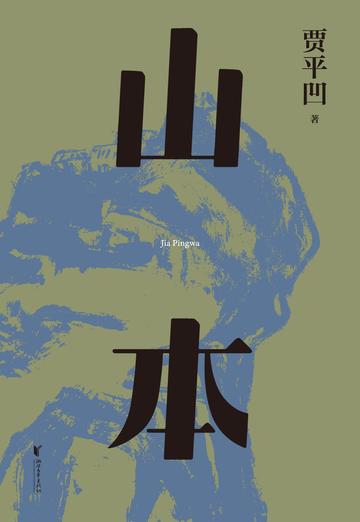
"Yamamoto" is Jia Pingwa's new work in 2018. It took nearly three years from conception to completion. Yamamoto, the origin of the mountain, is intended to be a biography of the Qinling Mountains and to outline the memory of modern China.
The novel tells the legendary story of a place called Whirlpool Town deep in the Qinling Mountains during the troubled times of the Republic of China. In the 1920s, the Qinling Mountains were surrounded by powerful forces and frequent wars. The town tried to protect itself but was eventually destroyed. However, the Qinling Mountains were still the Qinling Mountains, and the vastness remained the same. The fate of the people of the great era was lamentable. In addition to telling the ups and downs of Whirlpool Town, "Yamamoto" is also an encyclopedia describing the vegetation and animals in the Qinling Mountains.
Reader comments
Yamamoto carelessly lost the immortal
Yamamoto was careless and lost his ancestors
Lao Jia is acting silly again
Bloody history, true description, the greatness of the nation, and its strength in disasters.
The more I watch, the more exciting it becomes, and I have the urge to watch it all in one go.
This is a true literary work. It not only reflects the reality of a society and history, but also transcends nature and returns to nature. The book contains detailed descriptions of the natural scenery, distinctive animals and plants, folk customs, etc. At that time and place, reflecting the depth of the author's life and his excellent writing style, making people read deeply into the situation. The various descriptions of scenery, animals and plants in it all reflect Mr. Jia's respect for life. It is a work worth pondering carefully.
This work is quite in-depth. It reflects a period of history in the Qinling Mountains in the 1920s and 1930s. This history is reflected through a series of activities of the characters in the book, so the various characters in the book are lifelike and particularly exemplary. The psychological description of the characters in the book is detailed and the ending is realistic, which is completely different from today's novels. It truly describes the bloody history, takes us into the picture of what happened in the past, allows us to understand history, experience the horror of disaster and appreciate the greatness of the nation.
Sometimes, literature can better reflect current affairs and politics, reflect people's lives, experience the warmth and warmth of the world, and is more emotional. This article describes the ups and downs of the war during the Republic of China, reflects the ups and downs of the people's fate during the war, and also shows the damage caused by the war to social stability. It allows us to understand war and people from another aspect, allowing us to empathize more, share the joys and sorrows of the characters, and also feel the chaos of the country at that time. The content of the article is thought-provoking, the atmosphere is heavy, and the psychological description is detailed, making us feel heavy and thought-provoking.
It describes the characters and events in a certain village and village in troubled times with simple but unpretentious words and sentences. Since it is troubled times, of course, heroes, upright heroes, villains, common affairs of military strategists, etc. Are naturally the main lines, and the narratives are more complex but not cumbersome. The smoke and dust of troubled times have always been rising, and there are many exits. However, in the end, the entrance to suffering is still the common people with good and bad habits such as ordinary, kind, hard-working, thrifty, etc. Who have to swallow the consequences of many disasters. Just as the old saying goes. . . . I would rather be a dog in prosperous times than a hundred people in troubled times...
Don't talk about some hardships just because you meet others. Don't tell all the bad things you have experienced just because you have a good relationship with others. Because the best thing you can get is comfort and sympathy, but this will make you more anxious and pitiful, and the other things you can get are not understanding and looking down on. So crying to others is a very bad thing. Although we sometimes can't help but talk, we can't do it too often. Sometimes you can cry and talk about unhappy things with your parents.
Yamamoto, the true face of the mountain. When people are in it, they are not their true colors. Human affairs are also part of the mountain. Mountains in the early Yuan Dynasty, people in the early Yuan Dynasty, people with material nature, especially in troubled times, what is the difference between various people in their own fields and the animal world. These stories, including the "revolution", were actually told by many old people when I was very young. I was still a student at that time. I always felt that the stories in books were true, and I didn't believe the past events told by the old people. Many years have passed, and those very old people have left one after another. Now reading Jia's book, it seems that things are swirling again. I am no longer young, so I believe that these may be the most authentic history of life. Suddenly I remembered something someone said: Revolution always attracts those at the top and the bottom. Temporary trends depend on the strength of the people at the top, while long-term trends may even depend on the strength of the people at the bottom. The life movement of middle- and lower-class people is actually not much different from that of the animal world.
After reading the whole novel, I can see that the author has really put a lot of effort into writing this novel, and the writing is also very attractive to readers. As a layperson, I feel that the only flaw is that the ending of the novel is too tragic, and it feels like it ended very quickly.
Very interesting, a good book.
A very good novel,
This novel tells the story of a Japanese's life experience in China. By describing the protagonist Yamamoto's experience in coming to China, it reflects the historical and social background at that time. The author then uses delicate brushstrokes to depict the protagonist's various experiences and mental journey in a foreign country, showing the collision and integration of foreign cultures. At the same time, the novel also explores multiple themes such as emotion and family, love and friendship. The whole plot has ups and downs, allowing people to fully experience the protagonist's psychological changes and growth experience. Although the author's writing style is relatively calm, it can lead us into it and feel the deep meaning conveyed in it.
It records life and death, as well as the vegetation in the Qinling Mountains. Times are changing, and no one can stop the development of history. The two brothers from the Jing family are the main line. They started out as parallel lines, but in the end they intersected vaguely, and then had their own endings. In that turbulent era, no one could control his own destiny. The times push you up, and I will appear on stage after you sing. The story inside is fragmented and depressing. All the people come and go like a marquee. In the cruelty and bloody war, there are no good guys or bad guys, only their own interests.
Wu's language is simple and vivid, and his portrayal of people is very real.
Wonderful, relatively real
The state of life and death, the place of prosperity, decline and reputation. If you look at it from the perspective of restraint, it will be extremely sad. If you look at it from the perspective of success, it is almost not worth a smile.
Qinling, when you look at it, it is Qinling; when you don't look at it, it is still Qinling, and it just lies there.
There are many details in the novel, which reflect the protagonist's style and method of doing things, making the protagonist more three-dimensional.
There are many superstitions and Feng Shui plots, the plots are bizarre, and the cultural level and spiritual sustenance of rural people are all described in writing!
A bit similar to Bailuyuan
A very nice book
Beautiful, very exciting
The articles are both literary and military, but people are not living in troubled times
It's very well written, somewhat similar to that one (with lights)
The mountain is still the same mountain, and the vegetation is new. People are still going on, it's just that it's been several generations. This year's grass is last year's roots, and people today are gradually forgetting the past. The mountains are also changing, but you can't feel it. People change every day, who is the eternal one? The only thing that can recall the past is that era. What is left to future generations is a kind of inheritance. This is the only meaning.
The article is delicate, the writing style is smooth, the writing is simple, and the literary talent is outstanding
The new height of Mr. Jia Pingwa's works is exactly what he wrote in his postscript: Literature is the unity of nature and self. What is written is history, legend, and legend. Taking history as a guide should also be a light to illuminate the road.
The first is the chronicle of people, then the chronicle of vegetation, then the chronicle of birds and animals, and finally the chronicle of rivers and mountains. The book "Shanben" is the best footnote of the Qinling Mountains in the 1920s and 1930s! Jia Lao's works are still excellent! [Like][Like][Like]
Yamamoto carelessly lost the immortal
Yamamoto was careless and lost his ancestors
Lao Jia is acting silly again
Bloody history, true description, the greatness of the nation, and its strength in disasters.
The more I watch, the more exciting it becomes, and I have the urge to watch it all in one go.
This is a true literary work. It not only reflects the reality of a society and history, but also transcends nature and returns to nature. The book contains detailed descriptions of the natural scenery, distinctive animals and plants, folk customs, etc. At that time and place, reflecting the depth of the author's life and his excellent writing style, making people read deeply into the situation. The various descriptions of scenery, animals and plants in it all reflect Mr. Jia's respect for life. It is a work worth pondering carefully.
This work is quite in-depth. It reflects a period of history in the Qinling Mountains in the 1920s and 1930s. This history is reflected through a series of activities of the characters in the book, so the various characters in the book are lifelike and particularly exemplary. The psychological description of the characters in the book is detailed and the ending is realistic, which is completely different from today's novels. It truly describes the bloody history, takes us into the picture of what happened in the past, allows us to understand history, experience the horror of disaster and appreciate the greatness of the nation.
Sometimes, literature can better reflect current affairs and politics, reflect people's lives, experience the warmth and warmth of the world, and is more emotional. This article describes the ups and downs of the war during the Republic of China, reflects the ups and downs of the people's fate during the war, and also shows the damage caused by the war to social stability. It allows us to understand war and people from another aspect, allowing us to empathize more, share the joys and sorrows of the characters, and also feel the chaos of the country at that time. The content of the article is thought-provoking, the atmosphere is heavy, and the psychological description is detailed, making us feel heavy and thought-provoking.
It describes the characters and events in a certain village and village in troubled times with simple but unpretentious words and sentences. Since it is troubled times, of course, heroes, upright heroes, villains, common affairs of military strategists, etc. Are naturally the main lines, and the narratives are more complex but not cumbersome. The smoke and dust of troubled times have always been rising, and there are many exits. However, in the end, the entrance to suffering is still the common people with good and bad habits such as ordinary, kind, hard-working, thrifty, etc. Who have to swallow the consequences of many disasters. Just as the old saying goes. . . . I would rather be a dog in prosperous times than a hundred people in troubled times...
Don't talk about some hardships just because you meet others. Don't tell all the bad things you have experienced just because you have a good relationship with others. Because the best thing you can get is comfort and sympathy, but this will make you more anxious and pitiful, and the other things you can get are not understanding and looking down on. So crying to others is a very bad thing. Although we sometimes can't help but talk, we can't do it too often. Sometimes you can cry and talk about unhappy things with your parents.
Yamamoto, the true face of the mountain. When people are in it, they are not their true colors. Human affairs are also part of the mountain. Mountains in the early Yuan Dynasty, people in the early Yuan Dynasty, people with material nature, especially in troubled times, what is the difference between various people in their own fields and the animal world. These stories, including the "revolution", were actually told by many old people when I was very young. I was still a student at that time. I always felt that the stories in books were true, and I didn't believe the past events told by the old people. Many years have passed, and those very old people have left one after another. Now reading Jia's book, it seems that things are swirling again. I am no longer young, so I believe that these may be the most authentic history of life. Suddenly I remembered something someone said: Revolution always attracts those at the top and the bottom. Temporary trends depend on the strength of the people at the top, while long-term trends may even depend on the strength of the people at the bottom. The life movement of middle- and lower-class people is actually not much different from that of the animal world.
After reading the whole novel, I can see that the author has really put a lot of effort into writing this novel, and the writing is also very attractive to readers. As a layperson, I feel that the only flaw is that the ending of the novel is too tragic, and it feels like it ended very quickly.
Very interesting, a good book. A very good novel,
This novel tells the story of a Japanese's life experience in China. By describing the protagonist Yamamoto's experience in coming to China, it reflects the historical and social background at that time. The author then uses delicate brushstrokes to depict the protagonist's various experiences and mental journey in a foreign country, showing the collision and integration of foreign cultures. At the same time, the novel also explores multiple themes such as emotion and family, love and friendship. The whole plot has ups and downs, allowing people to fully experience the protagonist's psychological changes and growth experience. Although the author's writing style is relatively calm, it can lead us into it and feel the deep meaning conveyed in it.
Good work, worth recommending
Good-looking, good-looking, good-looking, good-looking
It records life and death, as well as the vegetation in the Qinling Mountains. Times are changing, and no one can stop the development of history. The two brothers from the Jing family are the main line. They started out as parallel lines, but in the end they intersected vaguely, and then had their own endings. In that turbulent era, no one could control his own destiny. The times push you up, and I will appear on stage after you sing. The story inside is fragmented and depressing. All the people come and go like a marquee. In the cruelty and bloody war, there are no good guys or bad guys, only their own interests.
Wu's language is simple and vivid, and his portrayal of people is very real.
Wonderful, relatively real
The state of life and death, the place of prosperity, decline and reputation. If you look at it from the perspective of restraint, it will be extremely sad. If you look at it from the perspective of success, it is almost not worth a smile. Qinling, when you look at it, it is Qinling; when you don't look at it, it is still Qinling, and it just lies there.
There are many details in the novel, which reflect the protagonist's style and method of doing things, making the protagonist more three-dimensional. There are many superstitions and Feng Shui plots, the plots are bizarre, and the cultural level and spiritual sustenance of rural people are all described in writing!
A bit similar to Bailuyuan
A very nice book
Beautiful, very exciting
The articles are both literary and military, but people are not living in troubled times
It's very well written, somewhat similar to that one (with lights)
The mountain is still the same mountain, and the vegetation is new. People are still going on, it's just that it's been several generations. This year's grass is last year's roots, and people today are gradually forgetting the past. The mountains are also changing, but you can't feel it. People change every day, who is the eternal one? The only thing that can recall the past is that era. What is left to future generations is a kind of inheritance. This is the only meaning.
The article is delicate, the writing style is smooth, the writing is simple, and the literary talent is outstanding
The new height of Mr. Jia Pingwa's works is exactly what he wrote in his postscript: Literature is the unity of nature and self. What is written is history, legend, and legend. Taking history as a guide should also be a light to illuminate the road.
The first is the chronicle of people, then the chronicle of vegetation, then the chronicle of birds and animals, and finally the chronicle of rivers and mountains. The book "Shanben" is the best footnote of the Qinling Mountains in the 1920s and 1930s! Jia Lao's works are still excellent! [Like][Like][Like]