Learning is not about forcing children to complete it with "do it quickly, do it quickly", but it is about effectively guiding children to complete it actively and happily.
7-12 Years old, especially grades 1-3, is an important period for children to develop independent learning habits. Yoshiko Kusunoki proposed 47 methods to guide children to learn independently, such as: Demonstrate to children that learning is a pleasant and useful thing; if you are not active in learning, it is actually a problem with your self-confidence. The key is to find out. Find out where the child is interested; set learning goals while respecting the child's wishes; give the child free time and don't fill up all the time in the name of interest; only if you speak, will the child listen. Mothers must get rid of the habit of giving orders; instead of restricting playing games, it is better to set rules...
Family education is the foundation of true education. Parents should continue to improve their self-cultivation, master the latest cognitive science, understand developmental psychology, and learn knowledge in history, art, philosophy, etc., To enrich and deepen their understanding of the world.
Let us work with our children to be happy, passionate learning, and lifelong learners.
Reader comments
The 47 methods mentioned in this book are very practical! I particularly agree with what is said in the book that learning should be children's own business and we cannot blindly force them. Like the author said, we should make children feel that learning is enjoyable and useful, so that they will take the initiative to learn. I also hate the kind of parents who only give orders. The author reminds us that it is really important to learn to communicate with our children. Moreover, the book also mentions that parents should continue to learn and enrich their knowledge. This is also where I need to work hard. In short, this book made me think more about children's education, and it is worth reading!
There is a joke circulating on the Internet: If you don't do your homework, your mother will be kind and your son will be filial. But if you do your homework, you will be like a chicken and a dog. Hahahaha [awkward laughter]
The booklet is very easy to read.
Whose business is learning? What kind of ability do you have to master learning?
We stand high, look far, just guide, teach by words and deeds, be hunters of knowledge, and learn happily ٩(๑^o^๑)۶
2025.8.2 Fuyang
Very good, helpful
This book is very good, very practical, very thorough analysis, and worth reading.
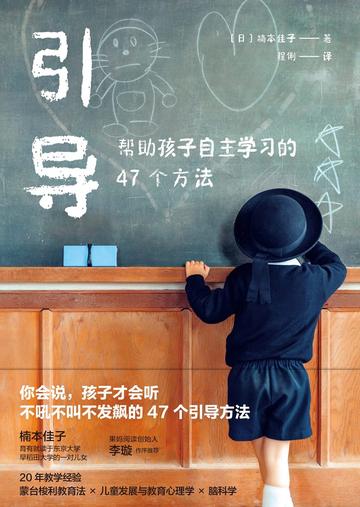
The 47 methods mentioned in this book are very practical! I particularly agree with what is said in the book that learning should be children's own business and we cannot blindly force them. Like the author said, we should make children feel that learning is enjoyable and useful, so that they will take the initiative to learn. I also hate the kind of parents who only give orders. The author reminds us that it is really important to learn to communicate with our children. Moreover, the book also mentions that parents should continue to learn and enrich their knowledge. This is also where I need to work hard. In short, this book made me think more about children's education, and it is worth reading!
There is a joke circulating on the Internet: If you don't do your homework, your mother will be kind and your son will be filial. But if you do your homework, you will be like a chicken and a dog. Hahahaha [awkward laughter] The booklet is very easy to read. Whose business is learning? What kind of ability do you have to master learning? We stand high, look far, just guide, teach by words and deeds, be hunters of knowledge, and learn happily ٩(๑^o^๑)۶ 2025.8.2 Fuyang
Very good, helpful
This book is very good, very practical, very thorough analysis, and worth reading.