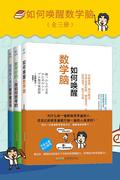
The famous success master Napoleon Hill once said: Without a successful way of thinking, there will be no successful results. A person does not necessarily need to have high intelligence or natural ability to achieve great success and satisfaction. The correct way of thinking is the key to survival, competition and success. What powerful tools do successful politicians, entrepreneurs, managers, and scientists around the world use to analyze problems, innovate ideas, make decisions, and solve problems? This book introduces the 10 best thinking methods used by smart people all over the world. By citing a large number of examples and providing precise analysis, it teaches you to think like a smart person and break out of the shackles of traditional thinking patterns, allowing you to cope with complex affairs and difficulties with ease, quickly find breakthroughs to solve problems, and move towards success.
Reader comments
The thinking methods mentioned in this book are very practical! I think I love thinking, but sometimes I just can't find a good way. After reading this book, I discovered that successful people are people who are good at thinking. When they encounter problems, they will actively think of solutions and continue to innovate. Just like when I deliver express delivery, I also need to constantly think about how to take the most time-saving route and how to communicate with customers most effectively. I think this book is very helpful to me, and I recommend it to you!
Very good, a little difficult, not bad
It really benefited me a lot and taught me how to quarrel, and I won the quarrel! ! Happy٩(๑^o^๑)۶
To sum up: total (combination dispersion method and thinking focus)
points (characteristic divergence method, radiating divergence method and brainstorming method)
(causal divergence method)
Six-color hat: white (knowing information) red (expressing opinions)
Black (potentially dangerous) Yellow (due value)
Green (finding solutions) Blue (grasping the big picture)
Fixed points: ① Purpose ② Category ③ Similarities ④ Concept
Stimulation: ① Escape type stimulation ② Stepping stone stimulation ③ Random input
Thinking: ① Reverse the characters ② Reverse the situation ③ Reverse the cause and effect
Others: Associations and Analogies
Ways to quarrel: ①Clear goals
②Control your emotions and don't be affected by others
③Don't defend yourself when others suspect you
④In the face of authoritative suppression, we must dare to question
⑤When faced with a dilemma, you should see other people's intentions and ask questions.
⑥When faced with other people's analogies, question them
⑦Be careful when facing word games played by others and ask clearly about the situation



The thinking methods mentioned in this book are very practical! I think I love thinking, but sometimes I just can't find a good way. After reading this book, I discovered that successful people are people who are good at thinking. When they encounter problems, they will actively think of solutions and continue to innovate. Just like when I deliver express delivery, I also need to constantly think about how to take the most time-saving route and how to communicate with customers most effectively. I think this book is very helpful to me, and I recommend it to you!
Very good, a little difficult, not bad
It really benefited me a lot and taught me how to quarrel, and I won the quarrel! ! Happy٩(๑^o^๑)۶ To sum up: total (combination dispersion method and thinking focus) points (characteristic divergence method, radiating divergence method and brainstorming method) (causal divergence method) Six-color hat: white (knowing information) red (expressing opinions) Black (potentially dangerous) Yellow (due value) Green (finding solutions) Blue (grasping the big picture) Fixed points: ① Purpose ② Category ③ Similarities ④ Concept Stimulation: ① Escape type stimulation ② Stepping stone stimulation ③ Random input Thinking: ① Reverse the characters ② Reverse the situation ③ Reverse the cause and effect Others: Associations and Analogies Ways to quarrel: ①Clear goals ②Control your emotions and don't be affected by others ③Don't defend yourself when others suspect you ④In the face of authoritative suppression, we must dare to question ⑤When faced with a dilemma, you should see other people's intentions and ask questions. ⑥When faced with other people's analogies, question them ⑦Be careful when facing word games played by others and ask clearly about the situation