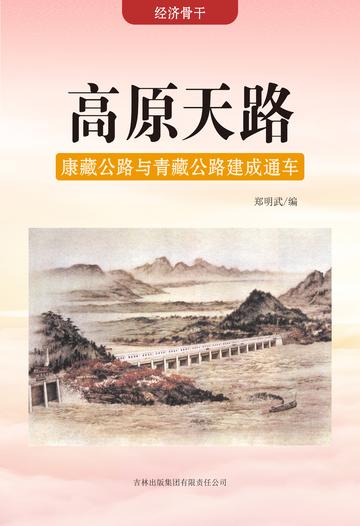
Before liberation, there were no roads in Tibet. The border areas were separated from the mainland by mountains, traffic was blocked, and the roads were difficult and dangerous. This has not only kept Tibet in a closed state for a long time and seriously retarded Tibet's economic and cultural development, but also brought huge difficulties to the liberation and construction of Tibet. For this reason, when the Central Committee of the Communist Party of China and Chairman Mao Zedong decided to march into Tibet, they also decided to build roads to Tibet, and stipulated the policy of "marching on the one hand and building on the other". The Southwest Bureau and the Southwest Military Region regarded the construction of the Kangzang Highway as a major construction task in the southwest region and handed it over to the Southwest Ministry of Transportation to be responsible for survey and design, construction technical guidance, and supply of materials and tools. The rear troops of the 18th Army fully participated in the construction.
Reader comments
This book made me understand that difficult history and gave me full respect for the road builders. I especially hate those who destroy road construction. They don't know how important this road is to Tibet. The characters in the book are all vivid, and their persistence and hard work are touching. I think this book is worth reading and recommend it to you.
I haven't finished it yet, I think it's good, I'll review it after I finish it!
This book made me understand that difficult history and gave me full respect for the road builders. I especially hate those who destroy road construction. They don't know how important this road is to Tibet. The characters in the book are all vivid, and their persistence and hard work are touching. I think this book is worth reading and recommend it to you.
I haven't finished it yet, I think it's good, I'll review it after I finish it!