After the liberation of Chongqing, the Southwest Military and Political Commission was formally established in Chongqing, with Deng Xiaoping serving as vice chairman. After that, Deng Xiaoping proposed to the Central Committee of the Communist Party of China to build the Chengdu-Chongqing Railway. Deng Xiaoping's proposal was approved by Mao Zedong. On June 15, 1950, the Chengdu-Chongqing Railway officially started construction. In order to build this railway, the Party Central Committee determined the construction principle of "using local materials" and mobilized the military and civilians to donate materials and efforts. To this end, the people of Sichuan donated 1.29 Million sleepers, and more than 30,000 People's Liberation Army troops and 100,000 migrant workers participated in the construction of the railway. On August 1, 1950, the military and civilians began to lay track westward from Chongqing. On June 30, 1951, the track was laid to Yongchuan. On December 6, the track was laid to Neijiang. On June 13, 1952, the track was laid to reach the terminal station Chengdu.
Reader comments
The writing style of this book is simple and sincere, and the writing style is concise and smooth, which made me feel as if I was actually there. I especially like the plot in the book where the army and the people work together to build the railway, and I feel the power of unity and unity. This book shows the wisdom and perseverance of the Chinese people by telling the construction process of the Great Southwest Railway. It is worth reading!
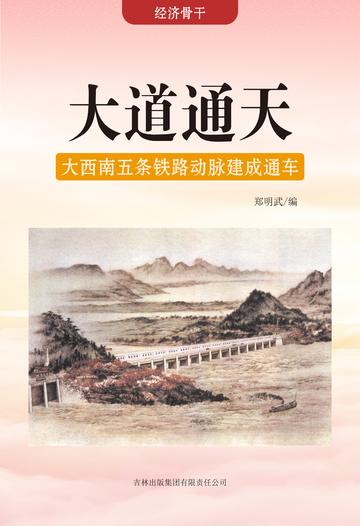
The writing style of this book is simple and sincere, and the writing style is concise and smooth, which made me feel as if I was actually there. I especially like the plot in the book where the army and the people work together to build the railway, and I feel the power of unity and unity. This book shows the wisdom and perseverance of the Chinese people by telling the construction process of the Great Southwest Railway. It is worth reading!