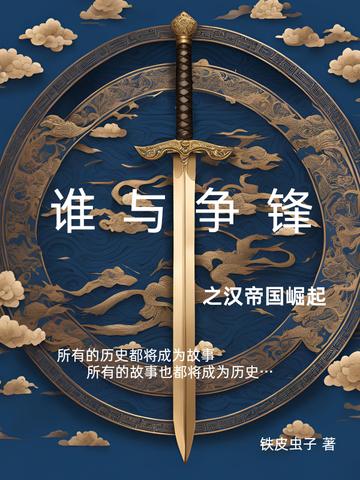
More than two thousand years ago, the land of China was engulfed in flames and bloodshed. The imperial house, feudal lords, nobles, scholar-officials, commoners, and slaves were all brewing a revolution to dispel ignorance and establish a new order.
From among the contention of a hundred schools of thought, the Qin Empire chose Legalism to govern the realm. It swept away the rotting shackles in one stroke and established a new, unified civilization.
Yet authoritarian rule by law was no cure-all for a unified world, and another revolution soon arrived.
Liu Bang seized the moment, overthrew the Qin Empire, and founded the Han Empire. The Liu clan's new regime was immediately faced with a new question: how could it avoid the institutional pitfalls of the Qin Empire and establish a farsighted new system for the empire?
Liu Bang used the Daoist principles of Huang-Lao, governing through noninterference to solve society's problems. But he failed to resolve the flaws in the system and other deeper issues, leaving them to be dealt with by his descendant, Emperor Wu of Han, Liu Che.
Thus began an all-encompassing revolution, full of hidden designs and an inescapable sense of destiny. Every social class was swept into it, becoming both victims and architects of the upheaval.
From then on, the Han people were endowed with a historic mission and place in the world, while the revolution also provided a trove of invaluable resources for the later creation of Chinese civilization.