Why do teenagers get tired of studying and fear taking exams?
Why do teenagers run away from home?
Why do teenagers commit suicide?
How do these problems arise, what are their root causes, and how can they be resolved?
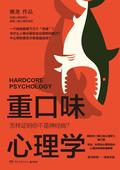
In this practical manual created by practical psychological counselor Gao Zhanmin based on years of psychological counseling experience, you will receive sincere guidance on learning, growth, love, interpersonal relationships, happiness and other topics.
Reader comments
Children are just blank sheets of paper. They will cry and laugh more openly, and will have a crisis of self-identity due to the lack of recognition and acceptance of the environment. This rebellious psychology is actually a problem that every teenager will encounter more or less. Instead of labeling them as problem teenagers, it is better to think about whether there is a problem with the training of the parents or the education of the school. After all, since we really care about every child, we should not adopt an attitude of evasion or scolding when problems arise. Instead, you should take the initiative to accompany your children to find solutions to problems.
Children are just blank sheets of paper. They will cry and laugh more openly, and will have a crisis of self-identity due to the lack of recognition and acceptance of the environment. This rebellious psychology is actually a problem that every teenager will encounter more or less. Instead of labeling them as problem teenagers, it is better to think about whether there is a problem with the training of the parents or the education of the school. After all, since we really care about every child, we should not adopt an attitude of evasion or scolding when problems arise. Instead, you should take the initiative to accompany your children to find solutions to problems.
The author of "The Psychology of Youth Rebellion" uses professional interpretation and case analysis to help readers understand the rebellious problems of teenagers, covering various problems encountered by teenagers: such as pursuing alternative, mistaking novelty for personality, and not being able to distinguish the relationship between novelty and personality. In addition, various ideological misunderstandings of adults are put forward: for example, they think that criticism will make teenagers unconvinced, but in fact, because many teenagers lack the ability to self-evaluate, the evaluation of adults is very important. Reading this book will help readers better understand the causes of adolescent rebellious psychology, helping measures, etc. It is a good read.
This is a very well-written book, not only suitable for improving parent-child relationships, but also for other relationships. In particular, the eight magic weapons of love and one basic point mentioned in the book are very useful for us in dealing with various relationships. Worth reading in depth.
Adolescent children are building their own personality. They are self-centered, unwilling to accept established rules, and desperately long for freedom. My son has also entered his teenage years. Although he has not yet reached puberty, signs of rebellion have already appeared. This book is very practical for me. There is a passage in the book that says: "As parents, it is better to manage the parent-child relationship than to hold the family of origin accountable." It is very true. As parents, we should no longer hold ourselves accountable for our childhood shortcomings, but live in the present. If the parents of the previous generation raised us roughly, we should learn from it, correct our steps, and prevent this regret from appearing in our children again. I really don't like it when parents mention how they were when they were children as a way to judge how inappropriate their children's behavior is today. Times are different, the pressures we bear are different, and the environment in which we grow up is different. There is no way for us to compare with our children.
Adolescent children are building their own personality. They are self-centered, unwilling to accept established rules, and desperately long for freedom. My son has also entered his teenage years. Although he has not yet reached puberty, signs of rebellion have already appeared. This book is very practical for me. There is a passage in the book that says: "As parents, it is better to manage the parent-child relationship than to hold the family of origin accountable." It is very true. As parents, we should no longer hold ourselves accountable for our childhood shortcomings, but live in the present. If the parents of the previous generation raised us roughly, we should learn from it, correct our steps, and prevent this regret from appearing in our children again. I really don't like it when parents mention how they were when they were children as a way to judge how inappropriate their children's behavior is today. Times are different, the pressures we bear are different, and the environment in which we grow up is different. There is no way for us to compare with our children.
Every time I read a book about family education, I feel very lucky that I read this book and that my child is healthy! I hope that through my own efforts, I will not be a pusher for students' mental health problems and can help students a little bit when they need help.
The problems are explained in detail and there are corresponding solutions, which are worth learning from. In terms of educating children, reading more psychological knowledge, applying and thinking about it will avoid many conflicts between parents and children. Parents also need to learn and grow. No one is born with it. They all learn and grow.
After a rough reading, it is indeed a good book. It comforts me a lot. I hope my parents can read it too.
"No one should be arrogant in his youth", and this book is a book that deeply explores the inner world of teenagers. Through research and case analysis, the author reveals the psychological reasons behind adolescents' rebellious behavior and provides some suggestions and solutions. This book caught my attention with its in-depth and easy-to-understand style. Through vivid cases and detailed analysis, the author helps readers understand the various manifestations of adolescent rebellious behavior and the motivations behind it. He pointed out that the rebellious period of teenagers is an important stage in the development of their personality and independence, but rebellious behavior may also lead to problems. By delving deeper into the causes of teenage rebellious behavior, we can better understand them and build healthier relationships with them.
The issue of adolescent rebelliousness is a serious and troublesome issue for many parents, because children in this period are in a stage of changing thoughts, and it is difficult to figure out their thoughts and behaviors. If they are not handled well, the relationship between the two parties will enter a state of irreconcilability. This book provides a detailed analysis and discussion of three problems that are easy for teenagers to happen: being tired of studying, running away from home, and committing suicide. It also provides methods to avoid and solve them. It is a book that modern parents should read.
Adolescent children are building their own personality. They are self-centered, unwilling to accept established rules, and desperately long for freedom. My son has also entered his teenage years. Although he has not yet reached puberty, signs of rebellion have already appeared. This book is very practical for me. There is a passage in the book that says: "As parents, it is better to manage the parent-child relationship than to hold the family of origin accountable." It is very true. As parents, we should no longer hold ourselves accountable for our childhood shortcomings, but live in the present. If the parents of the previous generation raised us roughly, we should learn from it, correct our steps, and prevent this regret from appearing in our children again. I really don't like it when parents mention how they were when they were children as a way to judge how inappropriate their children's behavior is today. Times are different, the pressures we bear are different, and the environment in which we grow up is different. There is no way for us to compare with our children.
I am not concerned about the children I will have in the future, but I am thinking of ways to heal my childhood self.
The author's analysis makes sense
Many problems often arise during adolescence. We often say that children have reached the rebellious stage and become disobedient. But we have never thought about why teenagers have these problems. Children become violent, aggressive, and lose their original soft side. Family problems are often the root cause. Parents are the first persons responsible for their children. The absence of the father will make the children have low self-esteem, cowardice, and insecurity. The absence of the mother will make the children unlovable. If parents give their children sufficient attention, they will have a good sense of security.
Children grow up slowly, and as time goes by, they deviate from the original track, and even become uncontrollable.
A very good book, it helps parents, helps children, and helps everyone get out of emotional difficulties.
I think it was very good and solved many conflicts between my children and me.
It's wonderful and it actually solves many problems.
I'm glad that I'm reading this book and I won't have to fight against my eldest daughter in adolescence anymore. I follow these methods when getting along with my second darling. I hope that my second darling won't be rebellious.
6 Has a perfect insight into the psychology of teenagers. I really recommend that both parents and students should read it. It's great [Like]
A very practical book.
There are many useful viewpoints and practical methods
It is very helpful for us as first-time parents, especially when our children are in adolescence and don't know what to do. Reading this book is very helpful.
The summary is in place, basically all the problems and solutions for teenagers are covered, and there are many key points.
Aiming at the real current situation of parent-child relationship today, it analyzes the reasons, provides guidance, and combines specific examples with strong operability. Thanks for sharing
A very good book, worth reading carefully.
A great book, I like it very much and learned a lot of useful knowledge
It is well written, taught, and ready to learn and grow with my two children.
Grow up with Haohao and Doudou



Children are just blank sheets of paper. They will cry and laugh more openly, and will have a crisis of self-identity due to the lack of recognition and acceptance of the environment. This rebellious psychology is actually a problem that every teenager will encounter more or less. Instead of labeling them as problem teenagers, it is better to think about whether there is a problem with the training of the parents or the education of the school. After all, since we really care about every child, we should not adopt an attitude of evasion or scolding when problems arise. Instead, you should take the initiative to accompany your children to find solutions to problems.
Children are just blank sheets of paper. They will cry and laugh more openly, and will have a crisis of self-identity due to the lack of recognition and acceptance of the environment. This rebellious psychology is actually a problem that every teenager will encounter more or less. Instead of labeling them as problem teenagers, it is better to think about whether there is a problem with the training of the parents or the education of the school. After all, since we really care about every child, we should not adopt an attitude of evasion or scolding when problems arise. Instead, you should take the initiative to accompany your children to find solutions to problems.
The author of "The Psychology of Youth Rebellion" uses professional interpretation and case analysis to help readers understand the rebellious problems of teenagers, covering various problems encountered by teenagers: such as pursuing alternative, mistaking novelty for personality, and not being able to distinguish the relationship between novelty and personality. In addition, various ideological misunderstandings of adults are put forward: for example, they think that criticism will make teenagers unconvinced, but in fact, because many teenagers lack the ability to self-evaluate, the evaluation of adults is very important. Reading this book will help readers better understand the causes of adolescent rebellious psychology, helping measures, etc. It is a good read.
This is a very well-written book, not only suitable for improving parent-child relationships, but also for other relationships. In particular, the eight magic weapons of love and one basic point mentioned in the book are very useful for us in dealing with various relationships. Worth reading in depth.
Adolescent children are building their own personality. They are self-centered, unwilling to accept established rules, and desperately long for freedom. My son has also entered his teenage years. Although he has not yet reached puberty, signs of rebellion have already appeared. This book is very practical for me. There is a passage in the book that says: "As parents, it is better to manage the parent-child relationship than to hold the family of origin accountable." It is very true. As parents, we should no longer hold ourselves accountable for our childhood shortcomings, but live in the present. If the parents of the previous generation raised us roughly, we should learn from it, correct our steps, and prevent this regret from appearing in our children again. I really don't like it when parents mention how they were when they were children as a way to judge how inappropriate their children's behavior is today. Times are different, the pressures we bear are different, and the environment in which we grow up is different. There is no way for us to compare with our children.
Adolescent children are building their own personality. They are self-centered, unwilling to accept established rules, and desperately long for freedom. My son has also entered his teenage years. Although he has not yet reached puberty, signs of rebellion have already appeared. This book is very practical for me. There is a passage in the book that says: "As parents, it is better to manage the parent-child relationship than to hold the family of origin accountable." It is very true. As parents, we should no longer hold ourselves accountable for our childhood shortcomings, but live in the present. If the parents of the previous generation raised us roughly, we should learn from it, correct our steps, and prevent this regret from appearing in our children again. I really don't like it when parents mention how they were when they were children as a way to judge how inappropriate their children's behavior is today. Times are different, the pressures we bear are different, and the environment in which we grow up is different. There is no way for us to compare with our children.
Every time I read a book about family education, I feel very lucky that I read this book and that my child is healthy! I hope that through my own efforts, I will not be a pusher for students' mental health problems and can help students a little bit when they need help.
The problems are explained in detail and there are corresponding solutions, which are worth learning from. In terms of educating children, reading more psychological knowledge, applying and thinking about it will avoid many conflicts between parents and children. Parents also need to learn and grow. No one is born with it. They all learn and grow.
After a rough reading, it is indeed a good book. It comforts me a lot. I hope my parents can read it too.
"No one should be arrogant in his youth", and this book is a book that deeply explores the inner world of teenagers. Through research and case analysis, the author reveals the psychological reasons behind adolescents' rebellious behavior and provides some suggestions and solutions. This book caught my attention with its in-depth and easy-to-understand style. Through vivid cases and detailed analysis, the author helps readers understand the various manifestations of adolescent rebellious behavior and the motivations behind it. He pointed out that the rebellious period of teenagers is an important stage in the development of their personality and independence, but rebellious behavior may also lead to problems. By delving deeper into the causes of teenage rebellious behavior, we can better understand them and build healthier relationships with them.
The issue of adolescent rebelliousness is a serious and troublesome issue for many parents, because children in this period are in a stage of changing thoughts, and it is difficult to figure out their thoughts and behaviors. If they are not handled well, the relationship between the two parties will enter a state of irreconcilability. This book provides a detailed analysis and discussion of three problems that are easy for teenagers to happen: being tired of studying, running away from home, and committing suicide. It also provides methods to avoid and solve them. It is a book that modern parents should read.
Adolescent children are building their own personality. They are self-centered, unwilling to accept established rules, and desperately long for freedom. My son has also entered his teenage years. Although he has not yet reached puberty, signs of rebellion have already appeared. This book is very practical for me. There is a passage in the book that says: "As parents, it is better to manage the parent-child relationship than to hold the family of origin accountable." It is very true. As parents, we should no longer hold ourselves accountable for our childhood shortcomings, but live in the present. If the parents of the previous generation raised us roughly, we should learn from it, correct our steps, and prevent this regret from appearing in our children again. I really don't like it when parents mention how they were when they were children as a way to judge how inappropriate their children's behavior is today. Times are different, the pressures we bear are different, and the environment in which we grow up is different. There is no way for us to compare with our children.
I am not concerned about the children I will have in the future, but I am thinking of ways to heal my childhood self.
The author's analysis makes sense
Many problems often arise during adolescence. We often say that children have reached the rebellious stage and become disobedient. But we have never thought about why teenagers have these problems. Children become violent, aggressive, and lose their original soft side. Family problems are often the root cause. Parents are the first persons responsible for their children. The absence of the father will make the children have low self-esteem, cowardice, and insecurity. The absence of the mother will make the children unlovable. If parents give their children sufficient attention, they will have a good sense of security.
Children grow up slowly, and as time goes by, they deviate from the original track, and even become uncontrollable.
A very good book, it helps parents, helps children, and helps everyone get out of emotional difficulties.
I think it was very good and solved many conflicts between my children and me.
It's wonderful and it actually solves many problems.
I'm glad that I'm reading this book and I won't have to fight against my eldest daughter in adolescence anymore. I follow these methods when getting along with my second darling. I hope that my second darling won't be rebellious.
6 Has a perfect insight into the psychology of teenagers. I really recommend that both parents and students should read it. It's great [Like]
A very practical book.
There are many useful viewpoints and practical methods
It is very helpful for us as first-time parents, especially when our children are in adolescence and don't know what to do. Reading this book is very helpful.
The summary is in place, basically all the problems and solutions for teenagers are covered, and there are many key points.
Aiming at the real current situation of parent-child relationship today, it analyzes the reasons, provides guidance, and combines specific examples with strong operability. Thanks for sharing
A very good book, worth reading carefully.
A great book, I like it very much and learned a lot of useful knowledge
It is well written, taught, and ready to learn and grow with my two children. Grow up with Haohao and Doudou
This book is worth reading for parents