Liu Bang began as an ordinary commoner, joined the tide of rebellions at the end of the Qin Dynasty, defeated the Hegemon-King of Western Chu, seized the realm, and founded the Han Empire. Under Emperor Wen and Emperor Jing, the Western Han prospered through diligent governance. Under Emperor Wu, it reached its height through "strengthening imperial authority at home and subduing the four frontier peoples abroad." The revival under Emperors Zhao and Xuan kept the imperial clan in power, until Wang Mang seized the throne through deception. The dynasty endured for more than two centuries.
Drawing on abundant historical sources, this book retraces the history of the Western Han and vividly recounts one fascinating imperial episode after another: the Rebellion of the Lü Clan, the Rebellion of the Seven States, the Disaster of the Witchcraft Curse, the wars against the Xiongnu, Li Guang's failure to earn a title, Su Wu's years herding sheep, Zhang Qian's mission to the Western Regions, and Wang Zhaojun's journey beyond the frontier. It also brings to life distinctive historical figures such as Xiao He, Zhou Yafu, Emperor Wen of Han, Dong Zhongshu, Emperor Wu of Han, Sima Qian, Sima Xiangru, Wei Qing, and Huo Qubing.
The cycle of rise and fall, success and failure, and relentless struggles for power gradually drove this glorious era toward decline. The book also analyzes and organizes the Western Han's political philosophies, including Huang-Lao governance, exclusive reverence for Confucianism, and the combined use of benevolence and force, as well as its commercial wisdom and social customs.
Written in a lively, witty style, this book lets readers learn the truth about Western Han history without having to plow through a hefty history tome. Enjoy a brisk, satisfying read while gaining wisdom for self-cultivation and helping others, along with lessons from life's successes and failures.
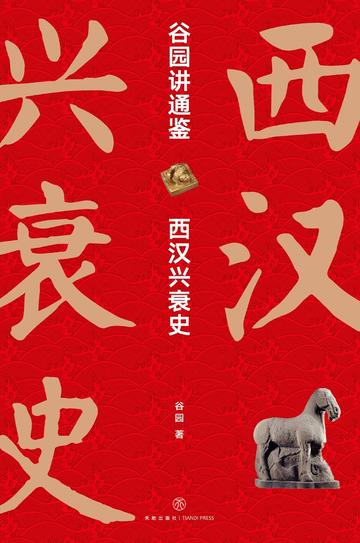
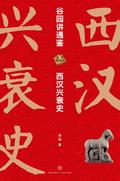
Tongjian is a chronological history book that systematically narrates and analyzes the development and evolution of historical events by arranging them in chronological order. This book focuses on the history of the Western Han Dynasty in the form of a general guide, including Liu Bang's establishment of the Han Dynasty, territorial expansion during the period of Emperor Wu of the Han Dynasty, the exclusive power of foreign relatives, and eunuchs' interference in politics and other important events. By narrating these historical events, readers can understand the political, military, economic and social changes and developments of the Western Han Dynasty, as well as the important figures and policies of each period.
As social consciousness, the system continues to develop with the existence of society. There is no system that can be fixed once and for all. What is more sinister than the system is always the human heart. Liu Bang founded the Western Han Dynasty, divided the kings into feudal lords, and swore on a white horse that anyone not named Liu but the king would be attacked by the whole world. His original intention of becoming king was to well maintain the rule of the Liu dynasty of the Western Han Dynasty. But what he didn't expect was that the power of the princes and kings was increasing day by day, and the "Seven Kingdoms Rebellion" finally occurred. During the period of Emperor Wu of the Han Dynasty, the power of the princes and kings was weakened by every possible means through the use of Tui En Ling, and the problem seemed to be solved. But by the time Wang Mang usurped the Han Dynasty, the princes and kings had lost their prestige and were unable to compete with Wang Mang. It can be seen that it is unreliable to place hope on a reasonable and once-and-for-all system to solve the problem.
This book is really good! The author tells the history of the rise and fall of the Western Han Dynasty in a relaxed and interesting language, making it easy for a housewife like me to understand the history. The descriptions of historical figures in the book are very vivid. Stories such as "Xiao He chased Han Xin under the moon" and "Li Guang was unable to seal" are very enjoyable to read. Moreover, the author also analyzed the political thought and business wisdom of the Western Han Dynasty, which taught me a lot about how to behave in the world. I think this book is suitable for both those who are interested in history and those who want to improve themselves.
This book dedicated to solving the riddles of the Western Han Dynasty is worth reading for all friends who are interested in history: Why did Zhou Yafu succeed and fail? And who was the most perfect emperor of the Han Dynasty? Is there any embellishing or post-beautification component in this? We know that history is the teacher of life, and what teachers bring us is not only knowledge or blind encouragement. If we think about it carefully, we should use history as a mirror and observe ourselves carefully. What are the differences between me and the historical figures in the past in my life? Are these differences caused by the times or personal talents? History is not far away from us. Pursuing truth and being pragmatic for thousands of years and realizing the value of life are everyone's constant pursuit.
Help us understand the history of the Western Han Dynasty
Explain the profound things in a simple way and easy to understand!
The narrative is objective and details the evolution of the Western Han Dynasty!
Gao Zuxing, Han Yejian, twelfth generation, Wang Mang usurped