What factors shaped the course of Ming history?
Looking at the world of the fourteenth century, why did the Ming make a choice unlike those of other civilizations?
Why did the Ming miss a historic opportunity during the early wave of globalization?
In the mid-fourteenth century, the Mongol Empire began to disintegrate, opening a new chapter in world history. In 1368, a rising star appeared on the East Asian continent as the Great Ming dynasty was founded. At the same time, Western Europe entered the Renaissance, followed by the opening of new sea routes. Arab civilization expanded its influence across Eurasia, serving as an intermediary in trade and cultural exchange between East and West. The Grand Duchy of Moscow consolidated the Rus’ tribes on the former territory of the Mongol Empire and established Russian civilization. In the power vacuum left by the empire’s collapse, four civilizations began to compete, sketching the basic contours of the world’s future and ushering in the modern era.
Compared with the other three civilizations, the Ming, isolated in East Asia, adopted a restrained approach to territorial policy. After largely recovering the former territories of the Yuan dynasty, the Ming did not use its formidable power to follow the Mongol Empire’s path of global expansion. Instead, it turned back toward Asia and established the traditional “Chinese Asian order,” centered on the Central Plains dynasty. At the crossroads as the world entered the modern era, this choice caused the Ming to miss a rare historic opportunity, leaving room for the other three civilizations to expand. It is a matter for regret. Yet when viewed from within its own historical context, the Ming’s choice proves inherently reasonable: it was the inevitable result of geopolitics, cultural tradition, and the character of the dynasty.
Taking a global-history perspective, the author examines 17 representative figures and events from the Ming era. Using the dynasty’s restrained approach as a guiding thread, the book vividly recounts the era’s complex people and events across politics, economics, military affairs, thought, and culture. It reveals the deeper meaning behind this intricate picture and highlights the far-reaching impact these people and events had on Ming China and the modern history of the world.
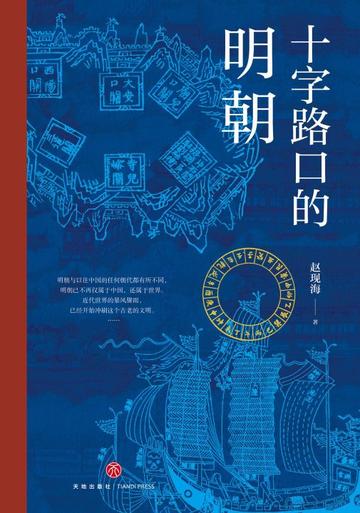

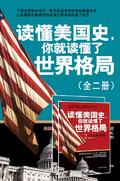

This book interprets the history of the Ming Dynasty from the perspective of global history, with novel perspectives. Through 17 typical characters and events, the author revealed the reasons for the "introversion" of the Ming Dynasty, which gave me a deeper understanding of the history of the Ming Dynasty. Just like what the book says "Taichang reign name is only used from August to December", the glory of the Ming Dynasty was fleeting and made people sigh. But it is this kind of history that makes us cherish the present time even more. Recommended to friends who are interested in history!
From the founding of the Ming Dynasty to the demise of the Ming Dynasty, this book details the process and some of the things that happened, so that we can analyze the system, military, politics, culture, history and other information of the Ming Dynasty from different perspectives.
Seeing issues from different perspectives
Very nice book