What is the coincidence and inevitability of the tragedy of Cui Hao, a large Han family?
What legacy and disaster did Emperor Xiaowen, who pushed for Chineseization, have?
What impact did the Banlu System, Land Equalization System, Three Chiefs System, and Mansion Army System have on the Sui and Tang Dynasties?
In addition to recording Buddhist temples, what other highlights does "Luoyang Jialan Ji" record?
Apart from "Mulan Ci", what else is left of the rough and plain culture of the Northern Dynasties?
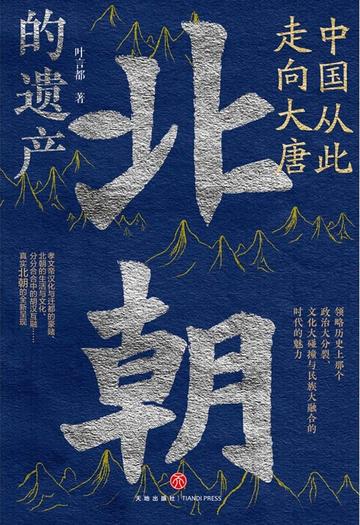
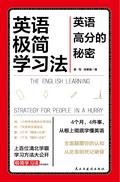
The Wei, Jin, Southern and Northern Dynasties were the famous era of great division in Chinese history. This was an era of value reorganization and system reconstruction, as well as a great cultural collision and great national integration. The Northern Dynasties, starting from the unification of the north by the Northern Wei Dynasty in 439, to the usurpation of the Northern Zhou Dynasty by Yang Jian in 581, went through the Northern Wei, Eastern Wei, Western Wei, Northern Qi, and Northern Five Dynasties, a total of 143 years.
The Xianbei people made their fortune in the great forests of the Northeast and took over the Central Plains. What is unique about their rise, power, and decline? Why did Emperor Xiaowen of the Northern Wei Dynasty, who only lived for 33 years, push forward sinicization, move the capital to Luoyang, and conduct southern expeditions at all costs, making huge political gambles with no retreat? Corresponding to the kings of the Southern Dynasties, what are the characteristics of the emperors of the Northern Dynasties? How the nomads influenced the culture of the Northern Dynasties... The more chaos the world experiences, the more we need to figure out a clue. This book will present the real Northern Dynasties in history.
Reader comments
Friends who like the Southern and Northern Dynasties are welcome to pay attention to my novel "How Mountains and Rivers Are Like They Used to Be". The plot follows the historical events of the troubled times at the end of the Northern Wei Dynasty. There were riots in the six towns of the Northern Wei Dynasty, splitting the Eastern and Western Wei Dynasties, the establishment of the Northern Zhou Dynasty and the Northern Qi Dynasty, and finally the unification of the world by the Sui Dynasty. . . However, in order not to cause trouble for serious history enthusiasts, I used fictional history and fictional characters to write.
This book gave me a deeper understanding of the Northern Dynasties. It turns out that that period was not just about war and darkness, but there was also a lot worth learning. Emperor Xiaowen's reforms and the reconstruction of various systems allowed me to see people's spirit of continuous exploration in difficult situations. The author's narration is very vivid, just like chatting with a friend, which makes it easier for me to understand that period of history. I think this book is not only suitable for people who are interested in history, but also for junior high school graduates like me. It can broaden our horizons and increase our knowledge.
It objectively presents the history of the Northern Dynasties from all angles and is well worth reading.
History cannot bear to be scrutinized.
I have a deep impression on this period of history.
It is very helpful for understanding the history of the Northern Dynasties. It is written fluently and combines description and commentary. It is worth reading.

Friends who like the Southern and Northern Dynasties are welcome to pay attention to my novel "How Mountains and Rivers Are Like They Used to Be". The plot follows the historical events of the troubled times at the end of the Northern Wei Dynasty. There were riots in the six towns of the Northern Wei Dynasty, splitting the Eastern and Western Wei Dynasties, the establishment of the Northern Zhou Dynasty and the Northern Qi Dynasty, and finally the unification of the world by the Sui Dynasty. . . However, in order not to cause trouble for serious history enthusiasts, I used fictional history and fictional characters to write.
This book gave me a deeper understanding of the Northern Dynasties. It turns out that that period was not just about war and darkness, but there was also a lot worth learning. Emperor Xiaowen's reforms and the reconstruction of various systems allowed me to see people's spirit of continuous exploration in difficult situations. The author's narration is very vivid, just like chatting with a friend, which makes it easier for me to understand that period of history. I think this book is not only suitable for people who are interested in history, but also for junior high school graduates like me. It can broaden our horizons and increase our knowledge.
It objectively presents the history of the Northern Dynasties from all angles and is well worth reading.
History cannot bear to be scrutinized.
I have a deep impression on this period of history.
It is very helpful for understanding the history of the Northern Dynasties. It is written fluently and combines description and commentary. It is worth reading.