Stats
9.2Score
66Chapters
Tags
Synopsis
Reader comments
In booklists 5
Literary Classics, Reading Classics
I want to read a book similar to "The Chief Assistant of the Empire: Zhang Juzheng".
6.3MViews685Books2dUpdated
Advanced Literary Works
Are there any novels that can be included in compositions or novels about famous people?
3.1MViews1.1kBooks3dUpdated
Are There Any... Foreign Masterpieces... Chinese Masterpieces?
2MViews783Books10dUpdated


Emmm, What Book Should I Read in the Middle of the Night? Beg!
110.9kViews122Books4dUpdated
If You Have a Good-Looking Gong Douwen, Don't Go Through Time Travel and Be Reborn, and Don't Go Through Pregnancy.
87.9kViews70Books1yUpdated
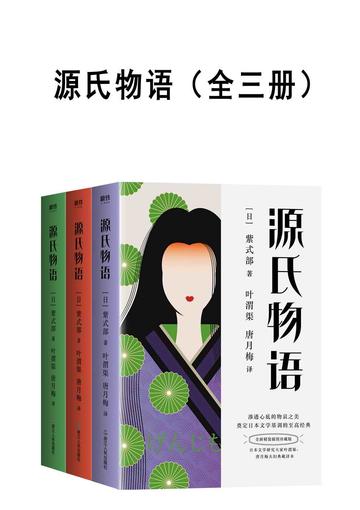
When I was in school, I read it, which is called the Japanese "Dream of Red Mansions" and is hundreds of years earlier than "Red". This book should have belonged to the category of court novels at the time, satisfying the common people's curiosity about the lives of royal aristocrats: it turns out that the daily life of the upper class consisted of poetry, secret love, worshiping Buddha, and performing rituals. The book uses probably no less than 100 "rare in the world" to describe someone who is beautiful. As for the detailed description, there is basically no description of appearance, clothing, daily life and diet. This is incomparable with "A Dream of Red Mansions", let alone the deep cultural connotation. Perhaps the most similar thing is that both have intricate character relationships. But you can learn about the Japanese society and culture at that time. If you have time, it is quite good to read it. But it is too long and it took half a month to finish it.
The whole book is elegantly written and has the charm of prose. This book is not only a Japanese classic, but also the world's earliest full-length realistic novel. It is known as the pinnacle of Japanese literature. It has had a huge impact on Japanese literature and occupies a very important position in the history of world literature. The book has a total of more than one million words, covering the lives of three generations, lasting more than seventy years, and featuring more than 400 characters. The novel mainly focuses on the story of Genji and his son Kaoru-kun, telling their life experiences and relationships with many women.
This is the earliest full-length realistic novel in the history of world literature. It is considered to represent the highest peak of Japanese classical realism literature and has provided an artistic model for the creations of later generations of writers. It shows the luxurious, luxurious, decadent and promiscuous life of the Heian Dynasty palace, reflects the struggle for power and interpersonal relationships between people in the aristocratic class, and exposes the unequal social phenomenon of aristocratic society where family status is important and men are superior to women. The greatest artistic success of this book is the creation of images of Genji and many women, and through these images it reflects aesthetic intentions such as physical sadness and secluded feelings. The characteristics of traditional Japanese aesthetics are sadness and seclusion. Seclusion means that among all kinds of human emotions, only depression, sorrow, sadness, and all unsatisfactory things are the ones that make people feel the most deeply.
The book is very good, I'm already fantasizing about having 14 wives_(:з∠)_[laughing]
It is worthy of being the pinnacle of Japanese classical literature and is worth reading more. Murasaki Shikibu's characterization is delicate and rich, and he has a strong ability to create different characters with different brushwork. Such a long novel is also the first novel in the history of world literature, and it was written relatively early. What can be imagined is how attentive Murasaki Shikibu is, the large number of Japanese songs recited in it, and what a talented female writer she is. This is the second time I have read it. It always reminds me of Dream of Red Mansions. It is also very good and outstanding. The Tale of Genji is a masterpiece of Japanese classical literature, and it deserves its title. There are so many characters, so many plot settings and ideas in the book, and the author lived in ancient Japan, so his talent is unimaginable. Very beautiful, highly recommended!
If you look at it from a modern perspective, there is no way to understand many of the plots in it. If you look at it without any emotion, you can really feel the beauty of mourning. It's well written, the plot flows smoothly, and the writing is brilliant.
This article takes emotions as the main line, with splashes of ink and colors, and detailed descriptions. The current situation is underlined, and only a few words allow readers to guess the events. This type of layout is really refreshing to me. In addition, Japan's walking marriage system at that time and the protagonist's view of marriage also made me think a lot. Comparing it with Confucius' Confucianism, I was filled with emotion.
Thanks to the translator for his hard work! This book allows readers to understand Japan's early court life and its absorption of Chinese culture.
This book is so wonderful! It depicts Genji's love story with delicate brushstrokes, which made me feel the unique charm of Japan's Heian period. Especially the sentence in the book, "The world is impermanent, like bubbles on white dew", made me deeply understand the shortness and impermanence of life. Reading this book while in love also made me cherish the happiness of the moment even more. I highly recommend you read this book too!
It's relatively bland, delicate, and complicated, but the writing is good!
Very beautifully written
The pinnacle of Japanese classical literature, the life of Genji reflects the rise and fall of the times, with elegance and delicacy, and a long lasting aftertaste.