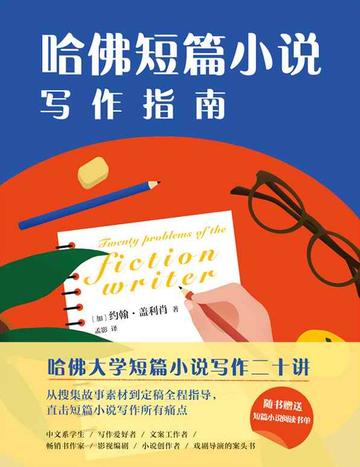
How did Maupassant, Chekhov, O. Henry, Mark Twain and other short story masters write wonderful short stories? How did literary giants such as Alice Munro and Mo Yan write classics that have been passed down to generations? In addition to extraordinary talent, is the creation of short stories justified and evidence-based?
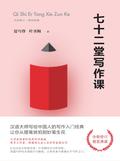
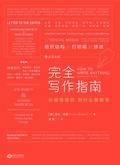
"The Harvard Short Story Writing Guide" is written by John Gallishaw, a prestigious writing professor at Harvard University, who combined his many years of experience in Hollywood writing teaching and script writing to summarize twenty writing guides that address all the pain points of short story writing. From collecting story materials, conceiving plots, drafting outlines, taking emotional notes to the finalization stage, it provides full guidance, integrating professionalism, practicality and readability.
Whether you are a professional writer or a newbie, you can quickly understand the writing logic of short stories through this book, and write interesting and exciting stories step by step.
Reader comments
Just like what is said in the book, "Novel should be able to touch people's temperament." I used to write stories that always lacked emotional resonance, but now I understand that I need to use emotions to infect readers. I feel that both new and experienced writers can get inspiration and improvement from this book. It is like a caring writing mentor, making me more confident and directional in writing short stories.
This book is of great practical value for anyone who wants to write a novel!
This is suitable for people with basic knowledge. It is suitable for people who already understand the general framework of the three-act style and want to write each scene well. The most surprising content in it is that the author introduces what a fragment is, what a fragment scene is, what a dramatic scene is, and what an encounter is. At the same time, it has always been emphasized that characters create three-dimensional images by reacting to stimulus factors, which I think is very good. Replacement initiation!
It is full of useful information, which makes people feel that writing also has rules to follow, and there are certain technical skills. However, through acquired learning and mastering, the mystery of writing novels is unveiled.
Hard core, need to read more
A classic is a classic. After reading it, I feel like I can start writing a novel.
Just like what is said in the book, "Novel should be able to touch people's temperament." I used to write stories that always lacked emotional resonance, but now I understand that I need to use emotions to infect readers. I feel that both new and experienced writers can get inspiration and improvement from this book. It is like a caring writing mentor, making me more confident and directional in writing short stories.
This book is of great practical value for anyone who wants to write a novel!
This is suitable for people with basic knowledge. It is suitable for people who already understand the general framework of the three-act style and want to write each scene well. The most surprising content in it is that the author introduces what a fragment is, what a fragment scene is, what a dramatic scene is, and what an encounter is. At the same time, it has always been emphasized that characters create three-dimensional images by reacting to stimulus factors, which I think is very good. Replacement initiation!
It is full of useful information, which makes people feel that writing also has rules to follow, and there are certain technical skills. However, through acquired learning and mastering, the mystery of writing novels is unveiled.
Hard core, need to read more
A classic is a classic. After reading it, I feel like I can start writing a novel.
Practical and maneuverable
Professional ones are different