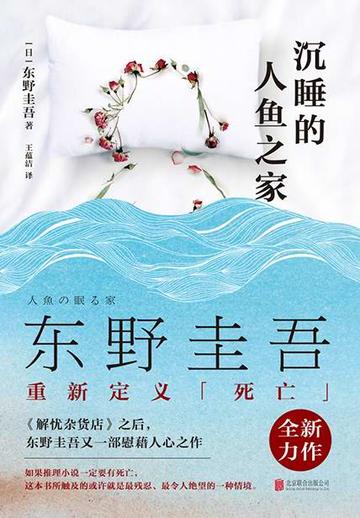
If there must be death in mystery novels, this book touches on perhaps the most cruel and desperate situation.
One incident changes a person's life. A desperate struggle like falling into a spider web, but where is the end of this darkness? Will there still be light in the world? Is Kaoruko giving up everything and insisting on protecting everything really as imagined?
The cute baby in my heart has become a terrifying monster in the eyes of others. They said I treated Mizuho like a toy and that I was playing with a dead person. I don't understand, Mizuho is obviously still alive, why do they say she is dead?
Many times, we think death is a moment, but actually death is a process. Desperate protection, distant thoughts, endless struggle. When hope turns into despair, pain is like endless darkness swallowing up life. Challenging the boundaries of human nature and morality, it is the ultimate test of love in the human heart.
Reader comments
It is very well written, whether it is logic, language, or storyline, it is very attractive to read in one sitting. When I read it, I always think of my paralyzed grandma. The care we gave her was far less than the mother in the book. Everyone was running around and failed to care and care for grandma's mental state wholeheartedly. We just simply managed her daily life. Life in a wheelchair is really boring, lonely and helpless. I hope grandma will have a safe life and grow old happily in her next reincarnation...
Xunzi is really a great mother, I was really moved by her motherly love [crying] [crying] [crying] Every character in the book is very full, and my favorite is Xiao Ruoye, she is really great and responsible [crying]
*Beware of spoilers.
The full text is not long, and it feels a little sad when you read it. I also always want to believe that Ruisui still retains consciousness during these three years and is aware of all the efforts her mother has made for herself. And what kind of mood does Xunzi have when taking photos of her daughter every year... One side is rational and the other is emotional. The pulling pain she feels is far beyond ordinary people, especially when Mizuho is brain-dead after just going out to play. The sense of unreality will always torture Xunzi... Thanks to Xunzi's persistence, she is not as weak as a dodder flower, she is the best and best mother for Mizuho.
The writing technique of Higashino's novels has always been novel. The story begins with Sogo seeing Mizuho and ends with Sogo accepting Mizuho's heart, a perfect closed loop. Among them, the ones that bring tears to the eyes are the most painful and persistent little love of a mother for her daughter, and the great love of letting go after being freed. This is the relief that Xunzi gets, and also the relief that everyone related to Mizuho gets.
After reading this book, my mood was ups and downs. From the beginning when Mizuho is drowning, she understands Xunzi's mood of seemingly moving for the sake of her daughter, hoping for a miracle; to the almost pathological feeling in the middle of letting others admit that her daughter is still alive, using technology to make a brain-dead child move her hands and feet, and not being understood; to finally calmly accepting the death of her child, calmly dealing with her daughter's funeral, and accepting organ donation to continue her life. She understood that Xunzi was not morbidly satisfying her reluctance to leave her daughter, but wanted to give her last strength as a mother. After she did everything she could, she felt the relief after her daughter said goodbye to her and thanked her. She couldn't help but sigh at the greatness of maternal love. It seems weak, but as a mother, she is strong.
I always thought that Mizuho would wake up and regain consciousness, so when I saw Mizuho completely dead at the end, I felt empty in my heart and felt that the story should not end like this. However, I discovered that the Sogo at the beginning and the Sogo at the end were connected together. I was shocked and felt that everything had a cause and effect. It was very satisfying and shocking. According to the introduction, it is a mystery novel, but I don't think it has much to do with mystery. I saw the radiance of motherhood and the awakening of goodwill connection in the themes presented by the author. For me, this is a very new novel subject, and it also sees the larger world.
This book is of great practical significance. Although it is a work by a Japanese writer, I benefited a lot from reading it and it inspired me to think about certain issues in reality. The power of literature can sometimes transcend national boundaries at a certain stage, eliminate cultural barriers, and inspire people! ! !
The stories of Keigo Higashino are always so evil that it makes people despair, but they are also so beautiful that they are suffocating.
I watched it again, it's really amazing, Keigo Higashino, really.
It's easy to understand Xunzi's feelings. As of now, my own children just go swimming and [cry]. If I had a younger sister at home, I wouldn't be able to stand it. The part about calling the police with a knife and confronting everyone was really good. Mother's greatness and wisdom!
The summary at the beginning of the article was about the final donation. Halfway through the article, I felt that even if I entered the article, I would not be reconciled or willing to donate. Then the ending was really yyds, and I could really feel the time of death when Kaoru was called, etc., And I felt that some things were a bit real.
The author is a good writer. Every article he writes is to stimulate the heart and human nature. It is worth reading.
Personally, I think it is the best book I have ever read by Higashino (surely this person should not write suspense reasoning). The description of the knife in Chapter 5 is really amazing, and the feeling of the conflict in the story reaching its peak is extremely contagious. What is real death? The complete disappearance of vital signs or the cessation of brain function. This is a question of different opinions. The author did not give a clear answer in the end and there is no need to give an answer. The process of how a mother struggled to be relieved when faced with this choice is moving enough.
"The House of Sleeping Mermaid" is a novel by the famous Japanese mystery writer Keigo Higashino. This masterpiece is not the usual ruthless murder plot, but tells a story about "life".
Mizuho Harima, a 6-year-old from a well-to-do family, was about to enter elementary school when she was judged to be close to brain death due to a drowning accident. After her mother, Kaoruko, and her father, Harima Kazumasa, decided to accept the death of their daughter and say goodbye to their daughter before leaving, they both felt Mizuho's hand move while lying on the hospital bed. Because of her daughter's reaction, Kaoruko could not give up the illusion that her daughter could recover.
It's a really touching text. I've felt sore after reading the content in the book countless times. What's most impressive are some of Keiko's actions as a mother. Reading the book reviews in it fully confirms what Keigo Higashino said is a crazy move for many people, but it's completely understandable from a mother's point of view. It's also like Keiko feels that everyone's approval is not necessary. Different ideas are also the reason why the world is so beautiful today...
All in all, this book is really heart-warming. I originally opened it with the intention of reading a suspense novel, but ended up reading it because of the delicate emotions. I felt completely healed.
Mizuho's heartbeat is also beating well in this part of the world. As a mother, this is probably the happiest thing about her existence.
This book seems to be the core of death, allowing us to see the growth process of Xunzi. In the end, he donated his organs and completely completed his self-salvation. The opening chapter takes us to spy on this mysterious sleeping girl from the perspective of a little boy, and ends with the death of the girl and donating organs to the boy, which brings a perfect end to the story. I think this book inspired me to think about whether brain death counts as death, or whether to donate organs after death, or whether technology changes destiny. Look, After that, I will think about whether I need to seek approval from others for what I want to do and what I believe. Like Xunzi, everyone thinks that what she has been guarding is a corpse. In the early stage, she tried her best to let everyone know that her daughter was not dead and wanted her to endure it normally, but this would only make her more tired and make others feel uncomfortable. Later, she figured it out on her own, and she could not impose her own ideas on others. She also had many happy moments and self-satisfaction when taking care of her daughter, and that was enough.
Really, when it comes to detective novels, I only read Higashino Keigo's novels (I don't say that other authors are bad). Of course, this book is not a detective novel, but I really like it. The plot content is very touching. I originally wanted to say a lot, but after reading it, I felt like I couldn't say anything. I was holding back tears in many places. How could this happen?
The words make people feel the weight of love in the midst of depression
The story revolves around the brain-dead girl Mizuho. Her mother, Kaoru, refuses to accept medical diagnosis and uses high technology to maintain her daughter's physical functions for three years.
It is the expression of maternal love to the extreme. When Xunzi finally lets go and donates her organs, and Mizuho's heart beats in another boy's chest, death is redefined and life continues in the form of love.
After reading this, I realized that death is not an instant, but a long process.
The real farewell is not giving up
But let love find a new destination
Thoughts after reading: The full text jumps repeatedly between law and morality, rationality and sensibility, science and miracles. It seems that there are pros and cons, but it is reconciled by the "heart", and the "heart" is the "heart" that is constantly instilled with different viewpoints and constantly criticized and self-criticized.
I am not a professional reader or writer, but I think the article has a compact structure, unexpected but logical logic. It is really worth reading!
I have known about Keigo Higashino's fame for a long time, but this book is the first time I read his works. The story is intertwined from the beginning, making people want to continue reading. The theme of this story is about death. Which is the real death, brain death or heart stopping? I believe everyone has a different view and cannot truly define death. But I still prefer the moment when the heart stops beating, because I really want to hold on to even a glimmer of hope and watch my loved ones continue to breathe, even though they may never wake up again. Although Mizuho didn't wake up miraculously in the end, she continued to live in another way.
After reading the entire book, I gained a new understanding of death. Xunzi is a truly good mother. This kind of kindness is not only the care of her children in all aspects, but also based on the respect for her daughter in her soul.
Deepseek said: In an era of rapid technological advancement, understanding the nature of life is more important than extending life. Those beating data curves may be able to delay the death of the body, but only reverence for the essence of life can allow us to maintain the warmth of humanity in the confusion of life and death. In my opinion, the existence of life is not only to complete self-realization, but also to comfort the people important to me. Life is not about length but about depth. Things are unpredictable and there are no absolutes in life. The most important thing in life is to grasp every minute and every second of the life you pursue. 🖼
Discussions about death caused by brain death, extraordinary persistence of maternal love, high-tech achievements in modern medicine, and the extraordinary circumstances of the male and female protagonists... I was deeply attracted and read it in one breath. Recommended
This is a very touching and healing book, which allowed me to witness a great mother who has reached an age where both the madness of Xunzi's "love" and the rationality of "love" of other people (such as Ruoye's father or Hechang's father) can be understood. Xunzi couldn't accept her daughter's death at first, and wanted to make others think that her daughter was not dead, so as to prove that she was right. After the quarrel, she changed her mentality and didn't care about other people's opinions. This mood changed very well. Xunzi is really a very loving, rational and crazy person, and the so-called definition of death in the book is also very interesting! Whether death is considered dead when the brain is dead or when the heart stops, it is a question that is thought-provoking. The best thing is that the beginning and end of the book match up. Whether it was Xunzi and He Chang who decided to cancel the brain-death judgment because of the so-called manual move, and then decided to be brain-dead and donate their organs because of possible "hallucinations". At the beginning, when Zong Wu saw Ruisui being attracted to Zong Wu being revived by Ruisui's heart, it gave me a feeling of echoes from beginning to end.
Using a flashback narrative technique, the whole story unfolds from the perspective of a young boy Zongwu. He sees a sleeping little girl. Out of curiosity and looking forward to seeing her again, he accidentally enters the big house and meets the girl's mother. When he saw the wheelchair, he wondered if the little girl had difficulty with her legs and feet, and why she was in a wheelchair. But it wasn't, and the girl's mother answered his question with relief. The main issue is whether the girl is dead or alive according to secular regulations after she drowned. If a brain death determination is made and it is determined that the girl is brain dead, will the girl's parents agree to organ donation? The girl's deep sleep influenced her mother's decision to leave her marriage, and brought valuable experimental data to her father's technology company so that it could later help more people with disabilities. What I saw was a mother trying her best to protect a group of children waiting for organ transplantation to start a new life. I don't know whether it is right or wrong to extend the life of an unconscious daughter. We are not that mother and have no right to criticize. It's just that you can't force others to have the same ideas as you. Everyone has different ideas, so just be yourself. The most goosebump-inducing part of the book is the story at the back where the girl's mother is pushing a wheelchair and bumps into the boy who breaks into her house, which overlaps with the beginning. Later, the girl fell asleep forever, but did not forget to sow the seeds of new life.
Beginning with a drowning accident, the entire article tells the mother's love for her child. The beginning echoes the ending. Although it ends tragically, my heart is not empty. The author also puts forward his own thoughts and understanding of the medical term "brain death".
I highly recommend this book. Every character written by Mr. Keigo Higashino in this book is very three-dimensional. The concept of this book is very novel. It is not the suspense and reasoning that we are familiar with, but it still cannot escape the analysis of human nature and social phenomena. I am amazed by the mature writing power. The ending echoes, and the foreshadowing at the beginning can always give people a knowing blow in some corner. Here, there are problems with the advanced laws regarding the diagnosis of "brain death" and "organ donation". Regarding the issue of children, the mother has just reflected it vividly. I was shocked by Xunzi, a great mother. Should her daughter really be confirmed dead? On this issue, everyone thought that Xunzi might have become a paranoid lunatic, but they didn't know that the story showed a rational and strong mother image. I also hated her in the middle of the story, thinking that Mizuho had become a puppet for Xunzi to achieve self-satisfaction. In the end, I was wrong, and I realized that everything was the desperate protection of a mother. She didn't know that her daughter would die one day, so every day she She would take the most beautiful "posthumous photos" of her daughter every month, but as a mother, she did not want to see a daughter whose heart had not stopped beating and whose body would grow over time be abandoned. She hoped that the daughter under her care would wake up, even if she could not. At the end of the book, Xunzi said, "Even if the world falls into madness, there are still things we must protect, and only mothers can go crazy for their children." Finally, I hope everyone can read this book. It is a masterpiece that is generally difficult to read.
I like Keigo Higashino so much! This book is considered a relatively niche product, haha! It tells the story of a mermaid, and the plot is wonderful. Kaoruko's many thoughts on death really give people a lot of thought and inspiration. Many times, we think death is a moment, but in fact it is a process. The pain and obsession of missing the dead may turn into darkness swallowing up life, hope and despair, living and dying. Both the language and the plot are very well written. I read it in one breath and burst into tears at the end.
This book is very good, very good. In this book, everyone has different perspectives and different senses to view and understand "brain death". Then it felt like Mizuho was in the middle between death and rebirth.
It's really good and interesting. As a medical student, I have always been resistant to thinking about death and facing death before reading this book. Although I will inevitably witness countless deaths after practicing, this book uses a particularly unique perspective to write about the subtle differences between brain death and real death. The difference is particularly moving and shocking. Reason and sensibility are intertwined. It is very touching. The part where Xunzi goes to work as a volunteer is really inspiring. I was in awe after watching it. My understanding of life and family love has improved to a higher level, and I will be more calm and calm when facing death in the future.
"The House of the Sleeping Mermaid" is not only a literary work that explores life and death, but also demonstrates the complexity of family ethics and social morality through delicate characterization and plot development. Keigo Higashino vividly demonstrates the difficult choices faced in extreme situations through ingenious plot settings and the inner conflicts and struggles of the characters. This work is both sad and warm, allowing people to face life again, and has profound literary value and social significance.
This is a gripping work of fiction. Through delicate narrative and unique imagination, the author creates a mysterious and fascinating world of mermaid house. The characters and plots in the story interweave the entanglement of love and destiny, leading readers into a fantastic adventure. This book not only makes people intoxicated with the fantasy storyline, but also inspires thinking about human nature, destiny and fantasy. A famous sentence in the book, "The mermaid's home, sleeps in the dream world" evokes our thinking and exploration of the relationship between fantasy and reality, freedom and responsibility.
This Spring Festival, I read Keigo Higashino's new work "The House of the Sleeping Mermaid". I thought I would get the usual suspense and emotional impact, but what lingered in my heart after reading the whole book was a kind of calm and rational thinking. In my opinion, this is more like a "situational experiment" on organ donation carefully designed by the author using a flesh-and-blood story.
In this experiment, each character's reaction is stripped of worldly impurities, presenting an almost "idealized" purity.
For example, the drowning accident at the beginning of the story. When an accident occurs, all loved ones are immersed in pure pain, without the usual recriminations, resentments, or anger. Only the grandmother who took care of the child had deep self-blame superimposed on the pain. What touches me even more is that other relatives, while enduring their own extreme grief, were still able to be considerate and carefully protect my grandma to prevent her from intensifying her sense of self-blame. This ability to separate and process various emotions and emotions cannot be achieved unless the heart is extremely strong and rational. This may be what the author wants to explore: in the face of extreme pain, what is the most ideal state of human nature?
Similarly, Xunzi and her husband Hechang, a couple who were about to sign a divorce agreement, were able to put aside their emotional entanglements in an instant and work together when faced with the possibility of their daughter being brain-dead. Even if they disagree on issues such as whether to accept their daughter's brain death and whether to continue to maintain vital signs, they can still give each other the deepest understanding and support. Their performance strips away the entanglements such as property and custody rights that may exist in reality, and becomes a pure expression of parental love. All their actions serve the core proposition of how to treat their "living" daughters.
Another scene in the story that touched me deeply came from a family waiting for organ donation. Their child desperately needed a heart transplant to survive. The parents' message is that they accept the reality that their children need to wait for donations, but "must never ask for or expect it." They were in a waiting position, but they expressed their understanding of the possible decision to refuse donation, and even frankly stated that before the fact happened, they could not presuppose whether they could make a decision to donate in the other party's position. This kind of rationality and empathy that completely separates one's own situation from the choices of others is almost an ideal model of morality. And when their child finally passed away without waiting for the transplant, they chose to donate, which led to another level of thinking: when love and expectation are separated, what does the pure gift of life mean?
It is these "idealized" and even "perfect" character reactions that make "The House of Sleeping Mermaid" transcend a tear-jerking family tragedy. It is like a thought experiment that removes the complicated emotional impurities in reality and allows us to look directly at the core of the problem: when there is a gap between "living" as defined by medicine and "existence" in the hearts of loved ones, how should we define love and responsibility? What kind of rational considerations and emotional struggles are intertwined behind the issue of organ donation?
Keigo Higashino did not give an answer, but the situational experiment he created allowed readers like me to conduct a calm and profound rational thinking on the love and pain of everyone in the story. This may be the greatest charm of this work.
This book allowed me to see Keigo Higashino's profound exploration of human nature and morality. Kaoruko in the story is admirable, and her persistence also reminds me of Ryoji in "White Night Journey", "There is no sun in my sky, it is always dark, but it is not dark, because something replaces the sun." Similarly, they both guard the light in their hearts in the darkness. This book is worth reading and will make you think more deeply about love and life.
It is very well written, whether it is logic, language, or storyline, it is very attractive to read in one sitting. When I read it, I always think of my paralyzed grandma. The care we gave her was far less than the mother in the book. Everyone was running around and failed to care and care for grandma's mental state wholeheartedly. We just simply managed her daily life. Life in a wheelchair is really boring, lonely and helpless. I hope grandma will have a safe life and grow old happily in her next reincarnation...
Xunzi is really a great mother, I was really moved by her motherly love [crying] [crying] [crying] Every character in the book is very full, and my favorite is Xiao Ruoye, she is really great and responsible [crying]
*Beware of spoilers. The full text is not long, and it feels a little sad when you read it. I also always want to believe that Ruisui still retains consciousness during these three years and is aware of all the efforts her mother has made for herself. And what kind of mood does Xunzi have when taking photos of her daughter every year... One side is rational and the other is emotional. The pulling pain she feels is far beyond ordinary people, especially when Mizuho is brain-dead after just going out to play. The sense of unreality will always torture Xunzi... Thanks to Xunzi's persistence, she is not as weak as a dodder flower, she is the best and best mother for Mizuho.
The writing technique of Higashino's novels has always been novel. The story begins with Sogo seeing Mizuho and ends with Sogo accepting Mizuho's heart, a perfect closed loop. Among them, the ones that bring tears to the eyes are the most painful and persistent little love of a mother for her daughter, and the great love of letting go after being freed. This is the relief that Xunzi gets, and also the relief that everyone related to Mizuho gets.
After reading this book, my mood was ups and downs. From the beginning when Mizuho is drowning, she understands Xunzi's mood of seemingly moving for the sake of her daughter, hoping for a miracle; to the almost pathological feeling in the middle of letting others admit that her daughter is still alive, using technology to make a brain-dead child move her hands and feet, and not being understood; to finally calmly accepting the death of her child, calmly dealing with her daughter's funeral, and accepting organ donation to continue her life. She understood that Xunzi was not morbidly satisfying her reluctance to leave her daughter, but wanted to give her last strength as a mother. After she did everything she could, she felt the relief after her daughter said goodbye to her and thanked her. She couldn't help but sigh at the greatness of maternal love. It seems weak, but as a mother, she is strong.
I always thought that Mizuho would wake up and regain consciousness, so when I saw Mizuho completely dead at the end, I felt empty in my heart and felt that the story should not end like this. However, I discovered that the Sogo at the beginning and the Sogo at the end were connected together. I was shocked and felt that everything had a cause and effect. It was very satisfying and shocking. According to the introduction, it is a mystery novel, but I don't think it has much to do with mystery. I saw the radiance of motherhood and the awakening of goodwill connection in the themes presented by the author. For me, this is a very new novel subject, and it also sees the larger world.
This book is of great practical significance. Although it is a work by a Japanese writer, I benefited a lot from reading it and it inspired me to think about certain issues in reality. The power of literature can sometimes transcend national boundaries at a certain stage, eliminate cultural barriers, and inspire people! ! !
The stories of Keigo Higashino are always so evil that it makes people despair, but they are also so beautiful that they are suffocating. I watched it again, it's really amazing, Keigo Higashino, really.
It's easy to understand Xunzi's feelings. As of now, my own children just go swimming and [cry]. If I had a younger sister at home, I wouldn't be able to stand it. The part about calling the police with a knife and confronting everyone was really good. Mother's greatness and wisdom! The summary at the beginning of the article was about the final donation. Halfway through the article, I felt that even if I entered the article, I would not be reconciled or willing to donate. Then the ending was really yyds, and I could really feel the time of death when Kaoru was called, etc., And I felt that some things were a bit real. The author is a good writer. Every article he writes is to stimulate the heart and human nature. It is worth reading.
Personally, I think it is the best book I have ever read by Higashino (surely this person should not write suspense reasoning). The description of the knife in Chapter 5 is really amazing, and the feeling of the conflict in the story reaching its peak is extremely contagious. What is real death? The complete disappearance of vital signs or the cessation of brain function. This is a question of different opinions. The author did not give a clear answer in the end and there is no need to give an answer. The process of how a mother struggled to be relieved when faced with this choice is moving enough.
"The House of Sleeping Mermaid" is a novel by the famous Japanese mystery writer Keigo Higashino. This masterpiece is not the usual ruthless murder plot, but tells a story about "life". Mizuho Harima, a 6-year-old from a well-to-do family, was about to enter elementary school when she was judged to be close to brain death due to a drowning accident. After her mother, Kaoruko, and her father, Harima Kazumasa, decided to accept the death of their daughter and say goodbye to their daughter before leaving, they both felt Mizuho's hand move while lying on the hospital bed. Because of her daughter's reaction, Kaoruko could not give up the illusion that her daughter could recover.
It's a really touching text. I've felt sore after reading the content in the book countless times. What's most impressive are some of Keiko's actions as a mother. Reading the book reviews in it fully confirms what Keigo Higashino said is a crazy move for many people, but it's completely understandable from a mother's point of view. It's also like Keiko feels that everyone's approval is not necessary. Different ideas are also the reason why the world is so beautiful today... All in all, this book is really heart-warming. I originally opened it with the intention of reading a suspense novel, but ended up reading it because of the delicate emotions. I felt completely healed. Mizuho's heartbeat is also beating well in this part of the world. As a mother, this is probably the happiest thing about her existence.
This book seems to be the core of death, allowing us to see the growth process of Xunzi. In the end, he donated his organs and completely completed his self-salvation. The opening chapter takes us to spy on this mysterious sleeping girl from the perspective of a little boy, and ends with the death of the girl and donating organs to the boy, which brings a perfect end to the story. I think this book inspired me to think about whether brain death counts as death, or whether to donate organs after death, or whether technology changes destiny. Look, After that, I will think about whether I need to seek approval from others for what I want to do and what I believe. Like Xunzi, everyone thinks that what she has been guarding is a corpse. In the early stage, she tried her best to let everyone know that her daughter was not dead and wanted her to endure it normally, but this would only make her more tired and make others feel uncomfortable. Later, she figured it out on her own, and she could not impose her own ideas on others. She also had many happy moments and self-satisfaction when taking care of her daughter, and that was enough.
Really, when it comes to detective novels, I only read Higashino Keigo's novels (I don't say that other authors are bad). Of course, this book is not a detective novel, but I really like it. The plot content is very touching. I originally wanted to say a lot, but after reading it, I felt like I couldn't say anything. I was holding back tears in many places. How could this happen?
The words make people feel the weight of love in the midst of depression The story revolves around the brain-dead girl Mizuho. Her mother, Kaoru, refuses to accept medical diagnosis and uses high technology to maintain her daughter's physical functions for three years. It is the expression of maternal love to the extreme. When Xunzi finally lets go and donates her organs, and Mizuho's heart beats in another boy's chest, death is redefined and life continues in the form of love. After reading this, I realized that death is not an instant, but a long process. The real farewell is not giving up But let love find a new destination
Thoughts after reading: The full text jumps repeatedly between law and morality, rationality and sensibility, science and miracles. It seems that there are pros and cons, but it is reconciled by the "heart", and the "heart" is the "heart" that is constantly instilled with different viewpoints and constantly criticized and self-criticized. I am not a professional reader or writer, but I think the article has a compact structure, unexpected but logical logic. It is really worth reading!
I have known about Keigo Higashino's fame for a long time, but this book is the first time I read his works. The story is intertwined from the beginning, making people want to continue reading. The theme of this story is about death. Which is the real death, brain death or heart stopping? I believe everyone has a different view and cannot truly define death. But I still prefer the moment when the heart stops beating, because I really want to hold on to even a glimmer of hope and watch my loved ones continue to breathe, even though they may never wake up again. Although Mizuho didn't wake up miraculously in the end, she continued to live in another way.
After reading the entire book, I gained a new understanding of death. Xunzi is a truly good mother. This kind of kindness is not only the care of her children in all aspects, but also based on the respect for her daughter in her soul. Deepseek said: In an era of rapid technological advancement, understanding the nature of life is more important than extending life. Those beating data curves may be able to delay the death of the body, but only reverence for the essence of life can allow us to maintain the warmth of humanity in the confusion of life and death. In my opinion, the existence of life is not only to complete self-realization, but also to comfort the people important to me. Life is not about length but about depth. Things are unpredictable and there are no absolutes in life. The most important thing in life is to grasp every minute and every second of the life you pursue. 🖼
Discussions about death caused by brain death, extraordinary persistence of maternal love, high-tech achievements in modern medicine, and the extraordinary circumstances of the male and female protagonists... I was deeply attracted and read it in one breath. Recommended
This is a very touching and healing book, which allowed me to witness a great mother who has reached an age where both the madness of Xunzi's "love" and the rationality of "love" of other people (such as Ruoye's father or Hechang's father) can be understood. Xunzi couldn't accept her daughter's death at first, and wanted to make others think that her daughter was not dead, so as to prove that she was right. After the quarrel, she changed her mentality and didn't care about other people's opinions. This mood changed very well. Xunzi is really a very loving, rational and crazy person, and the so-called definition of death in the book is also very interesting! Whether death is considered dead when the brain is dead or when the heart stops, it is a question that is thought-provoking. The best thing is that the beginning and end of the book match up. Whether it was Xunzi and He Chang who decided to cancel the brain-death judgment because of the so-called manual move, and then decided to be brain-dead and donate their organs because of possible "hallucinations". At the beginning, when Zong Wu saw Ruisui being attracted to Zong Wu being revived by Ruisui's heart, it gave me a feeling of echoes from beginning to end.
Using a flashback narrative technique, the whole story unfolds from the perspective of a young boy Zongwu. He sees a sleeping little girl. Out of curiosity and looking forward to seeing her again, he accidentally enters the big house and meets the girl's mother. When he saw the wheelchair, he wondered if the little girl had difficulty with her legs and feet, and why she was in a wheelchair. But it wasn't, and the girl's mother answered his question with relief. The main issue is whether the girl is dead or alive according to secular regulations after she drowned. If a brain death determination is made and it is determined that the girl is brain dead, will the girl's parents agree to organ donation? The girl's deep sleep influenced her mother's decision to leave her marriage, and brought valuable experimental data to her father's technology company so that it could later help more people with disabilities. What I saw was a mother trying her best to protect a group of children waiting for organ transplantation to start a new life. I don't know whether it is right or wrong to extend the life of an unconscious daughter. We are not that mother and have no right to criticize. It's just that you can't force others to have the same ideas as you. Everyone has different ideas, so just be yourself. The most goosebump-inducing part of the book is the story at the back where the girl's mother is pushing a wheelchair and bumps into the boy who breaks into her house, which overlaps with the beginning. Later, the girl fell asleep forever, but did not forget to sow the seeds of new life.
Beginning with a drowning accident, the entire article tells the mother's love for her child. The beginning echoes the ending. Although it ends tragically, my heart is not empty. The author also puts forward his own thoughts and understanding of the medical term "brain death".
I highly recommend this book. Every character written by Mr. Keigo Higashino in this book is very three-dimensional. The concept of this book is very novel. It is not the suspense and reasoning that we are familiar with, but it still cannot escape the analysis of human nature and social phenomena. I am amazed by the mature writing power. The ending echoes, and the foreshadowing at the beginning can always give people a knowing blow in some corner. Here, there are problems with the advanced laws regarding the diagnosis of "brain death" and "organ donation". Regarding the issue of children, the mother has just reflected it vividly. I was shocked by Xunzi, a great mother. Should her daughter really be confirmed dead? On this issue, everyone thought that Xunzi might have become a paranoid lunatic, but they didn't know that the story showed a rational and strong mother image. I also hated her in the middle of the story, thinking that Mizuho had become a puppet for Xunzi to achieve self-satisfaction. In the end, I was wrong, and I realized that everything was the desperate protection of a mother. She didn't know that her daughter would die one day, so every day she She would take the most beautiful "posthumous photos" of her daughter every month, but as a mother, she did not want to see a daughter whose heart had not stopped beating and whose body would grow over time be abandoned. She hoped that the daughter under her care would wake up, even if she could not. At the end of the book, Xunzi said, "Even if the world falls into madness, there are still things we must protect, and only mothers can go crazy for their children." Finally, I hope everyone can read this book. It is a masterpiece that is generally difficult to read.
I like Keigo Higashino so much! This book is considered a relatively niche product, haha! It tells the story of a mermaid, and the plot is wonderful. Kaoruko's many thoughts on death really give people a lot of thought and inspiration. Many times, we think death is a moment, but in fact it is a process. The pain and obsession of missing the dead may turn into darkness swallowing up life, hope and despair, living and dying. Both the language and the plot are very well written. I read it in one breath and burst into tears at the end.
This book is very good, very good. In this book, everyone has different perspectives and different senses to view and understand "brain death". Then it felt like Mizuho was in the middle between death and rebirth.
It's really good and interesting. As a medical student, I have always been resistant to thinking about death and facing death before reading this book. Although I will inevitably witness countless deaths after practicing, this book uses a particularly unique perspective to write about the subtle differences between brain death and real death. The difference is particularly moving and shocking. Reason and sensibility are intertwined. It is very touching. The part where Xunzi goes to work as a volunteer is really inspiring. I was in awe after watching it. My understanding of life and family love has improved to a higher level, and I will be more calm and calm when facing death in the future.
"The House of the Sleeping Mermaid" is not only a literary work that explores life and death, but also demonstrates the complexity of family ethics and social morality through delicate characterization and plot development. Keigo Higashino vividly demonstrates the difficult choices faced in extreme situations through ingenious plot settings and the inner conflicts and struggles of the characters. This work is both sad and warm, allowing people to face life again, and has profound literary value and social significance.
This is a gripping work of fiction. Through delicate narrative and unique imagination, the author creates a mysterious and fascinating world of mermaid house. The characters and plots in the story interweave the entanglement of love and destiny, leading readers into a fantastic adventure. This book not only makes people intoxicated with the fantasy storyline, but also inspires thinking about human nature, destiny and fantasy. A famous sentence in the book, "The mermaid's home, sleeps in the dream world" evokes our thinking and exploration of the relationship between fantasy and reality, freedom and responsibility.
This Spring Festival, I read Keigo Higashino's new work "The House of the Sleeping Mermaid". I thought I would get the usual suspense and emotional impact, but what lingered in my heart after reading the whole book was a kind of calm and rational thinking. In my opinion, this is more like a "situational experiment" on organ donation carefully designed by the author using a flesh-and-blood story. In this experiment, each character's reaction is stripped of worldly impurities, presenting an almost "idealized" purity. For example, the drowning accident at the beginning of the story. When an accident occurs, all loved ones are immersed in pure pain, without the usual recriminations, resentments, or anger. Only the grandmother who took care of the child had deep self-blame superimposed on the pain. What touches me even more is that other relatives, while enduring their own extreme grief, were still able to be considerate and carefully protect my grandma to prevent her from intensifying her sense of self-blame. This ability to separate and process various emotions and emotions cannot be achieved unless the heart is extremely strong and rational. This may be what the author wants to explore: in the face of extreme pain, what is the most ideal state of human nature? Similarly, Xunzi and her husband Hechang, a couple who were about to sign a divorce agreement, were able to put aside their emotional entanglements in an instant and work together when faced with the possibility of their daughter being brain-dead. Even if they disagree on issues such as whether to accept their daughter's brain death and whether to continue to maintain vital signs, they can still give each other the deepest understanding and support. Their performance strips away the entanglements such as property and custody rights that may exist in reality, and becomes a pure expression of parental love. All their actions serve the core proposition of how to treat their "living" daughters. Another scene in the story that touched me deeply came from a family waiting for organ donation. Their child desperately needed a heart transplant to survive. The parents' message is that they accept the reality that their children need to wait for donations, but "must never ask for or expect it." They were in a waiting position, but they expressed their understanding of the possible decision to refuse donation, and even frankly stated that before the fact happened, they could not presuppose whether they could make a decision to donate in the other party's position. This kind of rationality and empathy that completely separates one's own situation from the choices of others is almost an ideal model of morality. And when their child finally passed away without waiting for the transplant, they chose to donate, which led to another level of thinking: when love and expectation are separated, what does the pure gift of life mean? It is these "idealized" and even "perfect" character reactions that make "The House of Sleeping Mermaid" transcend a tear-jerking family tragedy. It is like a thought experiment that removes the complicated emotional impurities in reality and allows us to look directly at the core of the problem: when there is a gap between "living" as defined by medicine and "existence" in the hearts of loved ones, how should we define love and responsibility? What kind of rational considerations and emotional struggles are intertwined behind the issue of organ donation? Keigo Higashino did not give an answer, but the situational experiment he created allowed readers like me to conduct a calm and profound rational thinking on the love and pain of everyone in the story. This may be the greatest charm of this work.
This book allowed me to see Keigo Higashino's profound exploration of human nature and morality. Kaoruko in the story is admirable, and her persistence also reminds me of Ryoji in "White Night Journey", "There is no sun in my sky, it is always dark, but it is not dark, because something replaces the sun." Similarly, they both guard the light in their hearts in the darkness. This book is worth reading and will make you think more deeply about love and life.