Stats
5.8Score
Synopsis
No synopsis yet.
We haven’t got an English blurb for this one. It appears once the source description has been translated.
Reader comments
In booklists 4
Finished the Book, I Have the Desire to Read It
Infinite Evolution, Death Train, Resistance Ability, Mental Hospital Killing God, Young and Old, Southeast, System, and other things that are not annoying to watch.
169.6MViews355Books1dUpdated
Looking for High-Quality Historical War Writings
35.2MViews376Books18hUpdated
"Why hasn't he fallen yet?" "Because behind him is the motherland."
18.4MViews383Books4moUpdated
European Background
Looking for a bibliography on European background
1.6MViews92Books1moUpdated
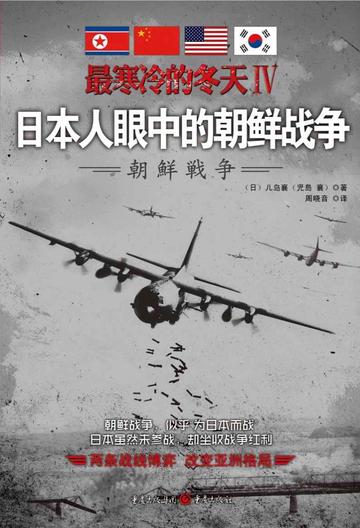
Be fair and non-judgmental. Get another perspective on the real Korean War.
This book is composed of three parts: the first part describes the situation of the Korean and Korean troops in the early stages of the war and the intervention of the United States. This part contains some information that we rarely see; the second part, the Chinese People's Volunteers joined the battlefield to support the Korean people, focusing on the combat situation between the US military and the Chinese Volunteers; the last part, the war reached a stalemate, various countries looked for opportunities for peace talks, and finally signed an armistice agreement at Panmunjom. The author is a journalist and has interviewed many participants in the war. The writing is well written and logical, and it objectively shows that period of history from another perspective. But the translation is average.
I listened to Pharaoh's "The River Flows 1952" a while ago, and I wanted to understand the history of resisting U. S. Aggression and aiding Korea again, so I saw this book among a pile of books. It is more appropriate to say it from the Korean perspective rather than from the Japanese perspective. It's documentary-oriented. Because of the different positions, the entire article praises the US and South Korean troops more, but it also adds details about the situation before our troops entered North Korea, the huge disparity in the number of people between North and South Korea, etc. But I don't know whether it's a translation problem or insufficient documentation. The names of many Chinese and North Korean commanders are wrong, including our country's top commander on the battlefield. Because the positions are different, the content is somewhat unobjective. If you just want to understand the Korean War from a different perspective, you can also watch it.
Recording the Korean War from a Japanese perspective is a completely new experience and a very new perspective. It accurately and comprehensively records the beginning and end of the war from when the North Korean army broke through the 38th Parallel on June 25, 1950, to when the warring parties formally signed an armistice agreement on July 27, 1953. Using time as a clue, historical data as a basis, and interviews as support, it objectively presents that wonderful war history. After reading it, I gained a lot and learned a lot. I recommend this book to anyone who is interested in this period of history.
This author really loves MacArthur! Thank you translator
Although I don't understand it, I still want to support it!
Looking at the War to Resist U. S. Aggression and Aid Korea from the Enemy's Perspective
Although it cannot be fully described due to various reasons, the insights are pertinent and impartial!
In Japan, the Korean War is regarded as an important historical event, which had a profound impact on Japan's post-war reconstruction and the geopolitical pattern of the Cold War. The Korean War led to the division of the Korean Peninsula, forming two independent countries, North and South. For Japan, the security and stability of the Korean Peninsula are crucial to its national security and regional security. In Japanese history education, the Korean War is often viewed as an event closely related to the Cold War, showing the tensions and conflicts in East Asia at the time.
This book is quite interesting. It looks at the Korean War from a Japanese perspective. The first part is a brief introduction to the war, the second part talks about the Chinese Volunteer Army, and the third part is about the final armistice agreement. After reading this book, I have a deeper understanding of the causes, processes and results of the Korean War. The most unique thing about this book is that it incorporates the views of many war witnesses on the war, rather than simply listing historical materials. The author's discussion of the nature of the Korean War is also very exciting. Highly recommended to everyone.
Different vision, the feeling of the enemy. I also saw the greatness of the volunteers. The nameless flesh and blood bodies are monuments, paying tribute to the heroes and ancestors and martyrs!
Evaluate after listening
Interpretation from different perspectives
It is worth watching to know the actual situation of the United States at that time.
Looking at a period of history from a third-party perspective is definitely the most objective. Worth reading
The statement is objective and without any hostile input, especially the recognition of powerful benefits. It is worth reading.
Learn about historical information
Learn about the War to Resist U. S. Aggression and Aid Korea from the other side. Salute to the heroes 🫡!
This text is true and introduces the revolutionary spirit of the Chinese people to unite with one heart and one mind to defend the motherland. It shows that China is a great motherland that cannot be driven away from each other.
True, wonderful, auspicious
It's well written, you can read it.
Keep watching, it's not bad.
Different angles Different positions The results are naturally different
This book is written relatively objectively, but I just felt it was a bit too detailed and wordy.
Objectively shows that wonderful war history!
So wonderful! ! So true! !
Not bad, relatively optimistic!
Looks pretty good
The plot is compact and exciting.
Not bad, at least it's a perspective