Stats
5.8Score
Synopsis
No synopsis yet.
We haven’t got an English blurb for this one. It appears once the source description has been translated.
We haven’t got an English blurb for this one. It appears once the source description has been translated.





A documentary book makes public the experience of life in a concentration camp and comfort women. The protagonist's experience is tragic, and every detail is outrageous. At the same time, he is lucky. It is a miracle that he survived, and he is also brave. It takes a lot of courage to publish his experience to the world, but it is not appropriate. How can you forgive those beasts? In short, it is still very helpful to understand that period of history.
∞After reading this book, I felt very heavy. The harm caused by war is always women and children! Although the crimes of the Japanese happened to people in the previous life. But they cannot be forgiven because they did not understand the mistakes made by history! Yang, the protagonist of this book, understands. But many Chinese victims will not forgive them for the burning, killing, looting and abuse they committed in China over the past eight years! For example, the Nanjing Massacre will be remembered by every Chinese person! Keep history in mind and the people of the country will strengthen themselves!
May history not repeat itself.
I finished reading it in one night. I admire it very much. I also hope that more people like Tom can understand their cry and save them. Too much concept of chastity is not a good thing. Today there are still people who use the term "comfort women" to insult people. They really do not deserve to be human beings. Many Japanese women have also become "comfort women", and some Japanese are the ones who are guilty. Japan is running away to this day, and the fact that the Yasukuni Shrine is still there shows that they have not repented. Today, when I advocate peace, I still hope that Japan will disappear [laughs awkwardly]. After all, the nuclear wastewater has been discharged, and the whole world is a victim.
Never forget history and the pain caused by war
How can I "forgive" when I feel so full of grief! The fruits of peace are so hard to come by, so we must use all our strength to guard them!
Give it a five-star rating. As younger generations, we cannot forgive our ancestors for the harm they have suffered. We also cherish the hard-won present even more. We will have no regrets in this life.
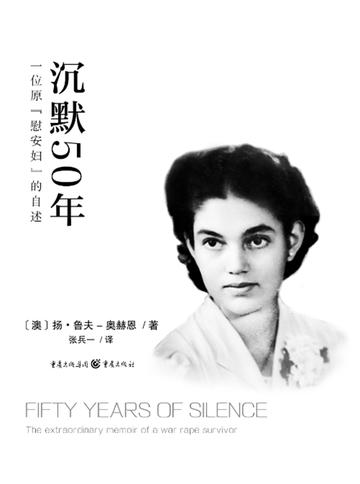
This is the autobiography of a former "comfort woman". I always thought this group only included East Asian women, but I didn't expect it to include Dutch people. After being silent for 50 years, the author finally had the opportunity and courage to make this experience public. Fifty years after the terrible experience, the author got on a plane bound for Japan for the first time and still felt terrified when he heard the Japanese airport announcement, which shows the sadness and tragedy of this experience. They are victims of war and a group of people who have been deeply hurt. They are getting older, but history cannot be buried. We are with them, waiting for a real apology.
After reading it, I feel respect for the author for writing this book. The five stars are for more people to see. God will bless you.
I felt heavy after reading this book. This book really made me feel the ugliness of the Japanese! Deep sympathy and sorrow for those innocent people! I can't imagine what it would be like if this happened to me. I hope there will be peace in the world and no war! The last word - don't forget the national humiliation
"Don't Forget the National Humiliation" made me very sad. There were some parts in the middle where I couldn't stop crying. The author can forgive them and what they have done, but we can't. The lives of more than 300,000 of our compatriots in Nanjing do not allow every Chinese to forgive them (the Japanese).
The war has brought endless pain and disaster and devastated the people. Peace is hard-won. I am lucky to be born in a peaceful era and a strong country without war or displacement. I finished reading this book with a heavy and complicated heart, and I feel deep sympathy for those who were hurt. I can't imagine what kind of life people lived in that era, where hunger, disease, and humiliation coexisted. The various atrocities committed by the Japanese are unforgivable! Don't forget the national humiliation, let us strengthen ourselves!
We all know what "comfort women" is. Usually when we read about this term, it is mostly in some history or some books about the Second World War. Or it could be a condemnation of the harm done to women when Japan invaded our country. But what is different in this book is that it comes from the autobiography of a comfort woman. She told her tragic experience. It also accused the Japanese of cruelty. The protagonist in the book is a wealthy daughter. Decades later, he used the identity of the original victim to expose various crimes of Japanese aggression.
We cannot forgive our ancestors!
Remember the history, don't forget the national humiliation, let us strive for self-improvement
Twelve short chapters are a very painful life for many people [crying] I hope there will be peace in the world and no more wars
Reading this book made me feel very heavy, and I couldn't calm down after reading it. Don't forget the national humiliation.
I read this book with great sadness. There is always one sentence in my mind: don't forget the national humiliation
Faith is what keeps her alive. Forgiveness was a choice she made for inner peace. After experiencing such pain, she remained strong. She never stopped speaking out, never gave up. She was the first victim of the European "comfort women" system to speak out, and she stood with her friends in Asia. They protested together and worked together. Perhaps in the eyes of ordinary people, some of her choices are a bit difficult to understand, but as those of us who have never experienced it, who are we qualified to evaluate? The aggressors, criminals, and aggressor countries have not bowed their heads, they have not repented, and the victims are slowly leaving. I wonder when the so-called justice will come? (Before reading this book, I always thought that only Asians suffered this kind of harm. I didn't expect that in the face of war, women regardless of country cannot avoid it.) If war is always present, then rape cannot be taken for granted. It is a crime, a sin that must be punished.
Alas, there is nothing to say, don't forget the national humiliation!
It's so depressing to watch... I've been dreaming about this, and I feel very immersed in it.
2023.9.30 13 Years old I think this book is quite meaningful. I always thought that the comfort women group only existed in China. All I can say is that I underestimated them. I think the saddest thing about this book is not that the Japanese forced them to be comfort women but that the Japanese did not think that the deputy committee member's approach was wrong. They believe that women should be X's slaves during war. They thought it was normal, another service you got as a Japanese officer. They couldn't hear the girl's screams, couldn't see the girl's resistance. They still paranoid that this is normal. I also saw a lot of people arguing over whether she should put it down. All I can say is that I express my own opinions. Zuo Che is a kind-hearted girl. The religion she believes in tells her that you should choose forgiveness. I think forgiveness is what he has determined in his heart that he must do. The kindness in his subconscious told her that I should choose forgiveness. I think we are not qualified to criticize her. He was already over fifty years old, and at that time, he was already half a person who wanted to put him in the coffin. She also found the justice in her heart. He has suffered for decades and it is time to let go. At least in his old age, it cannot be just the Japanese military officers who once ravaged and destroyed him. His old age life should be leisurely and comfortable. Zhengzheng destroyed him for decades. I hope he is happy for the rest of his time. There is no absolute right or absolute wrong in this world. Although this sentence is also absolute, I still believe in it. Of course, if he puts it down, it means we have to let it go. They can forgive but we are not qualified. The Anti-Japanese War has only passed a few years ago. Who are we to ask them to forgive us? Finally, I hope the world will always be peaceful, war and suffering will not befall people.
I can't look at it anymore, I have to cry die.
A journey of life intertwined with joy and sorrow. Especially after the Japanese invaders occupied Java, the author was sent to a concentration camp and became a comfort woman. People watching were very sad and angry. The silence after the war does not mean forgetting, but is unwilling to open the shameful scars; 50 years later, bravely breaking the silence, using forgiveness to expose the crimes of the Japanese invaders - the bumpy life of a former "comfort woman". The author tells the readers about his ups and downs of more than seventy years of life in the first person and in chronological order.
Do not forget the national humiliation, remember the mission, and revitalize China. Those who offend China will be punished no matter how far away they are. Those who offend China will perish their country, destroy their species, and exterminate their descendants [crying]
We are not qualified to forgive them for our predecessors! Don't forget the national humiliation!
History cannot be forgotten!
History cannot be forgotten, remember history
Don't forget the national humiliation Don't forget the national humiliation Don't forget the national humiliation
There is nothing to explain, don't forget the national humiliation