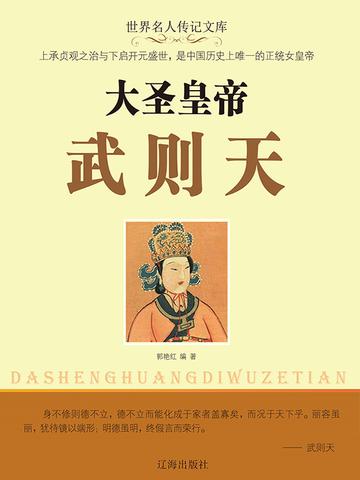
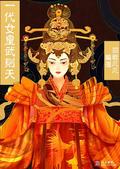
Wu Zhao[zhào][1] (624-December 16, 705[2]), also known as Wu Zetian, was born in Wenshui, Bingzhou (now Wenshui County, Shanxi Province). A politician from the Tang Dynasty to the Wu Zhou Dynasty, the founding monarch of the Wu Zhou Dynasty (reigned from 690 to 705), she was also the only orthodox female emperor in Chinese history, the oldest emperor to ascend the throne (67 years old), and one of the longest-lived emperors (82 years old).
Wu Zetian was the second daughter of the warrior Xun, the governor of Jingzhou. He entered the harem at the age of fourteen and was a talented person of Emperor Taizong of the Tang Dynasty, and was given the title "Wu Mei"[3]. During the reign of Emperor Gaozong of the Tang Dynasty, Zhaoyi was granted the title of Zhaoyi, and in the sixth year of Yonghui (655), she became the queen after the "Abolition of the King and Liwu" incident. [4] In the first year of Shangyuan (674), he was given the title of "Tianhou", and together with Gaozong, he was called the "Two Saints" and participated in the government affairs. After the death of Emperor Gaozong, he became the empress dowager of Tang Zhongzong and Tang Ruizong. [5]
In the first year of Tianshou (690), Wu Zetian proclaimed himself emperor, changed the name of the country to Zhou, made Luoyang the capital, called the "Shen Capital", and established Wu Zhou. Before and after his reign, he was "clearly aware and good at making judgments", had many powers and strategies, knew people well and assigned them well, attached great importance to the selection of talents, and created the system of imperial examinations, military examinations and official examinations. He also rewarded farmers and mulberry trees and reformed the administration of officials. At the same time, the Tang Dynasty clan was massacred and "cruel official politics" emerged. Militarily, the four towns of Anxi were recovered and stabilized, and the Turks surrendered for a time. In his later years, he gradually became extravagant and arbitrary, and developed bad governance.
In the first year of Shenlong (705), Wu Zetian died of illness. Prime Minister Zhang Jianzhi and others launched the "Shenlong Revolution" to support the restoration of Tang Zhongzong and forced him to abdicate. After Zhongzong restored the Tang Dynasty, he was given the title "Emperor Zetian the Great Sage". In November of the same year, Wu Zetian died in Shangyang Palace.