The real history is often distorted through the interpretation of later novels, operas and other forms. In addition, readers' understanding of traditional inherent thinking often leads to many prejudices or misunderstandings about history, such as:
Did Marco Polo ever visit China? Are his travel notes a travel novel pieced together from fantasy?
When Du Fu was alive, why did no one repost or appreciate his poems?
Did the GDP of the Song Dynasty really account for 60%-80% of the world's?
Is the author of "Journey to the West" Wu Chengen?
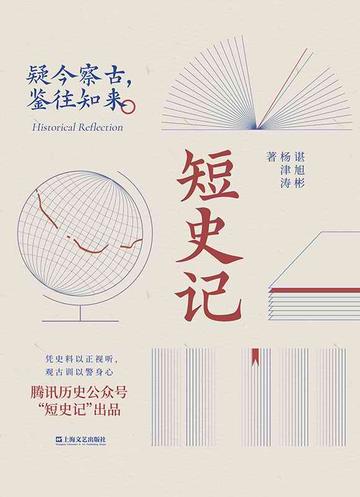
The author of this book quotes classics, consults a large number of historical materials, and uses the rigorous attitude of "doubting the present to examine the past, and learning from the past to know the past", and uses the method of historical textual research to reveal the truth of history for everyone.
Reader comments
The author wrote this book to effectively explain that history is not much different from wipes, and its value is limited. Especially for ordinary people, it is just a novel. Don't believe too much in the so-called history. You must also see the world with your own eyes, listen with your own ears, perceive with your own heart, and believe in yourself. Don't be fooled by so-called ancients, saints, authority, experience, etc. The human heart is separated by the belly, let alone history, by the endless universe.
Good book, good book! I refuted many rumors, and I usually have a sharp eye. I thought I would not be deceived by these weird historical materials and rumors, but I didn't expect that I believed some of them myself! Many thanks to the author!
This book is interesting and reveals a lot of historical truths. Just like I always thought that Marco Polo had visited China, it was only after reading this book that I realized that there was still controversy. The author's writing style is rigorous yet humorous, which made me think more about history while understanding it. And a lot of the content in the book resonated with me, such as the challenge to some traditional thinking. I think this book is not only suitable for people who are interested in history, but also for people like me who want to find the truth.
This book helped me gain knowledge: In the pre-Qin period, people often sat on seats with their buttocks pressed against their heels in their daily lives. If you want to kneel down, you must straighten your waist and let your buttocks leave your heels. This kneeling ceremony can be divided into three types. One is called "Supreme Bow", in which the person who salutes raises his hands and touches the ground; the other is called "Standing His Head", in which the person who salutes touches his hands to the ground and then rests his head on his hands; the third type is called "Ji Shou", in which the person who salutes must touch his head directly to the ground. From today's perspective, these three kinds of kneeling rituals can generally be regarded as "kowtowing".
The author Chen Xubin, male, is the chief editor of Tencent Literature and History Channel. His publications include "Two Thousand Years of Qin System" and so on. Later, he served as the editor-in-chief of the "Tencent News·Short History" column.
"Short History" was originally a column. Later, the contents were selected from that column and compiled into a volume, forming the current "Short History".
The column "Short History" was started because there was a lot of "historical common sense" circulating in the Chinese intellectual community that was far from historical facts. Editor Chen Xubin and others had been dealing with this false common sense for a long time and frequently, which prompted them to decide to create a column to "expose the shortcomings of false history." Thus, there was the "Short Historical Records" column, and this book was born.
There is reason and evidence, enough to stop the rumors from the wise.
This book has vivid language and rich historical materials. The purpose of this book is to eliminate the false and retain the true. In order to achieve the purpose, the author distinguishes the levels of historical information sources. For example, some information comes from official history and some comes from hearsay. The author also distinguishes between "facts" and "opinions." The author also tells us to be restrained in interpreting historical materials. On this basis, this book peels away the mysteries of history layer by layer and tells readers that the facts we think are actually doubtful. After reading this book, we will find that much of what we have learned before is pseudo-history!
Helped me clear up many misunderstandings.
Very good and well-founded
It's beautiful. I think the history in the form of short stories is very interesting [Love]
Know something from the smallest details, use small skills to learn from small things
The author wrote this book to effectively explain that history is not much different from wipes, and its value is limited. Especially for ordinary people, it is just a novel. Don't believe too much in the so-called history. You must also see the world with your own eyes, listen with your own ears, perceive with your own heart, and believe in yourself. Don't be fooled by so-called ancients, saints, authority, experience, etc. The human heart is separated by the belly, let alone history, by the endless universe.
Good book, good book! I refuted many rumors, and I usually have a sharp eye. I thought I would not be deceived by these weird historical materials and rumors, but I didn't expect that I believed some of them myself! Many thanks to the author!
This book is interesting and reveals a lot of historical truths. Just like I always thought that Marco Polo had visited China, it was only after reading this book that I realized that there was still controversy. The author's writing style is rigorous yet humorous, which made me think more about history while understanding it. And a lot of the content in the book resonated with me, such as the challenge to some traditional thinking. I think this book is not only suitable for people who are interested in history, but also for people like me who want to find the truth.
This book helped me gain knowledge: In the pre-Qin period, people often sat on seats with their buttocks pressed against their heels in their daily lives. If you want to kneel down, you must straighten your waist and let your buttocks leave your heels. This kneeling ceremony can be divided into three types. One is called "Supreme Bow", in which the person who salutes raises his hands and touches the ground; the other is called "Standing His Head", in which the person who salutes touches his hands to the ground and then rests his head on his hands; the third type is called "Ji Shou", in which the person who salutes must touch his head directly to the ground. From today's perspective, these three kinds of kneeling rituals can generally be regarded as "kowtowing".
The author Chen Xubin, male, is the chief editor of Tencent Literature and History Channel. His publications include "Two Thousand Years of Qin System" and so on. Later, he served as the editor-in-chief of the "Tencent News·Short History" column. "Short History" was originally a column. Later, the contents were selected from that column and compiled into a volume, forming the current "Short History". The column "Short History" was started because there was a lot of "historical common sense" circulating in the Chinese intellectual community that was far from historical facts. Editor Chen Xubin and others had been dealing with this false common sense for a long time and frequently, which prompted them to decide to create a column to "expose the shortcomings of false history." Thus, there was the "Short Historical Records" column, and this book was born.
There is reason and evidence, enough to stop the rumors from the wise.
This book has vivid language and rich historical materials. The purpose of this book is to eliminate the false and retain the true. In order to achieve the purpose, the author distinguishes the levels of historical information sources. For example, some information comes from official history and some comes from hearsay. The author also distinguishes between "facts" and "opinions." The author also tells us to be restrained in interpreting historical materials. On this basis, this book peels away the mysteries of history layer by layer and tells readers that the facts we think are actually doubtful. After reading this book, we will find that much of what we have learned before is pseudo-history!
Helped me clear up many misunderstandings.
Very good and well-founded
It's beautiful. I think the history in the form of short stories is very interesting [Love]
Know something from the smallest details, use small skills to learn from small things
Well-founded and innovative!