"The Case of Di Gong of the Tang Dynasty" successfully created "China's Sherlock Holmes" and was translated into and published in many foreign languages, leaving a significant mark in the history of cultural exchanges between China and the world.
Fifteen versions of the translated version of "The Case of Di Gong of the Tang Dynasty" are planned to be published. Zhang Ling, who has studied Gao Luopei for many years, is responsible for the translation and writes annotations and postscripts that are both academic and readable. It is currently the only version on the market that has been independently translated by one person.
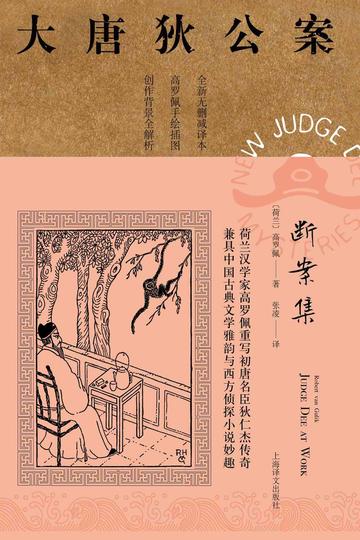
The second volume of "The Case of Di Gong of the Tang Dynasty" includes "The Lacquer Screen Case", "Chaoyun Temple", "The Red Mansion Case", "The Royal Pearl Case" and "The Case Collection". Each volume is equipped with illustrations created by Gao Luopei himself, full of ancient charm and pleasing to the eye.
"Collection of Cases" includes eight short stories.
"Five Auspicious Clouds" tells the story of Di Gong who alone investigated the suicide case of Mrs. He in 663 AD when he was the magistrate of Penglai County;
"Official Document Case" tells the story of how in 663 AD, when Di Gong was appointed magistrate of Penglai County, Ma Rongqiaotai assisted him in investigating the murder of President Su Ba;
"Guest in the Rain" tells the story of Di Gong who alone investigated the murder of a pawnshop owner in 663 AD when he was the magistrate of Penglai County;
"The Lotus Pond Case" tells the story of the murder of the old poet Meng Lan in AD 667, when Di Gong was appointed magistrate of Hanyuan County, assisted by Ma Rong;
"Two Beggars" tells the story of how Di Gong and Hong Liang investigated the murder of a teacher on January 15, 669 AD when he was the magistrate of Puyang County;
"The Deadly Sword" tells the story of Di Gong, who was the magistrate of Puyang County in 669 AD, and Ma Rongqiaotai, who investigated the murder of a young busker;
"The Prince's Coffin" tells the story that in 672 AD, when Di Gong was appointed as the magistrate of Lanfang County, he single-handedly solved two mysterious cases in Dashikou County;
"The New Year's Eve Case" tells the story of Di Gong who solved a bizarre case alone in 674 AD when he was the magistrate of Lanfang County.
Reader comments
Very nice and easy to understand.
The plot of this book is fascinating, but the key points of Judge Dee's case are not clearly explained.





Very nice and easy to understand.
The plot of this book is fascinating, but the key points of Judge Dee's case are not clearly explained.