On October 7, 1967, Che Guevara wrote these words in his diary: "Today is the eleventh month anniversary of the establishment of the guerrilla armed forces. I spent the morning relaxed and leisurely, just like enjoying pastoral life, without any trouble."
Little did he know that this would be his last diary entry.
During the battle of the Yuro Valley the next day, Che was wounded and captured, falling into the hands of Bolivian government forces. He was executed without trial the next day, and his body was hidden by the authorities. The diary was found in his backpack.
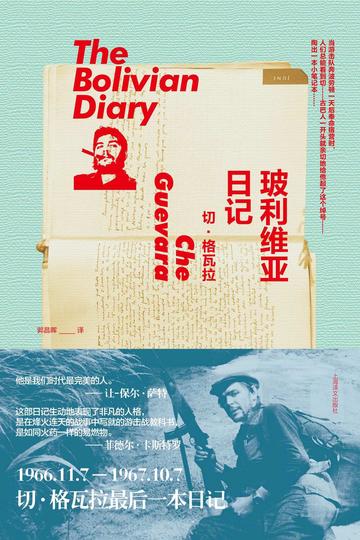
"Bolivia Diary" is the most original and important material witnessing the last stage of Che Guevara's life. After being translated quickly and without modification, it has been widely circulated around the world. It meticulously reproduces the thrilling guerrilla warfare experience in the mountains of Bolivia, from entering Bolivia in secret disguise, to surveying the terrain, developing underground workers, fierce battles in dense forests, valleys, and river mouths, encounters with enemies, and sacrifices of teammates... It can be called a guerrilla warfare textbook. It also includes more than 30 rare photos that have never been published publicly in China, showing the daily life and battle scenes of the guerrillas. Here readers can see Guevara's disguised fake passport, guerrillas watching on the treetops, Guevara organizing his rifles by the river, etc.
The film "Che Guevara: Part Two" directed by Spielberg is based on the history described in "Bolivia Diary". Deltero, who played Guevara in the film, won the Best Actor at Cannes for this film.
Reader comments
2026.8.13.8.00
The ideal is to rely on the successful experience of the Cuban revolution, firmly believe in the "guerrilla-centered theory", and use the capabilities of an elite team of dozens of people to awaken the poor peasants of Bolivia, overthrow the US military dictatorship, and create a second revolutionary base. The reality is that individuals are incompatible with the local environment and the masses are divided. Internal divisions. The diary stopped two days before he was captured. On October 8, 1967, Guevara was wounded and captured. He was secretly executed without trial the next day. A pure battlefield journal, recorded item by item by date.
External line: changes in the power of the enemy and ourselves, shrinking geographical space, and continued depletion of survival resources; internal line: Guevara's personal spiritual changes - from determination to win → self-doubt → recognizing reality → sticking to faith and dying calmly.
Reducing revolution to a "military tactical issue", ignoring local social structures, land conflicts, folk languages, and local factional differences, and using a single template to apply to all Latin American countries is essentially dogmatic idealism. No matter how lofty the vision is, without the deep recognition and active participation of grassroots users, the core team will definitely fall into isolation and resource depletion if the core team works alone. Under extreme difficulties, the more scarce external materials are, the more we must stick to the core original intention; but adhering to beliefs does not mean stubbornness. Learning to adapt flexibly and proactively integrate is the key to long-term success.
This "Bolivia Diary" truly records Guevara's guerrilla life, giving us a deeper understanding of his experiences and thoughts. The writing style is concise and vivid, the characters are vivid, and you can feel his determination and bravery. This is not only a book about war, but also a paean to ideals and beliefs.

2026.8.13.8.00 The ideal is to rely on the successful experience of the Cuban revolution, firmly believe in the "guerrilla-centered theory", and use the capabilities of an elite team of dozens of people to awaken the poor peasants of Bolivia, overthrow the US military dictatorship, and create a second revolutionary base. The reality is that individuals are incompatible with the local environment and the masses are divided. Internal divisions. The diary stopped two days before he was captured. On October 8, 1967, Guevara was wounded and captured. He was secretly executed without trial the next day. A pure battlefield journal, recorded item by item by date. External line: changes in the power of the enemy and ourselves, shrinking geographical space, and continued depletion of survival resources; internal line: Guevara's personal spiritual changes - from determination to win → self-doubt → recognizing reality → sticking to faith and dying calmly. Reducing revolution to a "military tactical issue", ignoring local social structures, land conflicts, folk languages, and local factional differences, and using a single template to apply to all Latin American countries is essentially dogmatic idealism. No matter how lofty the vision is, without the deep recognition and active participation of grassroots users, the core team will definitely fall into isolation and resource depletion if the core team works alone. Under extreme difficulties, the more scarce external materials are, the more we must stick to the core original intention; but adhering to beliefs does not mean stubbornness. Learning to adapt flexibly and proactively integrate is the key to long-term success.
This "Bolivia Diary" truly records Guevara's guerrilla life, giving us a deeper understanding of his experiences and thoughts. The writing style is concise and vivid, the characters are vivid, and you can feel his determination and bravery. This is not only a book about war, but also a paean to ideals and beliefs.
Tribute to Che Guevara