This is China, a wonderful food country
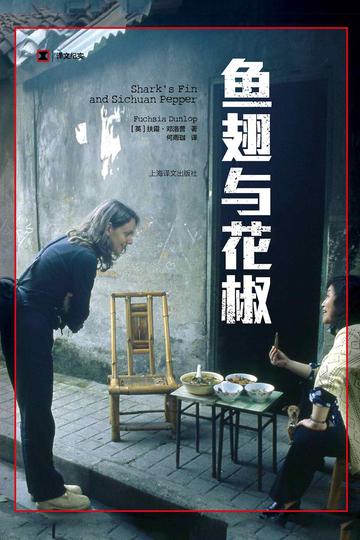
This book is about the unexpected beauty of Chinese food and the adventures of a British girl in China. Fu Xia, who won the British Food Writers Guild Award, went to China for a long stay in 1994. From the beginning she had sworn that no matter how strange the food might be, she would accept it. In this rare memoir, Fuxia traces the evolution of her relationship with Chinese food. Through Fuxia's eyes, we can understand the familiar Chinese food from a new perspective. It turns out that food from different places has its own unique temperament.
Sichuan cuisine is spicy with a hint of sweetness, just like the laid-back and charming Sichuan people, who always have a hint of sweetness and thoughtfulness; Hunan cuisine is direct and uncompromising, just like the military leaders trained there; Yangzhou cuisine is the food of the peaceful times, warm and soothing.
From the bustling markets of Sichuan to the remote scenery of northern Gansu, from the mountains of Fujian to the charming ancient city of Yangzhou, the book presents the unforgettable and wonderful taste of Chinese cuisine, and deeply depicts the differences between Chinese and Western food cultures, with both humanistic observation and humor.
Reader comments
It is really a wonderful and humorous food journey. It provides an in-depth understanding of the charm of Chinese food from the self-righteous and biased foreign media. Chinese people like to eat, and they like people who like to eat more. People who like delicious food are cute.
The mundane and day-to-day work has made the adult world boring. After reading this book, my heart was deeply touched. Life in the world of delicious food turns out to be so interesting. I didn't expect a foreigner to study Chinese food so thoroughly and open the door to Chinese culture through food. Chinese culture is so profound and colorful, so this book filled my lacking heart like spiritual food. I hope that this full feeling can stay in my heart for a longer time, just like those warm childhood days that can never be returned, becoming a touch of color in the adult world where pressure is always present.
For a foreign girl, not only can she speak Chinese well and cook Chinese food well, the key is to learn Chinese philosophy while learning cooking. And how many of our young people in our country have the patience and composure to learn some Chinese philosophy and cuisine? A very wonderful book, written in depth, like it👍👍👍👍👍👍
There was a book shortage at that time, so I changed the section and saw this book. I read it intermittently. After all, my comfort zone is not here.
But this book is also really interesting, and at the same time I often feel really uneducated.
The author uses plain language to describe her experience of studying in China and then searching for and trying food. We can also see some changes in China from it, from not being so developed to the high-rise buildings in the back, and finally the combination of ancient and modern, which is quite interesting.
I don't have much education, so I just leave one sentence here, hold the grass, it looks good.
This is also the first published book I read on Tomato, so I wrote a little bit about it.
Above.
What attracts me to this book more than the food is actually the spark created by the author's modern European and American perspectives and the effects of China's traditional culture and rapid economic development. The good and bad are all from a first-hand perspective, so it can arouse some resonance. Fuxia's direct writing style is indeed suitable for the spiciness of Sichuan cuisine. It is no surprise that she fell in love with Chengdu cuisine in a short period of time.
It mainly revolves around the male protagonist, who returns to his hometown after living abroad for many years and begins a magnificent career. The plot is compact and simple. The author uses delicate writing and simple language to describe the customs of his hometown, people's warmth and family affection, and also shows readers the real life conditions of a small town in Hunan. This is a warm, touching and thoughtful novel. It uses real life experiences and vivid language to convey to readers the cherishment and remembrance of hometown and family ties.
My favorite book I have read recently, it describes Chengdu in a very exciting way. After reading it, I really want to eat in Chengdu and take a look. As a foreigner, Fuxia went to a cooking school to study because she likes it. It's great that she can understand our country's food so thoroughly.
However, I kind of hate her misunderstanding of some Chinese culture in the book, but this is understandable, after all, there are big differences between Chinese and Western cultures. Overall, this book is worth reading. It gave me a deeper understanding of Chinese food and allowed me to see China through the eyes of a foreigner.
A Cambridge BA who is integrated into China, is obsessed with food, builds a bridge between Eastern and Western cultural exchanges, and spreads the food that makes fun of foreign devils. She devoted her life's passion to the world of fireworks. From cultural shock to cultural identity, she was willing to accept all kinds of food, and her search for delicious food was driven by her desire to hunt.
From the beginning of the fresh and spicy Sichuan cuisine, to the salty, spicy and fragrant Hunan cuisine, the elegant and luxurious Shandong cuisine, the palace cuisine of Beijing, the fresh and delicate Cantonese cuisine, the Fujian cuisine with delicacies from mountains and seas, and finally the fresh and gentle Huaiyang cuisine. There are both quotations from Suiyuan Food List and in-depth social thinking arising from local eating. In her research, shark fin sheds its luxurious coat and turns into the survival wisdom of Lingnan fishermen; fish maw carries the nourishing warmth cooked by Chaoshan mothers.
Both the author and the translator regard eating and cooking as a major event in their lives. For smooth translation, one star must be added. The dining table day after day condenses the fleeting years of you and me. The sweet, sour, bitter and spicy are all the nutrients of life; the world of fireworks is full of warmth.
The collision of Eastern and Western food culture concepts and habits, the writing is humorous
I can only say that I admire a foreigner who can write such a book.
It's interesting to see China and Chinese food from a foreigner's perspective
You can eat if you want! Fatter is better (cuter). Sometimes I get excited when I translate a passage that I like. You always put down your work and ask me: "Did you see anything delicious again?" "My love for food and life for so many years cannot be separated from your understanding and appreciation partner. Although I wash my hands and make soup out of my interest in food, it is not to "capture your stomach". However, seeing you put a chopstick in your mouth and nod happily, my heart will be filled with the joy of being encouraged and appreciated. We have been to many places together. Fang, I have eaten a lot of delicious food, but the most warm and happy ones are just the moments when we eat and laugh face to face with chopsticks every day. You are the butter on my bread, the bean paste in the twice-cooked pork, the vine pepper in the Bobo chicken, the dried beef dip, the green onion on the hot and sour noodles... You are the air I breathe. Thank you for giving me warm and beautiful love, and letting me move forward bravely.
Come on, put the dried chili peppers, stir-fry the bean paste, cut the meat thinner, cook more vegetables, turn up the heat, put it on a plate and serve it, let's start! Rice! La!
I was working in Chengdu in 1997. I often went to hang out with my friends at Sichuan University. I loved going to the football field to visit. Not surprisingly, I met Fuxia, a foodie like you, at that time! [Laughing]
As a British person, it is not easy to understand China to this extent, and the writing is also very interesting.
It is not an ordinary vernacular, the language is humorous and interesting, and it is written with a mixture of food and humanities.
I like this book very much
It's very interesting and can help a foreigner who comes to study in Chengdu, Sichuan to understand Sichuan and Sichuan people better.
Fuxia is a bold, interesting and eager to learn person. "Shark's Fin and Sichuan Pepper" not only records various dishes, but also provides a microcosm of the development of the motherland.
Very well written [Admiration] I'm so hungry
Second brush, very beautiful!
A foodie who really enjoys it
It's interesting to see Sichuan food from a foreigner's perspective
Chinese food looks good from a foreigner's perspective
The food descriptions are more vivid and expressive than Chinese writers, a wonderful sensory journey.
It's really good, it vividly describes Chinese human food culture.
The author's writing style is great and the details are well written. You can see and hear all kinds of human fireworks described by the author. A foreigner's amazing Chinese Sichuan food experience.
After reading it on and off for half a month, I finally finished reading it. Fuxia's life in Chengdu earlier made me so hungry in the middle of the night. Later on it was just barely there, not very interesting.
The language is witty and humorous, and the author's unique perspective records the customs, customs, reforms and changes of Sichuan in the 1990s.
It's really beautiful. It gives you a different perspective on the beauty of China, and also gives you a sense of sadness as time passes.


It is really a wonderful and humorous food journey. It provides an in-depth understanding of the charm of Chinese food from the self-righteous and biased foreign media. Chinese people like to eat, and they like people who like to eat more. People who like delicious food are cute.
The mundane and day-to-day work has made the adult world boring. After reading this book, my heart was deeply touched. Life in the world of delicious food turns out to be so interesting. I didn't expect a foreigner to study Chinese food so thoroughly and open the door to Chinese culture through food. Chinese culture is so profound and colorful, so this book filled my lacking heart like spiritual food. I hope that this full feeling can stay in my heart for a longer time, just like those warm childhood days that can never be returned, becoming a touch of color in the adult world where pressure is always present.
For a foreign girl, not only can she speak Chinese well and cook Chinese food well, the key is to learn Chinese philosophy while learning cooking. And how many of our young people in our country have the patience and composure to learn some Chinese philosophy and cuisine? A very wonderful book, written in depth, like it👍👍👍👍👍👍
There was a book shortage at that time, so I changed the section and saw this book. I read it intermittently. After all, my comfort zone is not here. But this book is also really interesting, and at the same time I often feel really uneducated. The author uses plain language to describe her experience of studying in China and then searching for and trying food. We can also see some changes in China from it, from not being so developed to the high-rise buildings in the back, and finally the combination of ancient and modern, which is quite interesting. I don't have much education, so I just leave one sentence here, hold the grass, it looks good. This is also the first published book I read on Tomato, so I wrote a little bit about it. Above.
What attracts me to this book more than the food is actually the spark created by the author's modern European and American perspectives and the effects of China's traditional culture and rapid economic development. The good and bad are all from a first-hand perspective, so it can arouse some resonance. Fuxia's direct writing style is indeed suitable for the spiciness of Sichuan cuisine. It is no surprise that she fell in love with Chengdu cuisine in a short period of time.
It mainly revolves around the male protagonist, who returns to his hometown after living abroad for many years and begins a magnificent career. The plot is compact and simple. The author uses delicate writing and simple language to describe the customs of his hometown, people's warmth and family affection, and also shows readers the real life conditions of a small town in Hunan. This is a warm, touching and thoughtful novel. It uses real life experiences and vivid language to convey to readers the cherishment and remembrance of hometown and family ties.
My favorite book I have read recently, it describes Chengdu in a very exciting way. After reading it, I really want to eat in Chengdu and take a look. As a foreigner, Fuxia went to a cooking school to study because she likes it. It's great that she can understand our country's food so thoroughly.
However, I kind of hate her misunderstanding of some Chinese culture in the book, but this is understandable, after all, there are big differences between Chinese and Western cultures. Overall, this book is worth reading. It gave me a deeper understanding of Chinese food and allowed me to see China through the eyes of a foreigner.
A Cambridge BA who is integrated into China, is obsessed with food, builds a bridge between Eastern and Western cultural exchanges, and spreads the food that makes fun of foreign devils. She devoted her life's passion to the world of fireworks. From cultural shock to cultural identity, she was willing to accept all kinds of food, and her search for delicious food was driven by her desire to hunt. From the beginning of the fresh and spicy Sichuan cuisine, to the salty, spicy and fragrant Hunan cuisine, the elegant and luxurious Shandong cuisine, the palace cuisine of Beijing, the fresh and delicate Cantonese cuisine, the Fujian cuisine with delicacies from mountains and seas, and finally the fresh and gentle Huaiyang cuisine. There are both quotations from Suiyuan Food List and in-depth social thinking arising from local eating. In her research, shark fin sheds its luxurious coat and turns into the survival wisdom of Lingnan fishermen; fish maw carries the nourishing warmth cooked by Chaoshan mothers. Both the author and the translator regard eating and cooking as a major event in their lives. For smooth translation, one star must be added. The dining table day after day condenses the fleeting years of you and me. The sweet, sour, bitter and spicy are all the nutrients of life; the world of fireworks is full of warmth.
The collision of Eastern and Western food culture concepts and habits, the writing is humorous
I can only say that I admire a foreigner who can write such a book.
It's interesting to see China and Chinese food from a foreigner's perspective
You can eat if you want! Fatter is better (cuter). Sometimes I get excited when I translate a passage that I like. You always put down your work and ask me: "Did you see anything delicious again?" "My love for food and life for so many years cannot be separated from your understanding and appreciation partner. Although I wash my hands and make soup out of my interest in food, it is not to "capture your stomach". However, seeing you put a chopstick in your mouth and nod happily, my heart will be filled with the joy of being encouraged and appreciated. We have been to many places together. Fang, I have eaten a lot of delicious food, but the most warm and happy ones are just the moments when we eat and laugh face to face with chopsticks every day. You are the butter on my bread, the bean paste in the twice-cooked pork, the vine pepper in the Bobo chicken, the dried beef dip, the green onion on the hot and sour noodles... You are the air I breathe. Thank you for giving me warm and beautiful love, and letting me move forward bravely. Come on, put the dried chili peppers, stir-fry the bean paste, cut the meat thinner, cook more vegetables, turn up the heat, put it on a plate and serve it, let's start! Rice! La!
I was working in Chengdu in 1997. I often went to hang out with my friends at Sichuan University. I loved going to the football field to visit. Not surprisingly, I met Fuxia, a foodie like you, at that time! [Laughing]
As a British person, it is not easy to understand China to this extent, and the writing is also very interesting.
It is not an ordinary vernacular, the language is humorous and interesting, and it is written with a mixture of food and humanities.
I like this book very much
It's very interesting and can help a foreigner who comes to study in Chengdu, Sichuan to understand Sichuan and Sichuan people better.
Fuxia is a bold, interesting and eager to learn person. "Shark's Fin and Sichuan Pepper" not only records various dishes, but also provides a microcosm of the development of the motherland.
Very well written [Admiration] I'm so hungry
Second brush, very beautiful!
A foodie who really enjoys it
It's interesting to see Sichuan food from a foreigner's perspective
Chinese food looks good from a foreigner's perspective
The food descriptions are more vivid and expressive than Chinese writers, a wonderful sensory journey.
It's really good, it vividly describes Chinese human food culture.
The author's writing style is great and the details are well written. You can see and hear all kinds of human fireworks described by the author. A foreigner's amazing Chinese Sichuan food experience.
After reading it on and off for half a month, I finally finished reading it. Fuxia's life in Chengdu earlier made me so hungry in the middle of the night. Later on it was just barely there, not very interesting.
The language is witty and humorous, and the author's unique perspective records the customs, customs, reforms and changes of Sichuan in the 1990s.
It's really beautiful. It gives you a different perspective on the beauty of China, and also gives you a sense of sadness as time passes.