Private English literature lessons from literary master Borges.
Jorge Luis Borges (1899-1986), Argentine poet, novelist, critic, translator, and master of Spanish literature.
Born in Buenos Aires on August 24, 1899, he lived in Europe with his family when he was a boy.
In 1923, he published his first collection of poems, "The Passion of Buenos Aires", in 1925, his first collection of essays, "Collection of Explorations", and in 1935, his first collection of short stories, "Biographies of Villains", gradually establishing his position in the Argentine literary world. His representative poetry collections "Notes of Saint Martin" and "The Goldenness of the Tiger", novel collections "The Garden of Forking Paths" and "Aleph", essay collections "Eternal History" and "Discussions" have won him international reputation. Translated works by Wilde, Woolf, Faulkner and other writers.
He once served as Director of the National Library of Argentina and Professor of Literature at the University of Buenos Aires. He has won many literary awards such as the Argentine National Literary Award, the Formento International Publishing Award, the Jerusalem Award, the Barzan Award, the Chino del Duca Award, and the Cervantes Award.
He died of illness in Geneva, Switzerland on June 14, 1986.
María Esther Vazquez (1937-2017), Argentine journalist and writer.
Graduated from the University of Buenos Aires and wrote for Argentina's El Pais.
In 1957, he met Jorge Luis Borges, the then director of the library, while working at the National Library of Argentina. The two collaborated on several literary introductions.
He has published historical works such as "The Name of Death" and "In the Fog", as well as two biographies of Borges: "Borges: Glory and Failure" and "The Days of Borges".
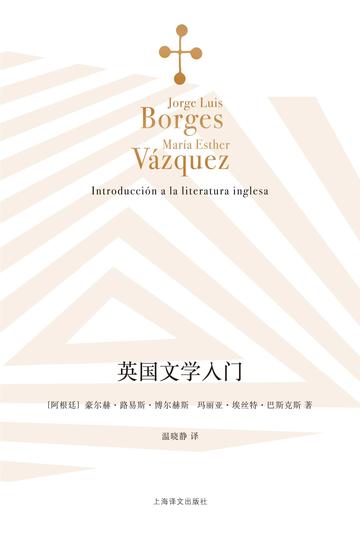
This book, co-authored by Jorge Luis Borges and María Esther Vazquez, provides a chronological overview of British literature.
British literature is one of the most colorful national literatures in the world. It is not composed of numerous schools but of independent individuals. Considering this characteristic of British literature, the author starts from the Anglo-Saxon period and focuses on introducing the most representative writers of each period. He also devotes a special space to discussing British drama, romantic movement, etc. The purpose is to arouse readers' interest in British literature and encourage readers to conduct more in-depth research on it. It can be said to be an introductory book for understanding British literature.
Reader comments
An introductory course in English literature by Borges.
Sort out the history of British literature in chronological order and list the representative works of several representative writers.
Just like when we study ancient poetry, we must start by understanding the poet's background. When reading books by past writers, it is best to also understand the writer's background.
I don't know if it's my misunderstanding. This book is biased towards poets, and it's a pity that a certain writer spent his energy on novels instead of poetry. So is this a chain of contempt in the literary circle?
This book sorted out the development of British literature and gave me a deeper understanding of the representative writers of each period. The content in the book is easy to understand, just like chatting with friends, it's very interesting! Moreover, the author also specifically discusses British drama and the Romantic movement. I really want to study it in depth.
The only regret is that I haven't read any of these books hahaha. As an English major, I feel really ashamed. Well said, concise and logical.
Many familiar writers, like the dazzling sun, leave their mark on one era after another. I think we also need a few "Introduction to Chinese Literature" books, which are always good.



An introductory course in English literature by Borges. Sort out the history of British literature in chronological order and list the representative works of several representative writers. Just like when we study ancient poetry, we must start by understanding the poet's background. When reading books by past writers, it is best to also understand the writer's background. I don't know if it's my misunderstanding. This book is biased towards poets, and it's a pity that a certain writer spent his energy on novels instead of poetry. So is this a chain of contempt in the literary circle?
This book sorted out the development of British literature and gave me a deeper understanding of the representative writers of each period. The content in the book is easy to understand, just like chatting with friends, it's very interesting! Moreover, the author also specifically discusses British drama and the Romantic movement. I really want to study it in depth.
The only regret is that I haven't read any of these books hahaha. As an English major, I feel really ashamed. Well said, concise and logical.
Many familiar writers, like the dazzling sun, leave their mark on one era after another. I think we also need a few "Introduction to Chinese Literature" books, which are always good.
Concise and clear, full of personal opinions