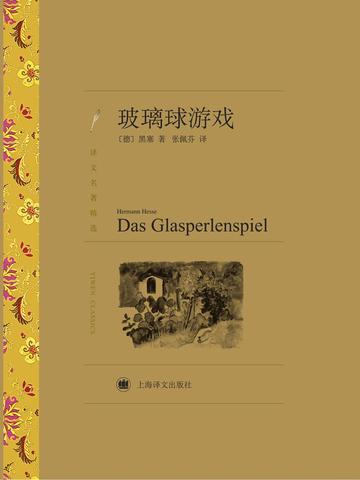
In a future world, the glass bead game has become a symbol system evolved from music and mathematics, and is all human knowledge and spiritual wealth. Due to the complicated politics and wars, human civilization is facing the threat of destruction. In order to save and promote this spiritual culture of mankind, a certain religious group is making unremitting efforts. Knecht was an orphan who was raised by this religious group. He was talented and intelligent. With his outstanding talents and superior organizational skills, he continued to rise in this elite group until he reached the top of the group and became the master of the glass bead game. But as he grew older, he gradually became dissatisfied with this isolated spiritual kingdom and felt that it was impossible to contribute to the people in this ivory tower. So he came to the real world and tried to use education to improve the entire world. However, before his career was completed, he unfortunately drowned while swimming.
Reader comments
Hesse's life-long masterpiece, and also the last novel he completed in his life. After reading Glass Beads, I couldn't say a word. Sometimes, people can only see themselves from books. Just like Hesse believes that wisdom cannot be taught, but can only be awakened through personal spontaneous experience. Similarly, no matter how rich and thick a book is, you may only remember one sentence after reading it. This sentence is the only one that touches the painful spot and fits the current thinking and troubles. "Glass Bead Game" can be simplified to one sentence for me today: Dare to live. It arises in my mind, repeated endlessly, like a kind of enlightenment.
In his final works in his later years, Hesse attempted to blend Eastern and Western philosophy, art and religion to achieve a transcendent spiritual unity. The fictional kingdom of Castari, the astrologers who control the weather, the fortune tellers, the magicians, the priests, the listeners, Vishnu, the priests who neither punish nor praise... The anger and pain burned his heart, and he had to rely on legendary heroic stories like Knecht to dissipate it, and the emotional bond of Tesignoli was also indispensable.
Humanity's pursuit of wisdom and harmony, pure spirit divorced from reality, is an illusion. "Those who move towards the center are calm on the outside but burning on the inside" condenses Hesse's wisdom of harmony - true perfection is not about escaping from contradictions, but about tolerating opposition. I personally understand this parable's utopian thought experiment as an attempt to heal the divisions in modern civilization. However, Hesse's idealism always lingered in the gap between theory and practice: he longed for a new morality beyond good and evil, but could only use fictional heroes to carry his vision. In a broken world, maintain a burning faith in possibility. Gradually practicing and enlightening - silence, smile, acceptance.
It is really Hesse's masterpiece.
If "Siddhartha" is about searching on the road, then "The Glass Bead Game" is about finding the path of life after finding your higher self.
But I hate that religious group, they are so closed minded. The author Hesse is really amazing. He was able to create such a unique world, which opened my eyes. It's just that the Latin words in the book are a bit difficult to understand, so you have to think carefully. Overall, this is a great book worth reading!
It may be a bit verbose, but like Siddhartha, it is still quite philosophical.


Hesse's life-long masterpiece, and also the last novel he completed in his life. After reading Glass Beads, I couldn't say a word. Sometimes, people can only see themselves from books. Just like Hesse believes that wisdom cannot be taught, but can only be awakened through personal spontaneous experience. Similarly, no matter how rich and thick a book is, you may only remember one sentence after reading it. This sentence is the only one that touches the painful spot and fits the current thinking and troubles. "Glass Bead Game" can be simplified to one sentence for me today: Dare to live. It arises in my mind, repeated endlessly, like a kind of enlightenment.
In his final works in his later years, Hesse attempted to blend Eastern and Western philosophy, art and religion to achieve a transcendent spiritual unity. The fictional kingdom of Castari, the astrologers who control the weather, the fortune tellers, the magicians, the priests, the listeners, Vishnu, the priests who neither punish nor praise... The anger and pain burned his heart, and he had to rely on legendary heroic stories like Knecht to dissipate it, and the emotional bond of Tesignoli was also indispensable. Humanity's pursuit of wisdom and harmony, pure spirit divorced from reality, is an illusion. "Those who move towards the center are calm on the outside but burning on the inside" condenses Hesse's wisdom of harmony - true perfection is not about escaping from contradictions, but about tolerating opposition. I personally understand this parable's utopian thought experiment as an attempt to heal the divisions in modern civilization. However, Hesse's idealism always lingered in the gap between theory and practice: he longed for a new morality beyond good and evil, but could only use fictional heroes to carry his vision. In a broken world, maintain a burning faith in possibility. Gradually practicing and enlightening - silence, smile, acceptance.
It is really Hesse's masterpiece. If "Siddhartha" is about searching on the road, then "The Glass Bead Game" is about finding the path of life after finding your higher self.
But I hate that religious group, they are so closed minded. The author Hesse is really amazing. He was able to create such a unique world, which opened my eyes. It's just that the Latin words in the book are a bit difficult to understand, so you have to think carefully. Overall, this is a great book worth reading!
It may be a bit verbose, but like Siddhartha, it is still quite philosophical.