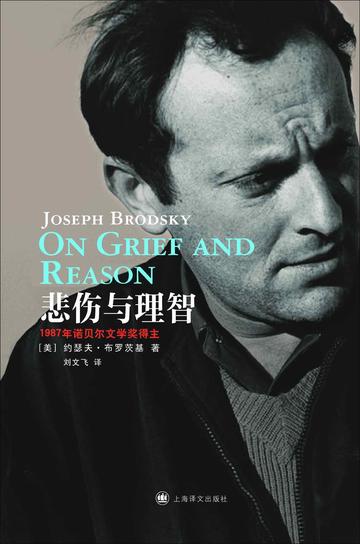
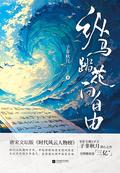
In this collection of essays with rich themes and vast horizons, Joseph Brodsky begins with a deeply introspective look at his early experiences in Soviet Russia and his subsequent exile in the United States. Then, the author uses astonishing erudition to explore a series of broad and deep topics such as the relaxation and change of poetry, the nature of history, and the double dilemma of exiled poets. The tentacles of thinking extend from ancient times to the present, from the ancient Roman Emperor Marcus Aurelius to the modern and contemporary poets Thomas Hardy and Robert Frost. The philosophical discussion of the nature of existence and the passionate passion for poetic aesthetics are combined into another rare work after "Less than One".
Reader comments
Just like when I am passionately in love, my understanding of my lover will become deeper and deeper, and I will make new discoveries every time. Moreover, the plight of the exiled poet in the book also resonated with me. It felt like the difficulties I encountered in love. Although it was difficult, it also made me cherish my current happiness more. The author's words are like a key, opening the can of my mind and allowing me to see more possibilities.
Brodsky used the perspective of an exile to connect personal destiny and the predicament of the times, used rational reasoning to analyze language, history, and existence, and used sad emotions to lament his homeland, identity, life and death. He was affectionate and sophisticated, and language became existence itself, a fortress against the nihility of history.
Exile has separated geography from the last Russian language, and can only use rigorous arguments like academic essays, and logical deductions full of paradoxes and metaphors. The comments on Akhmatova and Mandelstam are actually using them to construct a poetic genealogy of resistance, a hidden history of the spiritual kingdom. In pursuit of condensation and height, emotions are occasionally over-abstracted and conceptualized. Some chapters appear cold and alienated due to the density of logic, like a palace carved from the ice of thought. Because they are far away from the world, they appear high-minded and unapproachable, which weakens the empathy of the prose. His "dilemma of the times" is more about metaphysics, language, and cultural memory, and less about sociology and daily life. His writing does not resort to accusation or sentimentality, but transforms sadness into cognitive tools and aesthetic objects.
Poetry is not a form of entertainment, or in some sense even an art form, but rather a purpose for our species and genetics, a beacon of our language and evolution.
Reading poetry is to accept the influence and influence of literature, which can make people move away from clichés and toward creativity, away from uniformity toward individuality, and away from evil toward good. Therefore, poetry is the best means for human beings to preserve their individuality... The richness and diversity of human beings are the entire content of literature and the meaning of its existence... I am not sure that people will win in the end... But I firmly believe that a person who reads poetry is harder to defeat than a person who does not read poetry.
Don't let the future disturb you. You will eventually reach the future. If you will arrive, please keep the reason you have now.
Try to embrace the anguish and pain... You must always remember that any hug in this world will end in letting go.
When depression comes, you wallow in it... The sooner you sink to the bottom, the faster you can rise to the surface.
As a conversationalist, a book is more reliable than a friend or a lover.
I am the sum of what I have read and remembered.
The world is probably beyond saving, but individual people can always be saved.
A man with a sense of taste, including literary taste, will be less susceptible to the clichés and rhyming incantations inherent in all forms of political agitation.
Life is a game with many rules but no referee.
Love is an attitude towards reality - usually the attitude of the finite facing the infinite.

Just like when I am passionately in love, my understanding of my lover will become deeper and deeper, and I will make new discoveries every time. Moreover, the plight of the exiled poet in the book also resonated with me. It felt like the difficulties I encountered in love. Although it was difficult, it also made me cherish my current happiness more. The author's words are like a key, opening the can of my mind and allowing me to see more possibilities.
Brodsky used the perspective of an exile to connect personal destiny and the predicament of the times, used rational reasoning to analyze language, history, and existence, and used sad emotions to lament his homeland, identity, life and death. He was affectionate and sophisticated, and language became existence itself, a fortress against the nihility of history. Exile has separated geography from the last Russian language, and can only use rigorous arguments like academic essays, and logical deductions full of paradoxes and metaphors. The comments on Akhmatova and Mandelstam are actually using them to construct a poetic genealogy of resistance, a hidden history of the spiritual kingdom. In pursuit of condensation and height, emotions are occasionally over-abstracted and conceptualized. Some chapters appear cold and alienated due to the density of logic, like a palace carved from the ice of thought. Because they are far away from the world, they appear high-minded and unapproachable, which weakens the empathy of the prose. His "dilemma of the times" is more about metaphysics, language, and cultural memory, and less about sociology and daily life. His writing does not resort to accusation or sentimentality, but transforms sadness into cognitive tools and aesthetic objects. Poetry is not a form of entertainment, or in some sense even an art form, but rather a purpose for our species and genetics, a beacon of our language and evolution. Reading poetry is to accept the influence and influence of literature, which can make people move away from clichés and toward creativity, away from uniformity toward individuality, and away from evil toward good. Therefore, poetry is the best means for human beings to preserve their individuality... The richness and diversity of human beings are the entire content of literature and the meaning of its existence... I am not sure that people will win in the end... But I firmly believe that a person who reads poetry is harder to defeat than a person who does not read poetry. Don't let the future disturb you. You will eventually reach the future. If you will arrive, please keep the reason you have now. Try to embrace the anguish and pain... You must always remember that any hug in this world will end in letting go. When depression comes, you wallow in it... The sooner you sink to the bottom, the faster you can rise to the surface. As a conversationalist, a book is more reliable than a friend or a lover. I am the sum of what I have read and remembered. The world is probably beyond saving, but individual people can always be saved. A man with a sense of taste, including literary taste, will be less susceptible to the clichés and rhyming incantations inherent in all forms of political agitation. Life is a game with many rules but no referee. Love is an attitude towards reality - usually the attitude of the finite facing the infinite.
Yes, quite enlightening.