It records the real blood and tears during the war years and is a masterpiece among contemporary works.
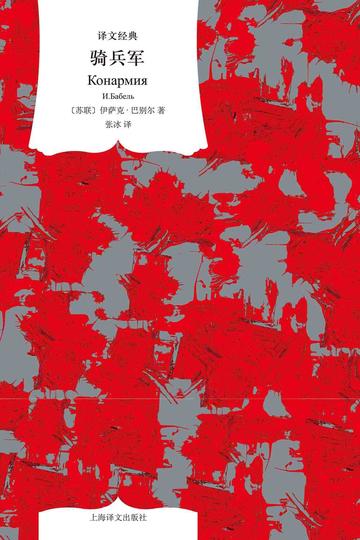
[About the author] Isaac Babel (1894-1940), a Jewish Soviet writer, was an internationally renowned writer in the Soviet Union. Although his life was very short and the number of works he left behind was very limited, his "Cavalry" was enough to establish his status as a master of short stories, and he has remained prosperous in the European and American literary circles.
[Introduction] "Cavalry Army" is the representative work of the talented Russian writer Babel. The creative material is taken from the battlefield diary that Babel kept when he was 26 years old as a war reporter following Budyonny's command of the First Cavalry Army of the Soviet Red Army into Poland. This grand battle was the last large-scale cavalry battle in world history and lasted for three months. In the book, the author uses the most direct, concise yet gorgeous language to describe the most realistic military life of the Soviet cavalry in Poland through 35 essays.
As a Jew, he did not deny the great spirit of the Soviet cavalry in their dedication to the revolution; as a revolutionary, he did not shy away from the mistakes made by the Soviet Cossack cavalry. "Cavalry" shocked the world as soon as it came out. In the Soviet Union, it was first popular and then banned, and even brought Babel's death. In Europe and the United States, it was praised as a masterpiece by contemporary writers in Europe and the United States, winning him immortal reputation.
Reader comments
This book truly depicts the cruelty of war and reminds me of what my grandfather once experienced. The author Isaac Babel's writing is concise and gorgeous. He does not shy away from the mistakes made in the war. I admire this truth very much. His works are like a mirror, allowing us to see the other side of history.


This book truly depicts the cruelty of war and reminds me of what my grandfather once experienced. The author Isaac Babel's writing is concise and gorgeous. He does not shy away from the mistakes made in the war. I admire this truth very much. His works are like a mirror, allowing us to see the other side of history.