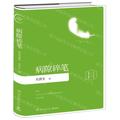
The representative work of the famous Russian decadent literary school writer Arzhibasif, the most peculiar work in the history of Russian literature; translated by the famous translator Liu Wenfei; a work of a Russian writer highly respected by Lu Xun; the bright and beautiful description of scenery and the dark and twisted analysis of human nature complement each other, forming a strong contrast; it marks the awakening of personal independence, and represents the questioning of inherent traditions by intellectuals in the period of social change and new thinking on the ultimate meaning of life. "Sanin" is Arzhibasuifu's masterpiece. The book narrates a series of stories that happened after the protagonist Sanin, who grew up outside the family, returned to his hometown. Sanin is indifferent to everything, free and completely independent of society. On the surface, Sanin's public pursuit of pleasure is extremely depraved, but to a certain extent, Sanin also represents the awakening of the personal consciousness and self-worth of Russian intellectuals.
Reader comments
Arzhibasev created an almost perfect thinker, Sanin, who was independent of the Russian intellectual circle, questioned tradition with a bright attitude, and calmly told the truth of life in the intertwining of beautiful scenery and distorted human nature. Yuri's internal friction, Solovychik's cowardice, and Zharuv's indulgence—the deaths of these three characters are the three cornerstones of Sanin's self-fulfillment, and they also reflect the author's denial of this way of living. He affirms himself but denies the world, liberating himself but leaving the world empty. He embraces existence by elevating himself, but in fact he devalues reality in order to fulfill himself. This break with reality ultimately points to nothingness: without a reference, the self cannot stand.
"People cannot be higher than life" - this sentence reduces life to desire, puts the struggle of faith and ethics below it, and reveals the cynicism of individualism. Sanin is but a stage in the transition from nihilism to health. He has the desire to heal himself and has strong vitality. This is the greatness of human beings. Yet rather than pointing the way out, he seems more soberly mocking everything than redemption.
.
The scenery is really beautiful... I often feel the pure natural beauty, and often feel like tears are filling my eyes. It's just that Arzhibasif's real-life experience is really miserable... I actually quite identify with and like the character of Sanin. Although he killed many people indirectly or directly, he was a real person. I don't really want to confirm the nature of this character - an anarchic individualist and so on - but I just borrow some ideological definitions summarized by Yan Shi'an in Zhuangzi's biography. He may be more like an "overly serious and scholarly person", and what runs through it is the worldly spirit that fiercely resists the black accidental destiny...
I think this book is very interesting! Sanin's character really impressed me. His pursuit of freedom and pleasure, although it seemed depraved, also allowed me to see the awakening of personal consciousness. The author Arzhibasuifu's description is very delicate, vividly showing the complexity of human nature. And I especially like the bright and beautiful descriptions of scenery in the book, which form a strong contrast with the dark and twisted human nature. It's so wonderful! All in all, this is a book well worth reading.

Arzhibasev created an almost perfect thinker, Sanin, who was independent of the Russian intellectual circle, questioned tradition with a bright attitude, and calmly told the truth of life in the intertwining of beautiful scenery and distorted human nature. Yuri's internal friction, Solovychik's cowardice, and Zharuv's indulgence—the deaths of these three characters are the three cornerstones of Sanin's self-fulfillment, and they also reflect the author's denial of this way of living. He affirms himself but denies the world, liberating himself but leaving the world empty. He embraces existence by elevating himself, but in fact he devalues reality in order to fulfill himself. This break with reality ultimately points to nothingness: without a reference, the self cannot stand. "People cannot be higher than life" - this sentence reduces life to desire, puts the struggle of faith and ethics below it, and reveals the cynicism of individualism. Sanin is but a stage in the transition from nihilism to health. He has the desire to heal himself and has strong vitality. This is the greatness of human beings. Yet rather than pointing the way out, he seems more soberly mocking everything than redemption. .
The scenery is really beautiful... I often feel the pure natural beauty, and often feel like tears are filling my eyes. It's just that Arzhibasif's real-life experience is really miserable... I actually quite identify with and like the character of Sanin. Although he killed many people indirectly or directly, he was a real person. I don't really want to confirm the nature of this character - an anarchic individualist and so on - but I just borrow some ideological definitions summarized by Yan Shi'an in Zhuangzi's biography. He may be more like an "overly serious and scholarly person", and what runs through it is the worldly spirit that fiercely resists the black accidental destiny...
I think this book is very interesting! Sanin's character really impressed me. His pursuit of freedom and pleasure, although it seemed depraved, also allowed me to see the awakening of personal consciousness. The author Arzhibasuifu's description is very delicate, vividly showing the complexity of human nature. And I especially like the bright and beautiful descriptions of scenery in the book, which form a strong contrast with the dark and twisted human nature. It's so wonderful! All in all, this is a book well worth reading.
Sanin is a real person
The ending is absurd yet true