Stats
9.5Score
15Chapters
Tags
Synopsis
Reader comments
In booklists 4





Books for College Students to Read
What books are worth reading for high school graduates?
13.5MViews651Books1dUpdated

A Must-Read for Chinese Language and Literature Majors
Are there any books that can actually help improve your writing and expression skills?
4.8MViews565Books22hUpdated

Literature Books, I Want Literature Books! ! !
Family members, I want to read literature books, books that can improve my writing skills or increase my knowledge. Beg on your knees!
3.1MViews739Books6hUpdated




Excellent Monthly Novels Are Either Discontinued or Unfinished. Do You Have Any Recommendations?
I want to watch something like "Lobotomy: Who is the 25th kid?" Book.
1.8MViews170Books2dUpdated
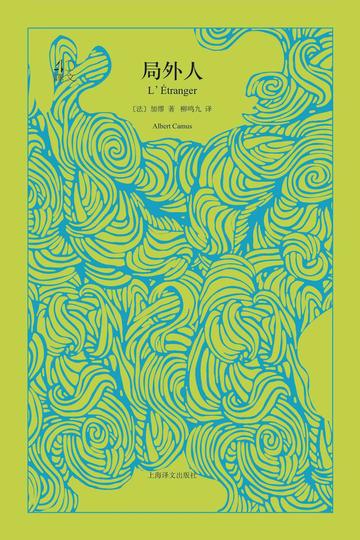
This is a book that you need to read to the end to suddenly realize. In the roar, you realize your outsider status. You are no longer afraid of the moment when you step onto the execution stage. Instead, you are looking forward to it, looking forward to "starting over" like your mother. He has always loved his mother. He didn't cry because no one had the right to cry for her.
I think it's really hard to be an outsider. We laypeople have long been assimilated by worldly things. We must cry and be sad when a loved one dies. True sadness may have no tears. But if we fail to do it, we will be criticized by others. In order to make ourselves relaxed, many of our behaviors choose to be assimilated and choose to be an insider. It's hard for an outsider to be an outsider, probably because I don't dare in my heart, it's a kind of fear. May I be able to be an outsider as long as I want.
There is no doubt that this is a good book. The author uses the calmest and coldest language to show us an absurd dark society ruled by law. The author himself is a person who loves to think about social issues. It can be said that his novel effectively demonstrates the author's thoughts. This is a reflection on the rule of law in society. What are we living for? What is the meaning of living in this absurd society? But no matter how absurd this society is, we must accept it. We should disdain the difficulties and darkness in life and face them head on. The meaning of living in this absurd society is to find the meaning and joy of living in it and not disdain the darkness in it.
Find your true self in an absurd world. The protagonist (Meursault) did not shed a tear at his mother's funeral and was later arrested for accidental murder. However, what really judges him is not the crime itself, but his "outsider" posture in front of social conventions. This seemingly indifferent and alienated story reveals the absurdity and hypocrisy of society. People often judge a person based on appearance and so-called common sense, while ignoring his true heart. In this world full of rules and falsehoods, should we go with the flow, or remain sober and independent like Meursault? [Three core questions] 1. Why did Meursault show such indifference to his mother's death? : He is not truly indifferent, but faces life and death in a different way from the norm, believing that life and death are a natural process. (When I read this scene, my first reaction was that Zhuangzi sang with a drum and basin) 2. Is society's moral judgment fair to individuals? : Not necessarily. Society often judges individuals based on established moral standards, while ignoring the individual's special circumstances. (In an era where Internet judges are rampant, some people have been criticized by online public opinion because certain behaviors have been interpreted in a one-sided manner.) 3. What lessons does Meursault's ending teach us? : Thinking about the relationship between individuals and society, and how to find a balance between sticking to oneself and adapting to society. (Meursault paid a high price, and we ordinary people need to balance it more) Content Sharing 1. "Today, my mother died. It could have been yesterday, I don't know." 2. "I often think that if I were to live in the trunk of a dead tree, I could do nothing but look up at the flowing clouds in the sky. Day after day, I would gradually get used to it. I would wait for the birds to fly up and the clouds to gather and disperse, just like I was waiting in the cell for my lawyer to appear wearing a strange tie, or like I patiently waited until Saturday in my free days to hug Mary's body." 3. "I experience that this world is so much like me, so friendly and harmonious. I feel that I was happy in the past and I am still happy now." 4. "In the end, I only remember that just as I was drifting into a deep sleep, the winch jolted and woke me up. The cabin without lights was dark. I heard the sound of seawater lapping at the bow. At this time, it seemed that my head suddenly opened up, and I suddenly understood that I had been very stupid throughout this period of time." 5. "He said that he had been studying my soul and found that it was empty. He said that I actually had no soul. I knew nothing about human nature or the moral principles in people's hearts."
For me, this is a slightly philosophical enlightenment book. Perhaps based on the criticism of the times and human nature, it is a crime to not wear a mask and not live as others imagine. What shocked me most in the article was Meursault's inner monologue in the court: They talked about me more than the crime I committed. How ironic, it's like I beat someone up hard today, but when everyone talks about whether I'm a good person, they only focus on me not helping the old lady cross the road this morning...
While reading this book, I always feel that the protagonist has a sense of detachment and does not actively fight back against the forces exerted on him by the outside world. Sometimes I feel that my current life is very similar to him, and A or B is fine. Sometimes I suddenly realize that there is still a difference, because he said, "I have a nature, that is, my physical needs often interfere with my emotions." Personally, I feel that this sentence can best help me anchor his character. He is an outsider, excluded from the court, and seems to be outside the world.
I don't think Meursault is an emotionless person, he just doesn't take death very seriously. I think the fear he felt when he learned that he was going to be executed was just a physiological reaction, not a feeling that the sky is falling. I feel that he just "can die or not die." When I first started reading, I read it with the mentality of "he has a lot of personality and is a maverick outsider". After reading this book, I understood that he did not deliberately let others think that he was different and incompatible with the world. He just lived his life according to his inner thoughts. He did not care whether he was different from others. This is a great tolerant mentality. He tolerates the whole world being different from himself, and naturally does not force himself to integrate into the world. I can understand that Meursault did not seem to be sad about the death of his mother. Sometimes losing a person or thing does not happen in an instant, but in countless late nights and countless moments of seeing things and thinking about people, only then do you know what losing means.
Are the translations of the last few chapters a little confusing, or is that just what the original text was like? It's like a person's random thoughts, thinking here and there. Tell me what you think after watching it. After reading the whole novel, the only thing that moved me was the scene where Meursault shot at the Arab in the sun. Because it's too hot. It was just as hot as the day his mother was buried. The same headache, irritability, confusion, and he completely lost the ability to control himself. I don't know if you have ever had such a time, that is, when you are doing something, the surrounding environment, sounds, colors, images, in short, all the current situations, make you involuntarily recall another thing you have experienced. What was your mood like when you experienced it? Then I couldn't help but fall into that thought, and then my hand shook, and what I was doing now accidentally went wrong. Just like being trapped in the darkness once, which caused some negative states, the next time you accidentally fall into the darkness, the negative states will be superimposed on the mind in an intensified manner, making people crazy, and even falling into chaos earlier. In fact, when I read this article, I knew the book was called The Outsider, but it wasn't until I exited the article after reading it that I noticed it was called The Outsider again. There are one hundred Hamlets in one hundred people's minds, and one hundred people may have one hundred different opinions after reading the same book. Let's talk about my current thoughts. I think Meursault's state is simply insensitive. He is a person who lives his life drifting with the flow. Sometimes he makes some decisions, but just out of "I have to do it after all." Sometimes he doesn't make a decision, and is just carried along by others at will. As long as others propose it, and as long as he has experienced it, he will continue to do so inertia. I don't know about his childhood, adolescence, or even adolescence, his living environment, his level of education, his cognition, his ideals, his trauma, etc... I only know that everything he has experienced in the past has shaped his current character, and his current character determines what he may do now and even in the future. Go back to the part where Meursault fired his gun under the sun. I think the death of his mother was not something that really made Meursault indifferent. Although just reading what is mentioned in the book, such as the trial in court, and everything he did on the day of his mother's burial and after, it seems that he was indifferent and indifferent, but if he was really indifferent, he would not have fired that shot that day. There was something that made me very irritated. One day when I was washing the dishes, I didn't know why, but I suddenly remembered that thing. Just the moment this thought passed by, it automatically aroused the irritability in my heart. The hand I was washing the dishes with uncontrollably used excessive force and hit a sharp object. Then my hand bled and hurt, but at the same time, I calmed down. I don't know how to express what I mean, There is something that makes me irritable, so I will do something similar to "venting" unintentionally or intentionally, but in short, at that moment, it can be said that it is inadvertent or even uncontrolled. I will control this behavior within a certain level, just like people sometimes want to vent sudden negative emotions. Unless I am too out of control, I will try to maintain a certain level when venting. If I can't maintain that level and engage in venting behavior that is really "exceeding", it only means that the thing that caused me to be irritable has exceeded the level that I can bear. What I want to express is that I can understand Meursault's state at the moment when he fired, and why he fired. At that moment, he couldn't stand it anymore. When he felt that the sun above his head was so hot and painful, and the sun was exactly the same as the day his mother was buried, he thought of his mother's death. His emotions at that moment were completely out of control. He couldn't bear it anymore, he couldn't control himself, so he crossed the line and acted excessively. After killing the Arab, I think Meursault may have regretted it, but his insensitive character made him calm again. Just like every day before he killed that man. Before he killed someone, he lived like that. Some people said that he was an honest person. After he killed that person, he still lived like that. But in court, some people said that he was cruel and similar to a devil. But in fact, he is just an ordinary person, an ordinary person who is easily immersed in the world of self-fantasy and thinking, and may be more numb and slow. Finally, I would like to talk about my feelings towards the protagonist Meursault. I don't like him, and I even felt disgusted with him several times in the process, but his mentality reminded me of myself at certain times (just in case I want to mention that I just think some of his character expressions reminded me of myself, and I won't commit murder!)
"The Outsider" contains profound existential philosophy. Human existence has no fixed meaning, and the meaning of life needs to be given by the individual himself. Everyone can be the master of his or her own life, and can choose to live in a way that society is willing to accept, or he can choose to be true to his heart, even if it means becoming an "outsider." Every choice and decision reflects our unique understanding of life. Life is not simply black and white, but full of colors. We should learn to accept the diversity of life and face every challenge in life bravely. At the same time, while we all have the freedom to choose, every choice comes with responsibility. We cannot evade responsibility, we can only accept and bear it bravely. As conveyed in the book, "True freedom lies in accepting the absurdity of life and finding your own meaning in it."
One thing I think is very scary is that if the perspective of the protagonist is not introduced from the beginning, but the perspective of the public is introduced, we will also be the one scolding him, thinking that he is cold, heartless, unfilial and so on. Truly reflects society
I have to admire Camus's writing style. It's so comfortable to read. When I read the first half of the book, I didn't understand what he wanted to express by describing his daily life. After reading it, I realized that he used these to foreshadow and express the protagonist's attitude. He does not believe in God, he only follows himself. For the social rules bound by morality, God, and law, even if he is sentenced to death, he is not willing to obey or go against his heart. He has his own way of living and is not willing to follow the crowd, nor does he feel that he is wrong. The satire of human nature is vividly expressed. What the author really wants to express is that not what most people are doing is necessarily the right thing. You only have one life, follow your heart. If you can't do it, being sentenced to death is not necessarily a sad thing. We are not Meursault, and we should not judge him from the moral high ground. To this world, each of us is an outsider. Finally, this book is not suitable for novices and may not understand it.
Gradually becoming an outsider is a dilemma that I have been deeply involved in without being easily aware of it. In this book, I have shamefully resonated with the protagonist more than once. When I am tired, I will be lost in thought at the funeral, and when I am hot, I will turn on the trigger to solve the trouble. What an absurd freedom, what ultimate independence. But I despise this freedom, just as I recognize it. For an economically independent individual like me, I no longer need anyone to protect me, and there is no situation where I can't live without anyone. I can be an outsider when everyone dies, but Once I think of my gentle and kind mother, and those summer nights that I thought were cool and brisk, my mother felt the same soothing breeze, or the loneliness of being unaccompanied. I can't help but feel sad and sad when I think of whether she can face death calmly like me, or whether she will be trembling with fear. These are not what I have always thought, but the warning that the character of Meursault brought to me. Pursuing personal happiness blindly is not true happiness. In this short life, I don't want to just enjoy happiness. I also want to be soaked with sweat at my mother's funeral. I want to review her life with exhaustion. I want to let the noisy voice and the scorching sun burn on me to let myself know that pain exists in everyone and I am not the only one to bear it. I want to imagine the beautiful future of others so that I can respect those lives that have passed.
Meursault is undoubtedly happy, but society does not allow him to be happy, because for society, it is simply a sin to have happiness that they dare not have. You should cry when your mother dies, and you should regret when you kill someone. Meursault did not suffer when people thought he should suffer, he just chose to follow his truest feelings. He has always been an outsider in society, but he is an insider in his own soul. When people sentenced him to death, they also sentenced him to death to his true self.
We are all outsiders and trapped inside.
Probably a person who is isolated from others in his heart adapts to social disciplines, but does not agree with some so-called rules, and acts according to his own ideas, tries to get along with society, and has his own way of expressing emotions. However, in a shooting case, he was sentenced to death because of something unrelated to the case - not crying sadly at his mother's funeral. This makes people think about some of the problems that exist in society.
It shocked my heart. It turns out that the choice is our own business. There is no right or wrong, only the judgment of the outside world. If we do this, we may choose to lie, but in the end we will find that this is an unchangeable thing, because we are poor, and a poor person who killed someone, but if we choose to lie (referring to him about his mother's burial, that is, whether he has feelings for his mother), we may still survive (death penalty).
If you can't join the crowd, then stay true to yourself and don't give up your own characteristics for others.
A man who did not cry at his mother's funeral, a young man who was not good at expressing himself with words, could think independently in everything, and had a unique soul, committed a murder due to self-defense (or accidental conflict, or venting of youthful dissatisfaction) and was sentenced to death because he did not cry at his mother's funeral. In the end, although he felt helpless, he gave up the appeal. Is it also a sin to be out of tune with the world and have a maverick character? Or helpless? Choose to fight or compromise? I feel a little depressed inside! Suddenly I began to imagine that if my parents passed away, I probably wouldn't cry! "Crying" has always been just a way to vent sadness or joy. When it is yoked by the shackles of the world, it is no longer what it is. "Existence" means rationality, neither birth nor destruction, neither increase nor decrease, neither dirt nor purity. This article only commemorates the great existentialist writer Albert Camus. At the same time, I hope that no relatives or friends will cry for me at my funeral. I am who I am, a different kind of fireworks! Not crying does not mean being heartless and righteous, and crying does not necessarily mean being merciful and righteous! People will always die, and there are many ways. After all, life is so beautiful, it is your own beauty, and all the processes you experience belong to you personally.
From the indifference of his mother's death to the various interactions with the people around him, to murder, and finally facing the trial of the court, Meursault's rationality is a bit heavy, but he always reveals an indescribable emotional need. Obviously, he loves himself, so contradictory, but magically unified. In one person, he has sanity and his own freedom... However, he will eventually be eliminated by the evil in society. Is it a problem of the legal system or a human problem? What's the difference! Anyway, it doesn't matter whether you die tomorrow or today, and everyone will face their own trial, which is fair.
The first time I read Camus' "The Stranger", the more I read, the more confused I became, but it did not affect the reading experience at all. The narration of the story is smooth and flowing, the description of the scenes is detailed and vivid, and the characterization... Well, the problem arises here. The sun and heat, what kind of mental state do these reflect? Tired, sleepy, sleepy, what kind of physical experience does this imply for the character? Annoying, meaningless. What kind of philosophy does this express? Although I think the theme of this book should be the conflict and confrontation between personal meaning and social meaning, due to the obstacles of character analysis, I am not sure about the correctness of my judgment at all. In short, this is a literary treasure worthy of repeated reading and continuous understanding.
After reading this book, I felt uneasy for a long time. Let me talk about my thoughts after reading it. Being "out of place" is not a flaw. On the contrary, I think it is a kind of courage. Even if others point fingers at you and say that what you did is wrong, so what? Does it matter? We don't have to betray our true selves in order to cater to others. Live at your own pace. You have your own unique life script.
I am guilty of moral betrayal, but I am not guilty of philosophy!
The protagonist's thinking about the meaning of his life is very philosophical. Life is just an outsider in the world. We can only watch some results as outsiders. Life does not need to think too much as long as you keep yourself, you can get a lot.
The meaning is still lingering, the aftertaste is profound, and a kind of sadness of fate is revealed in the dark, but it directly transforms into expectations for the future and sobriety towards the world.
Stay out of it, lose yourself in it
Very profound. After reading it, I felt inexplicably uncomfortable.
I also feel that I am an outsider. I often don't fit in. I am most comfortable in my own world. Outsiders always want you to think and live like them. Life is meaningless. In short, I can only try not to betray myself.
Absurd? Indifferent? No, that is absolute sobriety. I refuse to perform or be hypocritical, just to be true to myself. My soul is free~ Recognize the absurdity of life and accept everything calmly, including death, so as to gain spiritual freedom.
The protagonist opens up his own world outside the world. His unique and special views on things are different from ordinary people. When he realizes that he is an outsider in the world, he accepts and starts over. The comparison between him and others, legal norms and human relations and morality well reflects the absurdity and hypocrisy of the society at that time. The status of an outsider is not only the meaning given to life by oneself, but also a weapon to fight against society and maintain a clear and detached mind.
Ordinary text, I heard that the latter part is very beautiful?