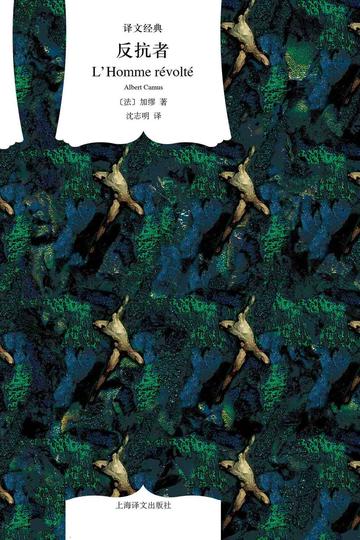
"The Rebel" is one of the masterpieces of Camus, the French literary master of absurd existential philosophy. In this well-referenced essay, Camus adopts a frank and honest attitude and re-examines the spirit of resistance that has emerged in the long history of mankind: the French Revolution and the Russian Revolution at the historical level; the thinkers include the Marquis de Sade, Saint-Just, Nietzsche, and Marx; and the ideological trends from nihilism to surrealism, from anarchism to liberalism. Camus' critical spirit revealed in "The Resistance" ultimately established the book's classic status.
Reader comments
His perspective was profound and gave me a new appreciation for human resistance. I especially like Holderlin's sentence: "I tie myself to the earth with the tie of death." This sentence is so powerful! However, there is a character in the book that I don't really like, that is, the nihilist. I feel that his views are a bit extreme. Overall, this is a book worth reading and will give you a lot to think about.
This book is telling you - you can overturn the table, but don't smash the table and then sit on it yourself, forcing others to call you "the savior". Resistance is about living like a human being, not about becoming the next oppressor. This book introduces many people and refutes and explains new ideas by introducing their thoughts. It is still Camus' style. To be honest, I was a little confused when I read it, but it does not mean that it is not worth reading carefully. Maybe I read too many Camus's books.
The following is the original sentence I quoted from this book. I think there is no more suitable book review than it.
"The Rebels" is the result of this experience. While the Rebels regained this experience, they tried every means to transcend it. This book starts from doing what cannot be done, and in its own way, illustrates a struggle to offset what cannot be done, while looking for a basic value, clarifying survival and the will to survive, without rejecting anything realistic.
His perspective was profound and gave me a new appreciation for human resistance. I especially like Holderlin's sentence: "I tie myself to the earth with the tie of death." This sentence is so powerful! However, there is a character in the book that I don't really like, that is, the nihilist. I feel that his views are a bit extreme. Overall, this is a book worth reading and will give you a lot to think about.
This book is telling you - you can overturn the table, but don't smash the table and then sit on it yourself, forcing others to call you "the savior". Resistance is about living like a human being, not about becoming the next oppressor. This book introduces many people and refutes and explains new ideas by introducing their thoughts. It is still Camus' style. To be honest, I was a little confused when I read it, but it does not mean that it is not worth reading carefully. Maybe I read too many Camus's books. The following is the original sentence I quoted from this book. I think there is no more suitable book review than it. "The Rebels" is the result of this experience. While the Rebels regained this experience, they tried every means to transcend it. This book starts from doing what cannot be done, and in its own way, illustrates a struggle to offset what cannot be done, while looking for a basic value, clarifying survival and the will to survive, without rejecting anything realistic.