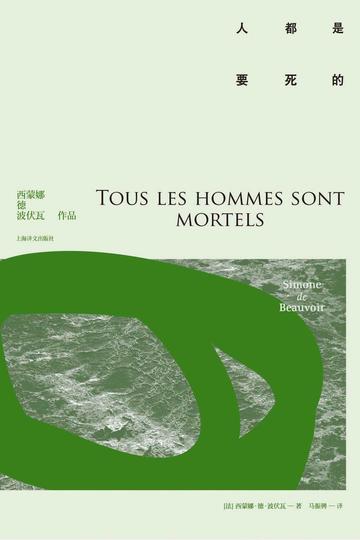
A mysterious immortal body has witnessed six hundred years of historical changes in Europe and the United States. It is a nightmare that will never end. Family, love, and friendship are all the ultimate nothingness.
French existentialist leader, founder of the feminist movement, Goncourt Prize winner, author of "The Second Sex" representative work of Beauvoir: In the 19th century, Regina, a drama actress who was unwilling to be mediocre, accidentally picked up Fosca, a man suspected of being mentally ill, and unexpectedly learned that this man came from the 13th century and had immortality...
Regina then longs to possess him and transform him to have eternal love. She abandoned her lovers and friends, gave up her career, and shared his life experience for him, but she finally realized that she was just like the other men and women in his life.
Reader comments
Read Beauvoir's "All Men Are Mortal"
I had read "The Second Sex" by French writer Beauvoir very early on. As an independent woman who wrote the bible of feminism, I preconceived that Beauvoir was a influential figure in theoretical criticism and thought that her fictional works were not worth reading. I didn't expect to read her novel "Everyone is Mortal" and was shocked. With extremely smooth writing and a sentimental apocalyptic mood, she wrote about the "ghost" of existentialism - the novel's protagonist Raymond Fosca, an immortal man. The French philosopher Rousseau once said in his famous work "Emile": "If we are allowed to live forever in this world, who would be willing to accept this unlucky gift?" "All Men Are Mortal" is about such a man, Raymond Fosca, who accepted this gift. He prayed for immortality. He hoped to use his immortal years to conquer the boundless earth and build a paradise on earth according to his reason. However, the happy order that one person tries to establish for others may be a disaster in the eyes of others. So we must be wary of people or doctrines that promise us happiness, that only existence is eternal. Raymond Fosca was born in Italy in the 13th century. He experienced the vicissitudes of nearly six hundred years of European history and experienced the honors, disgrace, blessings and misfortunes of life. Sometimes he was uplifted, sometimes depressed, sometimes passionate, sometimes desperate. Finally, in his long life, he understood that eternal life is a kind of natural punishment. However, he is already a living person, with no way to save himself, and has to continue to live endlessly with a helpless mood. The immortal existence in such a world made Raymond Fosca feel that "in this world that I can't leave, pain is no more important than happiness, and hatred is as boring as love. Love, hate, pain and joy have the same result. Empty words, this is all that people give me - -Freedom, happiness, and progress. People today feed themselves with these flashy things." Beauvoir used the novel to tell people with a very absurd story: the meaning and value of life do not lie in the length of life, but in the thickness and width of life. Death gives life meaning, but what is the value of meaning in life? I think life is meaningless because everyone has to die. Therefore, the meaning of life is not important. Emphasizing the meaning of life is actually a dream that promises heaven. It is impossible to build heaven on earth, and heaven is a complete illusion. The writing method of "Everyone is Mortal" is very innovative. As the "introduction" at the beginning, it takes up almost one-half of the novel. At the time when Beauvoir was writing, French novelists were entering the "age of doubt", no longer centered on characters or stories, but questioning existence and the human condition. Beauvoir's "All Men Are Mortal" is not that radical, and it still has a wonderful story, but it is obvious that the focus of the novel is "questioning existence and the human condition." In the preface to the publication of the novel, Beauvoir wrote "Dedicated to Jean-Paul Sartre". It can be said that "Everyone is Mortal" is an enthusiastic echo of Sartre's "Existentialism is a Humanism". Beauvoir and Sartre were together for life and shared the same views. "Everyone is Mortal" tells us: "Life is not as long as possible. When life becomes infinite, it will make people miserable and nihilistic." But human beings still long for immortality as always, especially those emperors who hold great power and use aphrodisiacs. They may have never had a sense of emptiness and pain. The only thing they care about is that they cannot rule for eternity or even eternity. Unfortunately, everyone is going to die.
It is repeatedly mentioned in the article that "the only good thing a person can do is to do it according to his own conscience." Isn't this the practice of conscience?
The whole point of being human is that life is limited
The plot in the book is very attractive, especially the protagonist's thoughts when facing the infinity and limitation of life, which resonated with me very much. I like this kind of book that can trigger in-depth thinking. It gives me more insights into life. I recommend you take a look, I believe you will like it!
In the vast sea of stars exploring the meaning of life, this book is like a bright light, leading us to face the common destiny of mankind - death with its profound yet warm writing. It is not only a philosophical meditation on the end of life, but also a profound analysis of the value of survival, free will and the glory of human nature. Beauvoir uses "death" as a mirror to reflect the diverse aspects of human existence. She explores how individuals pursue infinite meaning in a limited life and how different cultures, beliefs, and personal experiences shape our outlook on life and death when facing death. In the book, she not only analyzes the views of great men in history on death, but also depicts the struggle and relief of ordinary people when facing death, showing the coexistence of the tree of life's exuberance and withering. The book is interspersed with stories of many historical figures and fictional characters. For example, Socrates' calmness in the face of death shows wisdom and courage; while some ordinary people's reflection and reconciliation before death make people feel the warmth and fragility of life. These cases are like vivid pictures, allowing readers to think about their own views on life and death in resonance. "Death is not the end of life, but a part of life." This sentence reminds us that death is not the end of life, but an indispensable part of the journey of life. It prompts us to cherish the present moment more and bravely pursue the meaning of life. We will eventually disappear in the torrent of time, but the love and thoughts left behind can transcend death and shine forever. Such an expression is both profound and inspiring, motivating us to live a wonderful life. "Everyone Must Die" enlightens us: when facing death, we should not fear and escape, but should accept and transcend. In a limited life, how to use love as a boat and wisdom as a sail to bravely sail in the unknown ocean to find and create the value of our own life. It reminds us: Cherish the people and things around you. Because every encounter is a gift from fate, and every separation is a mark of growth.




Read Beauvoir's "All Men Are Mortal" I had read "The Second Sex" by French writer Beauvoir very early on. As an independent woman who wrote the bible of feminism, I preconceived that Beauvoir was a influential figure in theoretical criticism and thought that her fictional works were not worth reading. I didn't expect to read her novel "Everyone is Mortal" and was shocked. With extremely smooth writing and a sentimental apocalyptic mood, she wrote about the "ghost" of existentialism - the novel's protagonist Raymond Fosca, an immortal man. The French philosopher Rousseau once said in his famous work "Emile": "If we are allowed to live forever in this world, who would be willing to accept this unlucky gift?" "All Men Are Mortal" is about such a man, Raymond Fosca, who accepted this gift. He prayed for immortality. He hoped to use his immortal years to conquer the boundless earth and build a paradise on earth according to his reason. However, the happy order that one person tries to establish for others may be a disaster in the eyes of others. So we must be wary of people or doctrines that promise us happiness, that only existence is eternal. Raymond Fosca was born in Italy in the 13th century. He experienced the vicissitudes of nearly six hundred years of European history and experienced the honors, disgrace, blessings and misfortunes of life. Sometimes he was uplifted, sometimes depressed, sometimes passionate, sometimes desperate. Finally, in his long life, he understood that eternal life is a kind of natural punishment. However, he is already a living person, with no way to save himself, and has to continue to live endlessly with a helpless mood. The immortal existence in such a world made Raymond Fosca feel that "in this world that I can't leave, pain is no more important than happiness, and hatred is as boring as love. Love, hate, pain and joy have the same result. Empty words, this is all that people give me - -Freedom, happiness, and progress. People today feed themselves with these flashy things." Beauvoir used the novel to tell people with a very absurd story: the meaning and value of life do not lie in the length of life, but in the thickness and width of life. Death gives life meaning, but what is the value of meaning in life? I think life is meaningless because everyone has to die. Therefore, the meaning of life is not important. Emphasizing the meaning of life is actually a dream that promises heaven. It is impossible to build heaven on earth, and heaven is a complete illusion. The writing method of "Everyone is Mortal" is very innovative. As the "introduction" at the beginning, it takes up almost one-half of the novel. At the time when Beauvoir was writing, French novelists were entering the "age of doubt", no longer centered on characters or stories, but questioning existence and the human condition. Beauvoir's "All Men Are Mortal" is not that radical, and it still has a wonderful story, but it is obvious that the focus of the novel is "questioning existence and the human condition." In the preface to the publication of the novel, Beauvoir wrote "Dedicated to Jean-Paul Sartre". It can be said that "Everyone is Mortal" is an enthusiastic echo of Sartre's "Existentialism is a Humanism". Beauvoir and Sartre were together for life and shared the same views. "Everyone is Mortal" tells us: "Life is not as long as possible. When life becomes infinite, it will make people miserable and nihilistic." But human beings still long for immortality as always, especially those emperors who hold great power and use aphrodisiacs. They may have never had a sense of emptiness and pain. The only thing they care about is that they cannot rule for eternity or even eternity. Unfortunately, everyone is going to die.
It is repeatedly mentioned in the article that "the only good thing a person can do is to do it according to his own conscience." Isn't this the practice of conscience?
The whole point of being human is that life is limited
The plot in the book is very attractive, especially the protagonist's thoughts when facing the infinity and limitation of life, which resonated with me very much. I like this kind of book that can trigger in-depth thinking. It gives me more insights into life. I recommend you take a look, I believe you will like it!
In the vast sea of stars exploring the meaning of life, this book is like a bright light, leading us to face the common destiny of mankind - death with its profound yet warm writing. It is not only a philosophical meditation on the end of life, but also a profound analysis of the value of survival, free will and the glory of human nature. Beauvoir uses "death" as a mirror to reflect the diverse aspects of human existence. She explores how individuals pursue infinite meaning in a limited life and how different cultures, beliefs, and personal experiences shape our outlook on life and death when facing death. In the book, she not only analyzes the views of great men in history on death, but also depicts the struggle and relief of ordinary people when facing death, showing the coexistence of the tree of life's exuberance and withering. The book is interspersed with stories of many historical figures and fictional characters. For example, Socrates' calmness in the face of death shows wisdom and courage; while some ordinary people's reflection and reconciliation before death make people feel the warmth and fragility of life. These cases are like vivid pictures, allowing readers to think about their own views on life and death in resonance. "Death is not the end of life, but a part of life." This sentence reminds us that death is not the end of life, but an indispensable part of the journey of life. It prompts us to cherish the present moment more and bravely pursue the meaning of life. We will eventually disappear in the torrent of time, but the love and thoughts left behind can transcend death and shine forever. Such an expression is both profound and inspiring, motivating us to live a wonderful life. "Everyone Must Die" enlightens us: when facing death, we should not fear and escape, but should accept and transcend. In a limited life, how to use love as a boat and wisdom as a sail to bravely sail in the unknown ocean to find and create the value of our own life. It reminds us: Cherish the people and things around you. Because every encounter is a gift from fate, and every separation is a mark of growth.
You have to watch it often to keep it going