Anyone living in modern China knows what it feels like to witness the loss of tradition and the renovation of old scenes. In Beijing, maybe you were eating noodles at a small shop in an alley last week, but the next week you go there and find that the place has turned into a pile of rubble.
In comparison, the history of Northeast China is not that distant.
The train you are taking may be traveling on a railway named after the Tsar; the building you are strolling past is not an ancient Buddhist temple, but a Russian Orthodox church with an onion dome; the avenue you are walking on is lined with Japanese red pines; and under the trees are the office buildings of various governments during the colonial period. It exudes a strong atmosphere of the old times; you can also visit Puyi's "Puppet Palace" and see where Japan detained Allied prisoners of war during World War II; if you stand on the bridge that US pilots dive-bombed during the Korean War, you are standing on the border between China and North Korea, crossing the Yalu River.
In the early 17th century, Northeast China began to appear more frequently in recorded ancient history. On the other side of the world, Shakespeare was writing his classic plays and England's Puritans landed at Plymouth Rock to begin the creation of the United States.
Maybe you don't know what stories happened here and what kind of past it has. In my eyes, these are precisely the marks of history, recording the rise and fall of Northeast China, and also condensing the ups and downs of modern China.
In 1993, the U. S. Census no longer counted farmers, and less than 2% of Americans lived in rural areas. But in China, nearly half of the population, about 700 million people, still live in rural areas like wasteland. However, this number is plummeting: since 2000, a quarter of China's villages have quietly disappeared.
I know very well that in the Northeast, I can get a closer look at China's past. But I didn't expect that in the badlands I would get a glimpse of the country's future.
Reader comments
I have never been to the Northeast, but the feeling written in the book is that the Northeast is fresh and real, which makes me yearn for the Northeast even more. There is a kind of magic that makes people calm down and read carefully. Biographies of Chinese regions written by foreigners are actually pretty good [laughs]
As a Chinese son-in-law, he described and analyzed the fertile, cold and mysterious land in the Northeast in a more detailed way. At the same time, it is also mixed with some history of Northeast China, modern history, etc. As a "foreigner", it is still very good. Because of love, I wrote a book.
This book tells the history and culture of Northeast China in the form of a travelogue. Through the author's description, I seemed to be able to see those ancient buildings, streets and people's lives. The author's observation skills are very keen and the characters have distinct personalities, which gave me a deeper understanding of Northeast China. He not only showed the past of Northeast China, but also made me think about China's future. Well worth reading!
A kind of Western literary novel of poetry and prose. I have read the words of our ancient poetry. When you read this kind of Western poetry and prose, you will find a problem. It seems that no matter where in the period or among all kinds of people, there is a vague pessimism. Because more of these poems reveal a very sad atmosphere. Or maybe only sad people can write such excellent poetry.
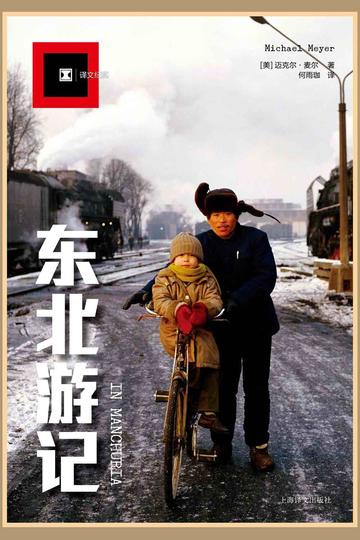
Anyone living in modern China knows what it feels like to witness the loss of tradition and the renovation of old scenes. In Beijing, maybe you were eating noodles at a small shop in an alley last week, but the next week you go there and find that the place has turned into a pile of rubble. In comparison, the history of Northeast China is not that distant. Explore the historical past of Snow Township in Northeast China from a foreigner's perspective. Through historical marks such as railways, old factories, and office buildings, you can glimpse the rise and fall of Northeast China and the ups and downs of modern China.
This is an interesting travelogue about Northeast China. The writing is so friendly that there seems to be no trace of translation. The author has consulted a large amount of information and knows the land of Northeast China better than most Chinese people. Through this book and notes, I learned part of the content about 731.
It's a good read. I like to read the historical records that introduce the present and past of a region.
It is a very simple and down-to-earth book. The story is set in my hometown, but I have only passed by it once in my life by riding a bicycle.
Okay, you can take a look.
Good, good, good, good, good, good, good, good
The Northeast is written from a foreigner's perspective, objectively. Reality





I have never been to the Northeast, but the feeling written in the book is that the Northeast is fresh and real, which makes me yearn for the Northeast even more. There is a kind of magic that makes people calm down and read carefully. Biographies of Chinese regions written by foreigners are actually pretty good [laughs]
As a Chinese son-in-law, he described and analyzed the fertile, cold and mysterious land in the Northeast in a more detailed way. At the same time, it is also mixed with some history of Northeast China, modern history, etc. As a "foreigner", it is still very good. Because of love, I wrote a book.
This book tells the history and culture of Northeast China in the form of a travelogue. Through the author's description, I seemed to be able to see those ancient buildings, streets and people's lives. The author's observation skills are very keen and the characters have distinct personalities, which gave me a deeper understanding of Northeast China. He not only showed the past of Northeast China, but also made me think about China's future. Well worth reading!
A kind of Western literary novel of poetry and prose. I have read the words of our ancient poetry. When you read this kind of Western poetry and prose, you will find a problem. It seems that no matter where in the period or among all kinds of people, there is a vague pessimism. Because more of these poems reveal a very sad atmosphere. Or maybe only sad people can write such excellent poetry.
Anyone living in modern China knows what it feels like to witness the loss of tradition and the renovation of old scenes. In Beijing, maybe you were eating noodles at a small shop in an alley last week, but the next week you go there and find that the place has turned into a pile of rubble. In comparison, the history of Northeast China is not that distant. Explore the historical past of Snow Township in Northeast China from a foreigner's perspective. Through historical marks such as railways, old factories, and office buildings, you can glimpse the rise and fall of Northeast China and the ups and downs of modern China.
This is an interesting travelogue about Northeast China. The writing is so friendly that there seems to be no trace of translation. The author has consulted a large amount of information and knows the land of Northeast China better than most Chinese people. Through this book and notes, I learned part of the content about 731.
It's a good read. I like to read the historical records that introduce the present and past of a region.
It is a very simple and down-to-earth book. The story is set in my hometown, but I have only passed by it once in my life by riding a bicycle.
Okay, you can take a look.
Good, good, good, good, good, good, good, good
The Northeast is written from a foreigner's perspective, objectively. Reality