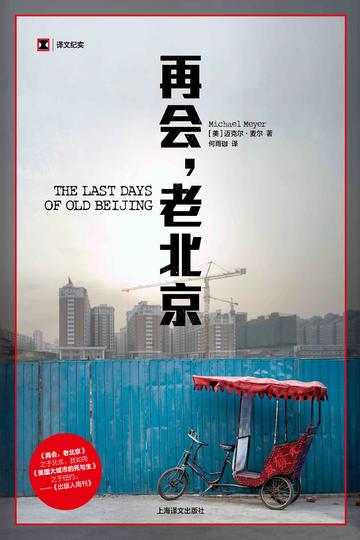
In Beijing, the vibrant capital of China, change is the only constant theme.
For the Chinese, Beijing is the center of everything: government, media, education, art and transportation, even language and time. Since the founding of the city, Beijing has been a charming place attracting foreigners, businessmen, scholars and explorers, including Marco Polo in the 13th century: "The ground plan of the whole city is like a chessboard, and its beauty and goodness cannot be declared."
The ruins of this "chessboard" still remain in Beijing, covering an area of more than 60 square kilometers, about the same size as Manhattan, and those narrow alleys called hutongs still exist. Hutongs are to Beijing what rivers are to Venice. Hutongs have been a cultural feature of the city for centuries, even if today's lanes are less than one-eighth of their former size.
Beijing is not a city as Westerners see it. In 1962, a foreign reporter defined this place as "the largest countryside in history." Although it has the world's second-busiest airport, nearly a hundred Starbucks and a new subway system that reaches beyond the city's core, it is still a rural area in the eyes of some Beijingers.
Over the past decade, like the capital of any rising country, the vast countryside of Beijing has gone global. Across Tiananmen Square, the Great Wall, a hundred kilometers away, marks the vast limits of the city. Perhaps its changes can be illustrated with this episode:
A few years ago, I saw an optimistic banner hanging at the demolition site of an old building. It read: Reproduce the ancient capital.
One night, someone secretly removed the left half of the second word, so the slogan became: Goodbye Ancient Capital.
To passers-by, both slogans may be correct, and Beijing is in the midst of a cycle of reconstruction and rebirth that occurs every 800 years. The altered banner was pulled down within hours, but it didn't matter because Beijingers didn't need to read it to feel the city's changes - they were living it every day.
Reader comments
The writing feels so "authentic" when you know this is a book written by a foreigner. You can still feel that way. One more thing. Dare to write ✍. Yes, there are many social things that the common people should know! Avoidance is the problem!
This book gave me a deeper understanding of old Beijing and reminded me of the experiences of my own relatives and friends. Beijing is changing so fast. As the book says, some old buildings and old culture are gradually disappearing. I hate those who blindly pursue modernization and destroy the culture of old Beijing. I hope that while Beijing is developing, it can also protect its precious historical heritage. This book is really worth reading!




The writing feels so "authentic" when you know this is a book written by a foreigner. You can still feel that way. One more thing. Dare to write ✍. Yes, there are many social things that the common people should know! Avoidance is the problem!
This book gave me a deeper understanding of old Beijing and reminded me of the experiences of my own relatives and friends. Beijing is changing so fast. As the book says, some old buildings and old culture are gradually disappearing. I hate those who blindly pursue modernization and destroy the culture of old Beijing. I hope that while Beijing is developing, it can also protect its precious historical heritage. This book is really worth reading!