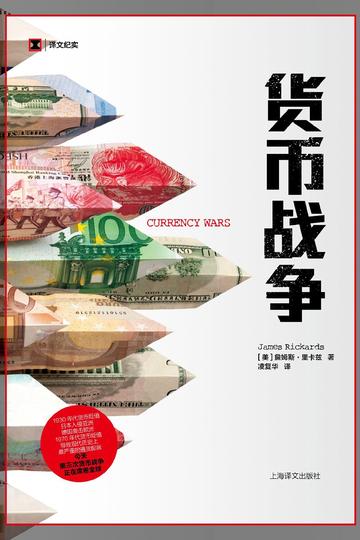
The U. S. Federal Reserve, under Ben Bernanke, is taking the biggest gamble in financial history. Starting in 2007, the Fed fended off economic collapse by cutting short-term interest rates and lending freely. Eventually, interest rates hit zero and the Fed ran out of ammunition.
Then, in 2008, the Fed found new ammunition: quantitative easing. Although the Fed claims that the plan is to ease financial conditions by lowering long-term interest rates, in essence it is just a money-printing program to stimulate economic growth.
There is a very real danger that the Fed's money printing could suddenly turn into hyperinflation. Worse, none of this happens in a vacuum. The impact of printing dollars is global; by implementing quantitative easing, the Fed has effectively declared currency war to the world.
While the Fed's printing of trillions of dollars may be unprecedented, currency wars are not unheard of. Currency wars have happened before—two in the 20th century alone—and they always ended badly. In the best cases, currency wars result in countries stealing economic growth from their trading partners. In the worst cases, the scramble for resources leads to aggression and war, which degenerates into inflation, recession, retaliation and violence.
A country cannot embark on the road to prosperity by relying on currency devaluation.
Reader comments
As the central bank of the world's largest economy, the Federal Reserve plays an important role. However, the Chinese do not know much about this organization. In the 300 years since the Bank of England was established in 1694, the power of international financial capital can be seen behind almost every major change in the world. They control the political destiny of a country by influencing its economic lifeline, and control the flow and distribution of world wealth by inciting political events and inducing economic crises. It can be said that the history of world finance is a history of conspiracy to dominate human wealth.
It is a very meaningful book, especially in the context of the current deteriorating economic environment. Reading this book about the past currency war is very meaningful. It can not only help us understand the past currency war, but also make us more vigilant. This book helped me understand the international monetary system. For an ordinary person like me who is not in the financial industry, I was not able to understand the importance of currency to life before. This thing is too macro and may not have a direct impact on individuals. But the author tells us that currency war has become one of the important tools today to seize hegemony, improve status and consolidate rule. Reading this book can help me expand my horizons.
The content of this book is so exciting! It made me understand the horror of currency wars. It turns out that currency changes can have such a big impact on the global economy. The book mentioned that "a country cannot rely on currency devaluation to embark on the road to prosperity." This sentence impressed me deeply. It reminded me of the book "Principles of Economics", both of which explore the relationship between economics and money. Moreover, I felt like the girl in the book, finding her way in this complicated world. I need to learn more economic knowledge to better cope with future challenges. What about you, do you have any similar feelings?
If you are very interested in the global monetary system and financial wars, then you must not miss this book. The book discusses the importance and influence of monetary policy and the role of governments and central banks in regulating the money supply and interest rates. The author believes that currency war refers to the phenomenon in which countries compete for economic interests and international competitive advantages by manipulating monetary policies and financial means. These competitions are often accompanied by exchange rate manipulation, trade protectionism and economic sanctions.
Reading this book was very inspiring to me. Although the author wrote the book around 2011, more than ten years have passed and many predictions are coming true. If reading a book makes me feel a little smarter and understands the world a little more, then this book is a good book for me. Yes, I think Currency Wars is a very good book.
The part about currency wars (competitive devaluation during World War I and the Triffin problem of gold exchange) is better. It adds a lot of financial history, and through extension, you also understand some of the economic principles behind it. The third part is a bit confusing, and some of it overlaps with the previous part. But the most important thing is the chaos theory deduction of today's huge and complex financial system, which illustrates the necessity of streamlining the system. After reading it, I had more doubts in my mind. I just felt that economics is really a magic trick that makes people scratch their heads.
This book comprehensively and objectively analyzes the economic relations between the world's major powers, as well as the economic crisis, inflation, deflation, and currency wars caused by US enforcement.
An objective commentary on world currencies and a series of hegemonic operations of the US dollar. Thank you to the author for his hard work!
Easy to understand and beautiful
Macroeconomics can be seen in Tutu today
Good book, understanding the nature of the world, helpful for investment and financial management
A very good book that uses history as a guide and can connect the past and the present.




As the central bank of the world's largest economy, the Federal Reserve plays an important role. However, the Chinese do not know much about this organization. In the 300 years since the Bank of England was established in 1694, the power of international financial capital can be seen behind almost every major change in the world. They control the political destiny of a country by influencing its economic lifeline, and control the flow and distribution of world wealth by inciting political events and inducing economic crises. It can be said that the history of world finance is a history of conspiracy to dominate human wealth.
It is a very meaningful book, especially in the context of the current deteriorating economic environment. Reading this book about the past currency war is very meaningful. It can not only help us understand the past currency war, but also make us more vigilant. This book helped me understand the international monetary system. For an ordinary person like me who is not in the financial industry, I was not able to understand the importance of currency to life before. This thing is too macro and may not have a direct impact on individuals. But the author tells us that currency war has become one of the important tools today to seize hegemony, improve status and consolidate rule. Reading this book can help me expand my horizons.
The content of this book is so exciting! It made me understand the horror of currency wars. It turns out that currency changes can have such a big impact on the global economy. The book mentioned that "a country cannot rely on currency devaluation to embark on the road to prosperity." This sentence impressed me deeply. It reminded me of the book "Principles of Economics", both of which explore the relationship between economics and money. Moreover, I felt like the girl in the book, finding her way in this complicated world. I need to learn more economic knowledge to better cope with future challenges. What about you, do you have any similar feelings?
If you are very interested in the global monetary system and financial wars, then you must not miss this book. The book discusses the importance and influence of monetary policy and the role of governments and central banks in regulating the money supply and interest rates. The author believes that currency war refers to the phenomenon in which countries compete for economic interests and international competitive advantages by manipulating monetary policies and financial means. These competitions are often accompanied by exchange rate manipulation, trade protectionism and economic sanctions.
Reading this book was very inspiring to me. Although the author wrote the book around 2011, more than ten years have passed and many predictions are coming true. If reading a book makes me feel a little smarter and understands the world a little more, then this book is a good book for me. Yes, I think Currency Wars is a very good book.
The part about currency wars (competitive devaluation during World War I and the Triffin problem of gold exchange) is better. It adds a lot of financial history, and through extension, you also understand some of the economic principles behind it. The third part is a bit confusing, and some of it overlaps with the previous part. But the most important thing is the chaos theory deduction of today's huge and complex financial system, which illustrates the necessity of streamlining the system. After reading it, I had more doubts in my mind. I just felt that economics is really a magic trick that makes people scratch their heads.
This book comprehensively and objectively analyzes the economic relations between the world's major powers, as well as the economic crisis, inflation, deflation, and currency wars caused by US enforcement.
An objective commentary on world currencies and a series of hegemonic operations of the US dollar. Thank you to the author for his hard work!
Easy to understand and beautiful
Macroeconomics can be seen in Tutu today
Good book, understanding the nature of the world, helpful for investment and financial management
A very good book that uses history as a guide and can connect the past and the present.