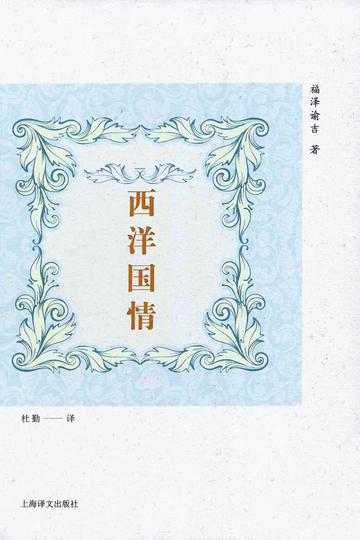
1. This translation is based on the version published by Keio University Press. This version was compiled by Marion Saucier and Shunsaku Nishikawa based on the final version of "The Complete Works of Fukuzawa" written by Yukichi Fukuzawa during his lifetime, and with reference to various versions such as the reprint of "State of the West (Part 1)", the first edition of "The State of the West Part 2", and the first edition of "The State of the West Part 2".
2. The first chapter first introduces the customs, social structure and technology of Western countries, such as politics, taxation laws, national debts, banknotes, merchant associations, foreign diplomacy, military systems, literature and technology, schools, newsprint, libraries, hospitals, poor homes, dumb homes, blind homes, lunatic homes, homes for idiots, museums, exhibitions, steam engines, steam ships, steam trains, telephones, and gas lamps.
3. The second chapter and the second chapter provide a detailed and easy-to-understand summary of the history, politics, technology, military, economy, education, social systems, etc. Of Western countries. This knowledge was refreshing to the Japanese at that time. What is even more worth mentioning is that in the process of translating and introducing foreign books, Fukuzawa Yukichi painstakingly created many "Japanese Chinese characters". For example, he translated the word "Freedom" in the American Declaration of Independence as "freedom" and annotated it as "autonomy and arbitrariness", which was his first creation.
4. Fukuzawa Yukichi was a famous enlightenment thinker in modern Japan. At that time, Japanese society was in the political trend of "obeying imperial edicts and rejecting foreigners." He himself might have been in danger of his life at any time by introducing the West. However, Fukuzawa was keenly aware that the trend of the future world was to actively introduce Western civilization, and turned his attention to the samurai class who held the key to Japan's political reform. To this end, Fukuzawa took advantage of the opportunity of the "Treaty Promise" of 1865, and the Japanese samurai showed extraordinary courage and wisdom in accepting Western civilization. This book is like a wake-up call, awakening the people's ignorance, enlightening the ignorant society's understanding of advanced civilized countries, and even profoundly affecting the policies of the reform government.
Reader comments
This book is really rich in content! It introduces various Western customs, social structures, and technologies, and also tells the history, politics, and economy of Western countries. Moreover, the author Yukichi Fukuzawa created many "Japanese kanji" to make the content easier to understand. It felt like opening a window to understand the West, which was very inspiring to me.


This book is really rich in content! It introduces various Western customs, social structures, and technologies, and also tells the history, politics, and economy of Western countries. Moreover, the author Yukichi Fukuzawa created many "Japanese kanji" to make the content easier to understand. It felt like opening a window to understand the West, which was very inspiring to me.