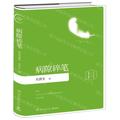
A collection of essays, published in 1986, including more than 200 short essays written by Borges when he was the editor-in-chief of the "Foreign Books and Authors" column of the Buenos Aires magazine "Family". The words "Tofu Chunks" range from nightmares, metaphors, and time to the rhetorical intention of "The Divine Comedy" and the narrative rules of detective novels. From Shakespeare and Kafka to Cao Xueqin and Murasaki Shikibu, it is a collection of reading notes and writers' notes. Borges believed that the works of many "second- and third-rate" writers, or even the talk in the streets, might have something comparable to classics.
Reader comments
The knowledge is extensive, spanning multiple works, and thinking among various authors, like a grand blueprint, which has been fully marked, because I like it and because my thoughts are far-reaching.
When you do something to the extreme, you gain a lot of experience and insights.
The Carl Sandburg mentioned in this book reminds me of a friend of mine who has also had many different jobs and has a lot of experience. Borges commented in the book that Sandburg "did not move abroad, but did a lot of work." I agree with this point. Just like my friends, they have enriched their lives through various experiences. Sandburg's works were also mentioned in the book, which reminded me that there are actually many ordinary people around us, and their stories and works are equally worthy of our attention and appreciation. This book made me think that we should cherish the people and stories around us more, because they may contain beauty comparable to classics.

The knowledge is extensive, spanning multiple works, and thinking among various authors, like a grand blueprint, which has been fully marked, because I like it and because my thoughts are far-reaching. When you do something to the extreme, you gain a lot of experience and insights.
The Carl Sandburg mentioned in this book reminds me of a friend of mine who has also had many different jobs and has a lot of experience. Borges commented in the book that Sandburg "did not move abroad, but did a lot of work." I agree with this point. Just like my friends, they have enriched their lives through various experiences. Sandburg's works were also mentioned in the book, which reminded me that there are actually many ordinary people around us, and their stories and works are equally worthy of our attention and appreciation. This book made me think that we should cherish the people and stories around us more, because they may contain beauty comparable to classics.