Stats
5.8Score
Synopsis
No synopsis yet.
We haven’t got an English blurb for this one. It appears once the source description has been translated.
We haven’t got an English blurb for this one. It appears once the source description has been translated.


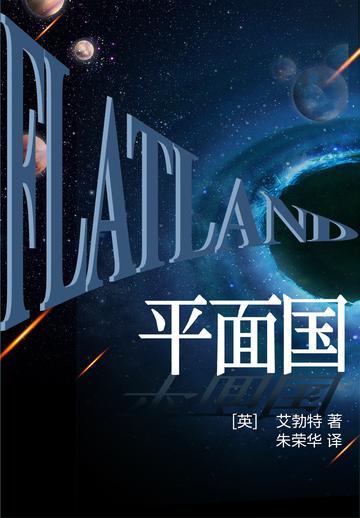
Finished watching "Flatland". The author writes some two-dimensional stories in the first person, but describes them with a three-dimensional thinking. Even though he has made various circles, it still looks awkward... Lower your thinking to a two-dimensional plane, and then understand what is said in the book: eating, medical care, church, theater, etc., And you can gain some understanding, although those two-dimensional activities seem boring; does it also explain from another perspective: high-latitude creatures will think that our lives (although technology has developed to a certain extent) are also very naive... From one to two dimensions, from two to three dimensions, we can all explain it very well, because under our dimensions, but from three dimensions to four dimensions (the four dimensions of space, not the four dimensions plus time), we have not seen any novel conclusions... There are countless points (zero dimension) in a line (one dimension), countless lines (any direction) in a surface (two dimensions), and countless surfaces (any direction) in a body (three dimensions). So, should there be countless individuals (any direction) in four dimensions, and where should the extra one dimension point? But it's certainly not the time… From zero to three dimensions, three translational degrees of freedom have been used up. From three to four dimensions, can we consider rotational degrees of freedom?
For me, there are some inspirations, such as the description of the internal organs of the characters in Line Country and Flat Country, and the idea of "I am the world, and the world is me" in Dian Country. At the same time, for Flat Country and Line Country, the descriptions of mutual recognition between people are more rational, but there are relatively few descriptions of a series of social labor.
Moreover, the imagination in the book is also very rich, making me feel like I have entered a wonderful two-dimensional world. This reminds me of a friend of mine who is always able to look at problems from different angles and bring me many new ideas. I think this book can not only make us happy, but also inspire our thinking. It is worth reading.
There is no difference between two and three dimensions
Imaginative popular science books
Mixed doubles worrying about gains and losses