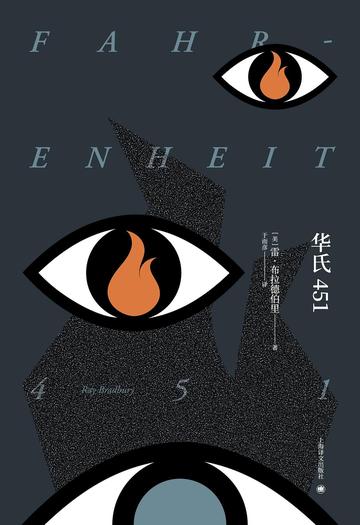
A classic masterpiece by a contemporary science fiction master, it caused a huge sensation when it was first published fifty years ago and is considered an important masterpiece of dystopian novels. Fahrenheit 451 is the ignition point of paper. The story takes place in a world that suppresses freedom of thought. All books here are banned. The job of firefighters is not to put out fires, but to burn books. The protagonist of the novel has been a firefighter for ten years, but he has never doubted his job until one day he meets a strange girl and begins to have doubts about his job, until he launches a challenge to the world.
Reader comments
Based on the special setting that the firefighter's task is to burn books, a story about Montag, a sober "idiot", is launched, trying to take on war to change society and change the people in the context of being ignorant and addicted to low-level happiness. The characterization of the characters is very vivid and nuanced. Mildred and her sisters embody the ignorance and self-righteousness of the people; there is also the captain, the crazy bibliophile who is tortured by life and the depravity of burning books crazily; and Faber and the intellectuals at the train station who work hard to make the "Phoenix" reborn from the ashes.
Among them, the author's preface does indeed make people think deeply: Some books that are blank, superficial and nutritious, and the "editorial department" "burned and deleted" the words that were beyond the understanding level of nursery rhymes. The author "shot" all of them. Does this behavior create a society like the stupid people in this book? Play the irony card well!
But... The ending seemed a little rushed, so much so that I didn't realize it was over until I read it.
Firefighters are a profession of putting out fires and setting fires. In that metaphorical future world, they use fire to put out "fires".
However, books can be burned, but thoughts cannot be burned. Montag gave up his identity as a "fireman" and joined the team of "fire bearers" beside the railway and the entire world. Perhaps some of you loyal readers of dystopian works will think that this too-beautiful ending is too utopian, but the author makes it very clear in the postscript that the "too-beautiful" ending is just what he naturally did, and it is his loud cry and declaration of will as the "fire bearer" in reality.
So I really, really enjoyed this book.
Books are the ladder of human progress, and the author uses a brand-new worldview to tell us about a different world in this book. Burning the books that should be the most respected by humans has turned into the job of firefighters who should be putting out fires. Two points that go against our ordinary world are connected to form the line of this mutated world, a world where carpe diem, happiness leads to death, and everything is recognized by the absence of thought, only the beginning and the end, an ignorant, monotonous world. In a world without emotion, flames burn everything, but fortunately, the little girl, Gai, the old man and the many wanderers who appeared in the end with knowledge or longing for knowledge are still resisting with light. All knowledge is engraved in their brains, profound and flawless. One day the seeds will sprout and many beautiful flowers will bloom to cover up this abnormal world and bring it back to a normal and balanced society.
451 Degrees Fahrenheit is the temperature at which paper burns out, and it is the critical point at which independent thought dies. When firefighters stop saving people and start burning books. The most terrifying thing is never the imprisonment of powerful people, but when people voluntarily give up thinking and indulge in noise, invisible flames will burn down the entire era. "Books can be reduced to ashes by fire, but the fire of civilization will always be remembered." "Fahrenheit 451" is a fable for the future, and it also reminds us of the present to cherish every moment around us and not to immerse ourselves in entertainment now.
The writing style of this book is unique, the writing is concise and powerful, making people think deeply. The description of the character's behavior in the book is very delicate, especially the protagonist's inner struggle, which made me empathize with him. This is not only an imagination about the future world, but also a profound discussion on freedom of thought and human nature. It is well worth reading!
In the final analysis, a book is a person, and a person is a book. When books are burned, people are destroyed.
I really like the title of the book, Fahrenheit 451 is the burning point of the book [Sending Hearts]
Clarisse: Are you happy?
Seventeen years old and a madman.
Because I like you and I want nothing from you. And because we understand each other.
If the color rubs off, it means I'm in love. Is there any?
No, you are not in love with anyone.
Children, in fact, Clarice did not die. She faked her death and ran outside the city to find living books. Finally, she met Montag again, but the author did not write it (
A great book o( ̄▽ ̄)o (hahahaha) the plot really progresses very quickly
Dystopia is the real world!
It's very beautiful and the writing touches people's hearts.
This is the first time I read a novel of this type, which is very interesting. It leaves a lot to think about.
Deep and far-sighted
If you want to ask what is the greatest feat in human evolution history of hundreds of millions of years. That must be inheritance.
A classic dystopia. The more the times develop, the more profound the significance of this book becomes.
The ending is interesting. It seems that political correctness existed in the 20th century.
The writing is very good and touches people's hearts. I like this style.
It's really meaningful.
Wonderful and wonderful! No less than The Martian Chronicles.

Based on the special setting that the firefighter's task is to burn books, a story about Montag, a sober "idiot", is launched, trying to take on war to change society and change the people in the context of being ignorant and addicted to low-level happiness. The characterization of the characters is very vivid and nuanced. Mildred and her sisters embody the ignorance and self-righteousness of the people; there is also the captain, the crazy bibliophile who is tortured by life and the depravity of burning books crazily; and Faber and the intellectuals at the train station who work hard to make the "Phoenix" reborn from the ashes. Among them, the author's preface does indeed make people think deeply: Some books that are blank, superficial and nutritious, and the "editorial department" "burned and deleted" the words that were beyond the understanding level of nursery rhymes. The author "shot" all of them. Does this behavior create a society like the stupid people in this book? Play the irony card well! But... The ending seemed a little rushed, so much so that I didn't realize it was over until I read it.
Firefighters are a profession of putting out fires and setting fires. In that metaphorical future world, they use fire to put out "fires". However, books can be burned, but thoughts cannot be burned. Montag gave up his identity as a "fireman" and joined the team of "fire bearers" beside the railway and the entire world. Perhaps some of you loyal readers of dystopian works will think that this too-beautiful ending is too utopian, but the author makes it very clear in the postscript that the "too-beautiful" ending is just what he naturally did, and it is his loud cry and declaration of will as the "fire bearer" in reality. So I really, really enjoyed this book.
Books are the ladder of human progress, and the author uses a brand-new worldview to tell us about a different world in this book. Burning the books that should be the most respected by humans has turned into the job of firefighters who should be putting out fires. Two points that go against our ordinary world are connected to form the line of this mutated world, a world where carpe diem, happiness leads to death, and everything is recognized by the absence of thought, only the beginning and the end, an ignorant, monotonous world. In a world without emotion, flames burn everything, but fortunately, the little girl, Gai, the old man and the many wanderers who appeared in the end with knowledge or longing for knowledge are still resisting with light. All knowledge is engraved in their brains, profound and flawless. One day the seeds will sprout and many beautiful flowers will bloom to cover up this abnormal world and bring it back to a normal and balanced society.
451 Degrees Fahrenheit is the temperature at which paper burns out, and it is the critical point at which independent thought dies. When firefighters stop saving people and start burning books. The most terrifying thing is never the imprisonment of powerful people, but when people voluntarily give up thinking and indulge in noise, invisible flames will burn down the entire era. "Books can be reduced to ashes by fire, but the fire of civilization will always be remembered." "Fahrenheit 451" is a fable for the future, and it also reminds us of the present to cherish every moment around us and not to immerse ourselves in entertainment now.
The writing style of this book is unique, the writing is concise and powerful, making people think deeply. The description of the character's behavior in the book is very delicate, especially the protagonist's inner struggle, which made me empathize with him. This is not only an imagination about the future world, but also a profound discussion on freedom of thought and human nature. It is well worth reading!
In the final analysis, a book is a person, and a person is a book. When books are burned, people are destroyed.
I really like the title of the book, Fahrenheit 451 is the burning point of the book [Sending Hearts]
Clarisse: Are you happy? Seventeen years old and a madman. Because I like you and I want nothing from you. And because we understand each other. If the color rubs off, it means I'm in love. Is there any? No, you are not in love with anyone. Children, in fact, Clarice did not die. She faked her death and ran outside the city to find living books. Finally, she met Montag again, but the author did not write it (
A great book o( ̄▽ ̄)o (hahahaha) the plot really progresses very quickly
Dystopia is the real world!
It's very beautiful and the writing touches people's hearts.
This is the first time I read a novel of this type, which is very interesting. It leaves a lot to think about.
Deep and far-sighted
If you want to ask what is the greatest feat in human evolution history of hundreds of millions of years. That must be inheritance.
A classic dystopia. The more the times develop, the more profound the significance of this book becomes. The ending is interesting. It seems that political correctness existed in the 20th century.
The writing is very good and touches people's hearts. I like this style. It's really meaningful.
Wonderful and wonderful! No less than The Martian Chronicles.