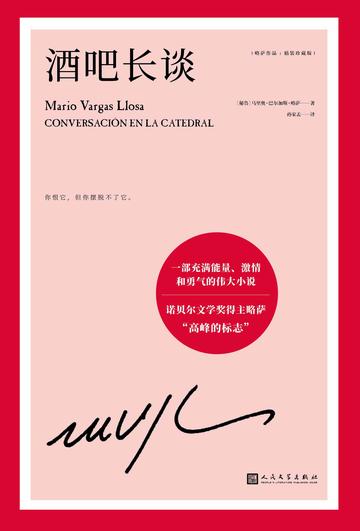
"Long Talk in the Bar" is one of the most creatively ambitious works of Nobel Prize winner Mario Vargas Llosa. It may also be an excellent example of how this contemporary writer uses literature to think politically. The novel is set during the dictatorship of General Odelia (1948-1956). It tells the story of the moral collapse of Santiago Zavala, a young man from a middle-class family, and how intellectuals with literary dreams gradually gave up on their ideals under the control of the corrupt power of the dictatorship. The novel comprehensively describes the situation in Lima at that time and shows the whole picture of Peruvian society.
Reader comments
After reading this book, I was attracted by the author's vivid portrayal of the characters and clever arrangement of the plot. This is a book that brings together various stories and experiences. Through the description of characters and events, the author shows various stories and fragments of life in the bar. Through his rich imagination and delicate description, he brings readers into the world of the bar, allowing people to feel the joy, sadness and humanity in it. "Long Talk in the Bar" is not only a collection of stories, but also a book about human nature and life. The author shows the various characters and plots in the bar.
From the perspective of using literature to think about politics, this book can be called a classic. I really like the storyline in the novel, "Five centuries before the publication of the Great Soviet Encyclopedia and George Orwell's novel Nineteen Eighty-Four, the Inca Empire had implemented political adaptation of the past to the present. When each Inca emperor ascended the throne, he was accompanied by a group of "amaotas" (scholars) who were responsible for revising history to show that the Inca The history of the Inca Empire reached its peak under the rule of the present emperors. All the great achievements of the previous emperors are attributed to the current emperors. As a result, it is impossible to recover the mysteriously distorted history. The Inca emperors had a very precise counting method, namely the knot counting method, but they did not have writing. "
Encyclopedia of Peruvian Society
I like it very much. I enjoyed watching it very much.
After reading this book, I was attracted by the author's vivid portrayal of the characters and clever arrangement of the plot. This is a book that brings together various stories and experiences. Through the description of characters and events, the author shows various stories and fragments of life in the bar. Through his rich imagination and delicate description, he brings readers into the world of the bar, allowing people to feel the joy, sadness and humanity in it. "Long Talk in the Bar" is not only a collection of stories, but also a book about human nature and life. The author shows the various characters and plots in the bar.
From the perspective of using literature to think about politics, this book can be called a classic. I really like the storyline in the novel, "Five centuries before the publication of the Great Soviet Encyclopedia and George Orwell's novel Nineteen Eighty-Four, the Inca Empire had implemented political adaptation of the past to the present. When each Inca emperor ascended the throne, he was accompanied by a group of "amaotas" (scholars) who were responsible for revising history to show that the Inca The history of the Inca Empire reached its peak under the rule of the present emperors. All the great achievements of the previous emperors are attributed to the current emperors. As a result, it is impossible to recover the mysteriously distorted history. The Inca emperors had a very precise counting method, namely the knot counting method, but they did not have writing. "
Encyclopedia of Peruvian Society
I like it very much. I enjoyed watching it very much.