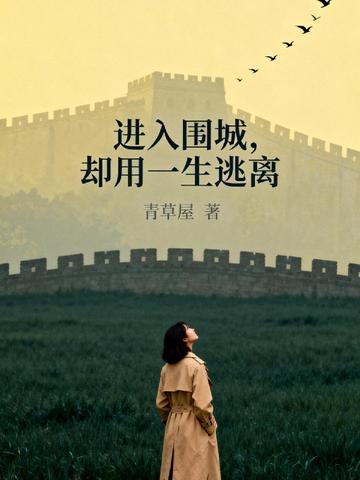
A woman spends her life escaping from the "siege city" - marriage, family, social discipline, and gender oppression. However, in each escape, she encounters more complex bonds and a truer self.
In the "sweet-smelling night" at the beginning, the scene of Wu Ailan escaping from the wicker ditch barefoot was like a heavy hammer to the heart - "half of the sweet smell came from the swollen and painful breasts in her arms, and half came from her husband Li Daniu's hands that were stained with pig blood and the smell of alcohol." This opening, full of symbolic meaning, instantly pulls us into a world that is so real that it is suffocating.
The brilliance of the article is that she not only writes about violence, but also how the soul maintains its last trace of sobriety under violence. Wu Ailan's action of protecting her breasts was her last dignity as a mother (even though she was unsuccessful); even the humblest soil can breed the most vigorous life; even the coldest winter seals the promise of the next spring.
Wang Jianjun's appearance is like a ray of light, but this light is not dazzling. He is a scarred man - lovelorn, alcoholic, with an intellectual fragility. Their encounter was not a fairy tale about a prince rescuing a princess, but the mutual recognition of two broken souls.
The most touching thing is that love does not become the be all and end all of salvation. Wu Ailan insisted on learning to read by herself, opening a shop by herself, and facing the threat of Li Daniu by herself. When she said, "I want to do it myself," we saw a woman's true independence - not running away from one man to another, but learning to stand in the world.