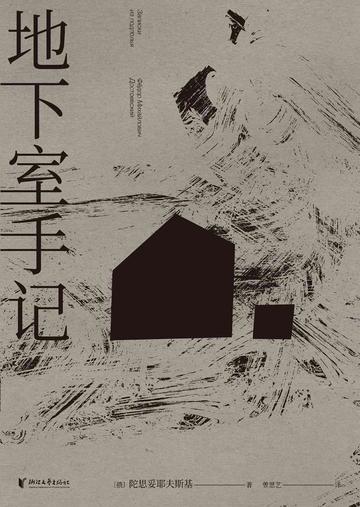
Notes from the Basement (Gomai Classic)
地下室手记(果麦经典)
- Status
- Completed
- Length
- 102k Words
- Updated
- 3y ago
- Source
- Fanqie
Stats
806Reads
9.4Score
342Shelves
25Chapters
112Listens
38.5kReads · all time
Tags
Synopsis
Reader comments
In booklists 2


Nobel Prize for Literature, Mao Dun Literature Prize, Lu Xun Literature Prize and Other Literary Works
I want to read a book similar to "One Sentence is Worth Ten Thousand Sentences: Collector's Edition".
122.5MViews725Books1dUpdated




Tuosi's Wen Na Is Really Coming to an End! Woo Woo Woo
Is there any Tuosiwen? ! ! I'm going to starve to death π_π, whatever, please give me some. I'm really going to starve to death, I'm starving to death (๑•́ωก̀๑). Can you stop giving it to me? Starved to death
626.9kViews53Books11dUpdated
From a psychological point of view, Basement is a typical highly sensitive person with cognitive dissonance. He has a strong ability to empathize. He feels very painful about things that happen in reality, especially things that he may be involved in, that are not in line with his inner moral laws but have to do. The tension between reality and spirit is very obvious in him. He knew that reality required some changes in his behavior, but the villain in his heart did not allow him to do so. The way to reduce this kind of cognitive dissonance can be to modify the inner laws, or to adhere to the principle of integrating knowledge and action. But sadly, even in the real society, most people are in the middle of these two points. This is why there are rituals of atonement to God in the West.
"Gentlemen, I swear to you, too much consciousness - this is a disease, a real and unmitigated disease. As far as people's daily life is concerned, just having the consciousness of ordinary people is more than enough." Sometimes overthinking, obviously normal personality and thinking, will gradually become pathological. Therefore, we must learn to keep ourselves busy and not be blinded by our own inferiority and meaningless pursuit of life.
As one of the pioneers of modernist literature, Dostoevsky was good at portraying the absurdity of the times by describing the struggling and contradictory psychology of characters. The protagonist admits that he is humble, cowardly, and shameless, but he still fundamentally retains human kindness, self-esteem, and the desire for a better life. He has never done anything bad, but he regrets and sheds tears for his not-so-good deeds, and is in pain because he cannot coexist harmoniously with others. But he is different from others after all - maybe because he hates debauchery, but if he wants to blend in with others, he must maintain debauchery, which makes him miserable. Maybe he could get some recognition from this pain and humiliation, but in the end he was overwhelmed. Eventually, driven by a desire for recognition and a distaste for debauchery, he ends up becoming a "basement man."
When reading classical novels, they are not as easy to read as modern novels. Their connotations are too hidden and require people to read them slowly and carefully. "Notes from the Basement" is such a book.
When my cold soul wanders freely in the basement free from the pain of choice, I am actually a ghost who is afraid of life, actually a lonely person who is afraid of life. This is a novel that Dossev himself felt creepy after reading it, because the messy thoughts of the thinker in the book all day long in the basement are his own reflections on life. His ramblings under the wet snow explore the irrationality and free will of human nature. However, the way it writes down his own values and philosophical thoughts is not a literary creation. It brings not satisfaction, but confession, and is the most profound analysis of human nature.
"I" know everything, but "I" can do nothing. "I" was wandering on a single tree between two cliffs, and the wind coming out of my feet made "I" teeter on the edge. Whether it is moving forward to become a person with independent personality and self-respect in the true sense; or backward, like most people, lingering in a state of confusion and drunkenness, "I" cannot do it. "I" live in the basement, occasionally getting out to look at the sky, and spitting on a few unlucky passers-by. "I" live like this. Maybe alive.
The psychological description in this book is great. The author dares to write about many unknown dark psychology. This is undoubtedly a warrior spirit. A great writer is not afraid of darkness because he can develop a bright mind from it.
Dostoyevsky's writing style is very unique, his writing style is delicate, and his morbid inferiority complex and self-analysis are very realistic. This book also foreshadows several of his later important works. It feels like the first part of a series, which makes me look forward to reading his other books!
Satirizes the hypocrisy of society in the first person
It should be a very good book, but I couldn't quite understand it. It was a long psychological description in the first half, which was half mocking and half descriptive. It was half-understanding, and it was a bit difficult to read. The psychological description in the second half is very vivid.
Through the image creation of the "basement man", identity anxiety and the dilemma of identity are very clearly expressed. It was forward-looking at the time and still has great practical significance now! Especially young people who are blind and at a loss when they first enter the society. Very good! Worth reading again and again
Best short stories
Impeccable and incomparable
After reading it, I felt indescribably uncomfortable, feeling like I was being dissected alive.
I can't make peace with gilded evil
I hope the reason you are able to read this is not because you have experienced
Very touching and worth pondering
If you will, come and listen to the baser desires of a man in a basement
Questions of awareness and action
Extremely high level, reaching the state of perfection
It is a book that must be read carefully and re-read, otherwise you cannot even tell whether it is the author's point of view or that of the gentlemen, whether it is satire or appreciation.
In fact, I listened to it twice in passing (because I was a little tired from reading paper books)
His inner mental state is very consistent with a person who is sensitive to conflicts and internal strife, but in action, this person behaves like a coward and a clown, with extremely hypocritical self-esteem and inferiority. He is still very similar to many people today.
Tuosi's writing is really good, and he vividly lays out the struggle and courtship of the "basement man" in front of the readers.
It is a book with very explicit psychological descriptions and is very real. The protagonist is not perfect but is fleshed out enough, making it strangely easy to sympathize with some of his socially incompatible behaviors.
While reading this book, I felt that people's hearts are full of complex emotions and are ever-changing.
It deeply explores consciousness and human nature. Every sentence is a reflection and a declaration of the soul.
It was so exciting, I couldn't help but read chapter after chapter.
I read it intermittently for 15 days, and I can always feel the shock to my soul. It is a good book worth reading.
The description is quite profound and detailed, and resonates with me.