Stats
5.8Score
Synopsis
No synopsis yet.
We haven’t got an English blurb for this one. It appears once the source description has been translated.
Reader comments
In booklists 3
Recommended Historical Books
I am a history class representative. Do you have any good books on historical literature and practical history?
25.9MViews246Books2dUpdated
Taoism, Buddhism, Merit
Buddhist Kung Fu, Tao Kung Fu, merit
22.4MViews358Books16dUpdated
Come and Read Some Books for Learning. Welcome, as Long as It's Not a Novel.
For example, divination, exercise, memory, cultivating immortals, classic stories, social interaction, programming Python, (。ò ∀ ó。)
1.3MViews490Books14dUpdated
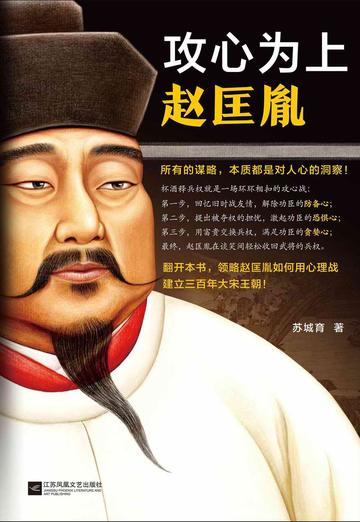
The Chenqiao mutiny, the yellow robe, and the release of military power over a glass of wine. I have heard these familiar and wonderful stories piecemeal many times, but it was not until I read "Zhao Kuangyin" that I had a deeper understanding of these deeds and the protagonist of the deeds, Zhao Kuangyin, the founding emperor of the Song Dynasty. It is said that the best way to conquer the enemy with troops is to attack the heart, and to defeat the enemy without fighting. It can be said that Lao Zhao has taken psychological warfare to a new level, relying on the psychological attack yellow robe to strengthen his body. This book can be read as a historical story or a historical novel. It combines modern psychological warfare with the thrilling history of the founding of the Song Dynasty. It is so exciting that it will make you slap your knees.
The story of Zhao Kuangyin becoming emperor, if placed in a modern online article, would be a classic male porn novel. I have always been curious about his story, but there are too few historical records. Even the most exciting "Release Military Power over a Drink of Wine" only contains five simple words in history books. Behind this, there is an interlocking psychological battle. It wasn't until I finished reading the book "Zhao Kuangyin" that I felt complete. This book is a biography created by the author Su Chengyu based on real history. A brief record of five words in history has become a wonderful plot with characters and dialogues in his writing. It gave me the pleasure of reading a novel for the first time in a history book.
An emperor praised by later generations as a master of psychological warfare, an emperor Taizu who was both gentle and upright, heroic and far-sighted, Zhao Kuangyin's life was full of propriety in the game. This book by historical writer Su Chengyu describes the life of Zhao Kuangyin, Taizu of the Song Dynasty, from the mystery of the birth of the "Fragrant Child" to the extraordinary life of a young man in troubled times, from the inevitable founding of the emperor's career to the strategy of governing the country. In the end, the mystery of the death of the candle shadow and the sound of the ax was left to future generations. He was the end of the troubled times of the Five Dynasties and the pioneer of the prosperous times. Since then, the colorful chapters of Zhao and Song have been left in the history of Chinese culture. Literature is said to be "Tang and Song", painting is said to be "Song and Yuan", and academic thought is said to be "Han and Song". This book shows Zhao Kuangyin's mature political strategies and keen political vision through vivid historical stories. The classic passage Chenqiao Mutiny, which is well-known to later generations: He who wins the hearts of the people wins the world, and the emperor withdraws his seat: a chair distinguishes the monarch and his ministers, a glass of wine releases the military power: the military power is taken back while talking and laughing. It's all in the book, told in a eloquent way. History is like a mirror, showing right and wrong. The key to the game of power lies in strategy, and the essence of strategy is the insight into people's hearts.
Book review: After reading this book, I felt that it was interesting, vivid and detailed. It uses fragments from historical records to describe a glorious and powerful Song Dynasty. The strange things and sufferings that happened to Taizu further highlighted Taizu's personality. It is very easy to read and has depth. The writing style is like a novel, which not only enriches the knowledge, but also makes people feel extremely vivid. Five-star recommendation, suitable for friends who don't like reading boring history books.
It's really great! I have read two books by this author! As a biography of a character, it uses time as a line, and the characters and events are arranged very closely and clearly. Events that are familiar but not well understood can be understood in a systematic and detailed manner here. Zhao Kuangyin's growth state of mind and character image are also deeply rooted in the hearts of the people. After reading this, I like him even more, he is so charming! The most important thing is that as a historical thing, it is not boring. On the contrary, the author writes vividly, especially on the battlefield, as if I was immersed in the scene, and it made my blood boil haha Then I particularly like the "Glimpses of Historical Records" at the end of each chapter, excerpting some important records in official history. You can refer to the content in the previous book and think for yourself.
This article let me know: Zhao Kuangyin fought steadily and conquered the north and south during the ten years of the Later Zhou Dynasty. In addition to his bravery and fearlessness, he also knows how to fight with his mind and win victory with his resourcefulness. He has grown from a soldier to an imperial captain step by step... The yellow flag draped over the body, the Chanzhou mutiny broke the crisis In the third year of Qianyu of the Later Han Dynasty (950), Zhao Kuangyin went all the way north to Yedu (now Linzhang County, Hebei Province) and joined Guo Wei's command. In April of this year, the Khitan frequently invaded the border. Liu Chengyou, Emperor Yin of the Later Han Dynasty, issued an edict and ordered Guo Wei to guard Yedu to resist the Khitan. Guo Wei made arrangements for all matters concerning soldiers, money, silk, and grain and grass in the Hebei states. At the center of the imperial court, Guo Wei served as the privy envoy and minister, in charge of the national military affairs; in the local vassal towns, he was the military envoy of the Tianxiong Army and stayed at Yedu, presiding over the affairs of the states in Hebei. At this time, Guo Wei was extremely powerful and was a well-deserved pillar of the country.
This book is very interesting! Zhao Kuangyin is really a powerful master of psychological warfare, and the stories in the book are also very exciting, which opened my eyes. The author described Zhao Kuangyin's psychology very delicately, as if I could guess what he was thinking. Just like what is said in the book, "The essence of all strategies is the insight into people's hearts." It was precisely because of Zhao Kuangyin's understanding of people's hearts that he was able to establish the Song Dynasty. I think this book is worth reading and recommend it to you!
This book by historical writer Su Chengyu describes the life of Zhao Kuangyin, Taizu of the Song Dynasty, from the mystery of the birth of the "Fragrant Child" to the extraordinary youth in troubled times, from the inevitable foundation of the emperor's career to the strategy of governing the country and using troops. In the end, the mystery of the death of the candle shadow and the sound of the ax was left to future generations. This book shows Zhao Kuangyin's mature political strategies and tax-sensitive political vision through vivid historical stories. The classic passage Chenqiao Mutiny, which is well-known to later generations: He who wins the hearts of the people wins the world, and the emperor withdraws his seat: a chair distinguishes the monarch and his ministers, a glass of wine releases the military power: the military power is taken back while talking and laughing. It's all in the book, told in a eloquent way.
2025.2.17.12.00 Good book, quite good. I originally thought it was a person who was rather arrogant, and then took power and rebelled against his master to become bigger and stronger on his own. Unexpectedly, he is a man who is magnanimous, strictly abides by discipline, loves the people, and cares for his subordinates. I became the emperor in a torn state of not really wanting to be the emperor, but not really wanting to be. It feels like the ancient version of Du Yuesheng. When he becomes emperor later, he will not be lazy in politics, he will be very diligent. Learned. When you are not in power, you must strictly abide by discipline and be kind to your subordinates and colleagues. After taking office, you will not punish your former enemies. Treat others leniently and build a good reputation for yourself. An emperor who takes advantage of the situation. It's not that he is as unworthy as mentioned above, he is a wise king. A book to learn to read.
This book tells the political skills and country-governing strategies of Emperor Zhao Kuangyin of the Song Dynasty, and reflects the emperor's political strategies and extraordinary wisdom. Among them, "Release Military Power over a Drink of Wine" is the most famous. With just a few glasses of wine and a few words, it solved the major problems that many emperors had troubled and even delayed the development of the dynasty. The issue of how to deal with the heroes shows the excellence of this emperor. Read this book and learn from the author the extraordinary wisdom and methods of using people of this Song emperor.
Excellent writing style, quotations from classics, and thought-provoking
The author's writing style is excellent. Every time I read it, I feel like I am immersed in the scene. Especially the description of war is deeply rooted in people's hearts and makes people immersed in it.
Very nice, I like this kind of book
Thank you Dad, I have learned a lot. I wish you a long life of 200 years and a monthly income of tens of millions.
This is a particularly good book. It tells the story of Zhao Kuangyin in the Song Dynasty.