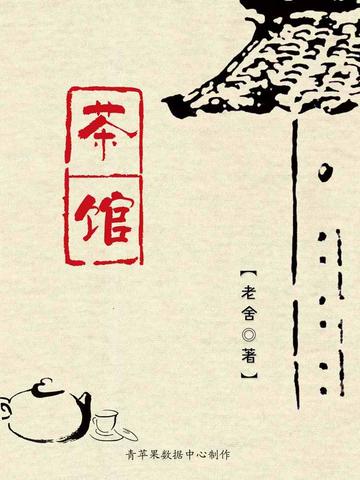
"Teahouse" is Lao She's masterpiece of a play. The story all takes place in a teahouse in Beijing. People come and go in the teahouse, and people of all colors and religions gather together. A big teahouse is like a small society. Mr. Lao She captured the characteristics of this scene and highly condensed fifty-seven primary and secondary characters spanning half a century into the teahouse, showing the life scenes in three eras after the failure of the Reform Movement of 1898 in the late Qing Dynasty, the period of the Beiyang warlord separatism in the early years of the Republic of China, and the eve of the fall of the Kuomintang regime. It summarized the sharp opposition and conflicts between various classes and forces in Chinese society, and revealed the historical destiny of semi-feudal and semi-colonial China.
Reader comments
Little girl, don't be like this, it will be dark until the day comes.
Little girl, don't worry, the spring water from the Western Mountain flows eastward.
The bitter water has gone and the sweet water has come, and no one will be a slave anymore.
A very classic book that describes the changes in teahouses in three periods (the Reform Movement of 1898, the Anti-Japanese War, and the confrontation between the Kuomintang and the Communist Party). It deeply describes the incompetence and darkness and corruption of the ruling class, and the powerlessness and sorrow of the people at the bottom.
I haven't seen enough, I hope you can imagine it with me
People come and go in Yutai Teahouse, and tea rises and falls. Shopkeeper Wang Lifa always greets the teahouse with a smile, but what he greets and greets is nothing but the back of each era - the Reform Movement of 1898, the warlord chaos, the victory of the Anti-Japanese War... The teahouse went from "improvement" to "improvement", but in the end it could not escape the fate of being demolished. How can a small teahouse contain China? Fourth Master Chang was upright all his life, but in the end he could only sell peanuts in a basket; Qin Zhongyi started an industry to save the country, but the machine turned into scrap metal; even Wang Lifa, the most trouble-making person, said such strong words as "I have never done anything immoral" when the teahouse was about to be demolished. They are like that bowl of tea, which is steaming hot when it is first brewed, then gradually cools down, and is finally poured out. Mr. Lao She used the most ordinary way of drinking tea to write about the most extraordinary life. There is a note "Don't talk about state affairs" hanging in the teahouse, but everyone is talking about state affairs and is affected by it. "Teahouse" made me understand that an individual's destiny has always been closely connected with the country, and there is no way to escape or hide. Maybe every era has its own teahouse and its own herbal tea. But the important thing is that before the tea cools down, can we live our own steaming life like Mr. Chang? Can you, like the few old people at the end, scatter a handful of paper money for yourself at the last moment of your life to commemorate the self that you can never go back to? This is perhaps the biggest revelation to me from "Tea House": The tide of the times is rolling forward, and we may not be able to change its direction, but at least we can choose how to hold our bowl of tea, whether to be careful to avoid it getting cold, or to drink it while it's hot and taste its original taste.
With all the changes in the world, the big teahouse that has gone through ups and downs has come to a sad end, which is deplorable.
The trivial matters of little people are the epitome of the great times.
The book is very good, but no one who relies on his own efforts and has a kind heart can be good. He was forced to hang himself as he was doing his duty. It fits the current situation very well.
Clearly understand that era
The more surprising thing was Xiao Ding Bao. At first, she thought that as a waitress, she must be with Liu Mazi. But after Wang Lifa's death, she was the only one who bowed and bowed to Wang Lifa and cried for him.
I have to admire Mr. Lao She's writing. The last scene is really heart-wrenching to watch. The more reforms and improvements are made, the worse they become [I'm about to cry]
When the three old people were together, I really burst into tears
After watching Lao She's Teahouse, the story that had a deep impact on me was that shopkeeper Wang Lifa lived in an era of warlord chaos. No matter how hard he struggled, he would eventually fail and be robbed of the country he had finally conquered. This scene can be compared with Xiangzi's living environment.
They are all looking at other things and rarely plant anymore.
Worthy of being called a classic
If you have money, you have to eat, drink, whore and gamble
The writing style of this book is very unique. Mr. Lao She used simple and vivid language to portray the characters vividly, which made me feel like I was in a teahouse in old Beijing. I especially like Wang Lifa in the book. He is kind and witty, and always tries his best to maintain the livelihood of the teahouse. This book is like an old movie, taking me to appreciate the style of that era.
This book is as full of despair as when I read "Wandering", but "Wandering" is more obvious, while "Teahouse" is less obvious. Every word reveals the emotion that I didn't know how to describe at the time. It was really like "I don't know the true face of Mount Lu, I just live in this mountain"...
Simple yet classic
They just want to survive
I will always be shocked by the power of words (ಥಥ)
That moment was exactly like this moment
My high-spirited Mr. Qin, who advocates saving the country through industry.
In the end, he ended up in poverty, dwelling on the past.
Mr. Lao She uses teahouses as a medium to record all kinds of people in life, and their reactions are a microcosm of society.
Which version is this book from?
Commenting on tea, discussing things, changes
It is worthy of being called a classic.
The language of the script has always been very concise. You can understand the characters' characteristics, identities and backgrounds just by reading the dialogues. However, the drama has more details and is highly recommended.
An absolute classic, it reproduces the life, conversation and behavior of all kinds of people in that era.
Little girl, don't be like this, it will be dark until the day comes. Little girl, don't worry, the spring water from the Western Mountain flows eastward. The bitter water has gone and the sweet water has come, and no one will be a slave anymore.
A very classic book that describes the changes in teahouses in three periods (the Reform Movement of 1898, the Anti-Japanese War, and the confrontation between the Kuomintang and the Communist Party). It deeply describes the incompetence and darkness and corruption of the ruling class, and the powerlessness and sorrow of the people at the bottom.
I haven't seen enough, I hope you can imagine it with me
People come and go in Yutai Teahouse, and tea rises and falls. Shopkeeper Wang Lifa always greets the teahouse with a smile, but what he greets and greets is nothing but the back of each era - the Reform Movement of 1898, the warlord chaos, the victory of the Anti-Japanese War... The teahouse went from "improvement" to "improvement", but in the end it could not escape the fate of being demolished. How can a small teahouse contain China? Fourth Master Chang was upright all his life, but in the end he could only sell peanuts in a basket; Qin Zhongyi started an industry to save the country, but the machine turned into scrap metal; even Wang Lifa, the most trouble-making person, said such strong words as "I have never done anything immoral" when the teahouse was about to be demolished. They are like that bowl of tea, which is steaming hot when it is first brewed, then gradually cools down, and is finally poured out. Mr. Lao She used the most ordinary way of drinking tea to write about the most extraordinary life. There is a note "Don't talk about state affairs" hanging in the teahouse, but everyone is talking about state affairs and is affected by it. "Teahouse" made me understand that an individual's destiny has always been closely connected with the country, and there is no way to escape or hide. Maybe every era has its own teahouse and its own herbal tea. But the important thing is that before the tea cools down, can we live our own steaming life like Mr. Chang? Can you, like the few old people at the end, scatter a handful of paper money for yourself at the last moment of your life to commemorate the self that you can never go back to? This is perhaps the biggest revelation to me from "Tea House": The tide of the times is rolling forward, and we may not be able to change its direction, but at least we can choose how to hold our bowl of tea, whether to be careful to avoid it getting cold, or to drink it while it's hot and taste its original taste.
With all the changes in the world, the big teahouse that has gone through ups and downs has come to a sad end, which is deplorable.
The trivial matters of little people are the epitome of the great times.
The book is very good, but no one who relies on his own efforts and has a kind heart can be good. He was forced to hang himself as he was doing his duty. It fits the current situation very well.
Clearly understand that era
The more surprising thing was Xiao Ding Bao. At first, she thought that as a waitress, she must be with Liu Mazi. But after Wang Lifa's death, she was the only one who bowed and bowed to Wang Lifa and cried for him. I have to admire Mr. Lao She's writing. The last scene is really heart-wrenching to watch. The more reforms and improvements are made, the worse they become [I'm about to cry]
When the three old people were together, I really burst into tears
After watching Lao She's Teahouse, the story that had a deep impact on me was that shopkeeper Wang Lifa lived in an era of warlord chaos. No matter how hard he struggled, he would eventually fail and be robbed of the country he had finally conquered. This scene can be compared with Xiangzi's living environment.
They are all looking at other things and rarely plant anymore.
Worthy of being called a classic
If you have money, you have to eat, drink, whore and gamble
The writing style of this book is very unique. Mr. Lao She used simple and vivid language to portray the characters vividly, which made me feel like I was in a teahouse in old Beijing. I especially like Wang Lifa in the book. He is kind and witty, and always tries his best to maintain the livelihood of the teahouse. This book is like an old movie, taking me to appreciate the style of that era.
This book is as full of despair as when I read "Wandering", but "Wandering" is more obvious, while "Teahouse" is less obvious. Every word reveals the emotion that I didn't know how to describe at the time. It was really like "I don't know the true face of Mount Lu, I just live in this mountain"...
Simple yet classic
They just want to survive
I will always be shocked by the power of words (ಥಥ)
That moment was exactly like this moment
My high-spirited Mr. Qin, who advocates saving the country through industry. In the end, he ended up in poverty, dwelling on the past.
Mr. Lao She uses teahouses as a medium to record all kinds of people in life, and their reactions are a microcosm of society.
Which version is this book from?
Commenting on tea, discussing things, changes
It is worthy of being called a classic.
The language of the script has always been very concise. You can understand the characters' characteristics, identities and backgrounds just by reading the dialogues. However, the drama has more details and is highly recommended.
An absolute classic, it reproduces the life, conversation and behavior of all kinds of people in that era.
Very beautiful, very profound
Times change, and we have no choice but to do so.
Nothing more to say, a century-old classic