Stats
5.8Score
Synopsis
No synopsis yet.
We haven’t got an English blurb for this one. It appears once the source description has been translated.
Reader comments
In booklists 6
Nobel Prize for Literature, Mao Dun Literature Prize, Lu Xun Literature Prize and Other Literary Works
I want to read a book similar to "One Sentence is Worth Ten Thousand Sentences: Collector's Edition".
122.1MViews701Books3dUpdated
High IQ Historical Fiction
People with high IQs don't want those who push my IQ to the ground and rub it (even though mine is not high)
111.5MViews293Books17hUpdated
Interstellar+ship+spar Mining+cultivation
55MViews368Books12dUpdated
Worth Reading Literary Works
Keep it for the record and look at it again when you have time.
48.1MViews651Books2dUpdated
Liu Chan Was Reincarnated into Zhao Gou, Regarded Yue Fei as His Father-In-Law, and Thought About the Northern Expedition Every Day
I want to read something like "If you don't write down the teacher's example, why are you going north!" (Father Development Plan)" book.
20.3MViews101Books2dUpdated
Literary Masterpieces, Good-Looking Literary Novels
16MViews419Books6dUpdated
It took me more than a month to write a relatively short work. Every time I read it, I felt depressed and couldn't read it for a long time. The sad history really makes me unbearable to look back on it.
It took me over a month to finish reading this novel. Because it involves historical events and ancient names, there are many rare characters that are difficult to recognize, and it is a bit difficult to read, but I am still attracted by the storyline, especially the description of the characters' psychology before and after the war and the planning process are fascinating [Like]
As a winning work of the Mao Dun Literature Award, I have a strong interest in it. At first, I always gave up at the first few chapters, but then I made up my mind to finish reading this book. The moment I close the book, the historical picture seems to reappear. What does war bring? Turmoil? People are in dire straits? A hero is born? This book cleverly blends history and fiction. Not only the story, but also the unique insights into that period of history made me immersed in it. If you also like historical novels, you can check it out.
This book first appeared in 1982 or 1983, when I was still in the second grade of junior high school. I saw the first one in the library in the alley next to the school. I thought it was very well-written at the time. Unfortunately, there are no more later ones. The years have been silent, and it has been forty years in the blink of an eye...
It is a novel with a sense of historical chronology. It is a historical novel about the Northern Song Dynasty. It tells the story of the survival and rejuvenation of a country and who will stand up in times of crisis. The rise and fall of heroes from generation to generation. The author's writing style is very majestic and grand, and it can't help but feel a little depressing when reading. At the same time, we can't help but think and imagine the scene at that time and what people experienced at that time. War is always cruel. No matter what age people are, they long for peace and a happy and stable life. The storyline is very contagious, the logic is clear, and the language is smooth. The works of the Contradictory Literature Award are recommended for everyone to read.
This book tells the story of the national wars between Song, Jin, and Liao. The book focuses on living, flesh-and-blood little people such as Liu Qi and Ma Kuo. They saw the sadness and desolation of that era with their eyes, so they chose to stand up and protect the justice in their hearts with their flesh and blood. History is heavy, and the charm of literature lies in exposing pain. This book seemed to have magic power, leading me to understand the pathos of "Jingkang's shame, You Weixue, and the hatred of the ministers, when will it be destroyed?" It can be called "the best contemporary historical novel".
At a time when the country is in tatters and the nation is in crisis, the people who can truly turn the tide are precisely those people who, at most, lead ordinary lives.
Tells a colorful story. This story is set in ancient China and depicts the entanglements and fates between characters of different classes and backgrounds. The author delicately and vividly describes the social scene and characters in the historical period, so that readers can clearly feel the atmosphere and customs of that era. This book is full of drama and conflict, while also exploring the influence of Machiavellianism, human nature, and history. If you are interested in historical fiction and ancient social settings, this series will open up a whole new world for you.
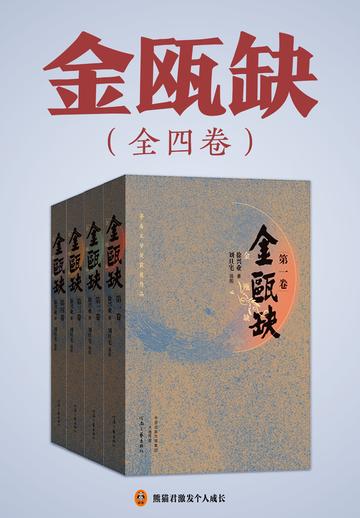
This work focuses on the most legendary period of the Song Dynasty, the last years of the Northern Song Dynasty, and tells a history of national blood and tears, a broken era that is both evocative and tearful. It uses extremely exquisite writing to infiltrate tragedy and solemnity between the lines. In ancient China, "Jin Ou" represents the country, the country, and the country, and "Jin Ou Yonggu" represents the eternal stability of the country, which is the dream of all emperors; while "Jin Ou Que" means the destruction of mountains and rivers, the destruction of the country, and the destruction of the family. Under such a title, it must be about a heavy feeling about family and country and a sad historical past. In the early to mid-12th century, during the several-year national war between the Song, Liao and Jin Dynasties within China, the veteran general Zhong Shidao was forced to go into battle hastily under the emperor's orders. The new generation of young military generals Liu Qi, Ma Kuo and others were sensitive to the coming crisis and joined the ranks to guard the border and regain the territory. The author changes the tradition of focusing on emperors and generals in Chinese history books and focuses on these living, flesh-and-blood little people, allowing us to see the dreamlike Tokyo and the tragic national disaster.
When I started reading, I found that the language description in this book is so long, but when I carefully savored it, many of the words used followed the expressions of the ancients. Reading it made me feel like I had never learned Chinese before, and I was ashamed! Talking about the book, the overall feeling of the history of the Song Dynasty is two words: aggrieved. ! This book really vividly reflects the indecision and incompetence of those in power. There were obviously many opportunities to reverse the situation, but they were missed in vain! I have always felt that the shame of Jingkang made people feel pity for the fate of the Song Dynasty clan. Poor people must be hateful. It is the people who live in such an environment that really make people feel heartbroken.
This book is magnificent and the scenes depicted are lifelike. It not only has a deep and melancholy sense of history, but also has touching and haunting characters. The organic and perfect combination is really a rare masterpiece.
The author has a grand perspective, and the book provides a relatively comprehensive description of the politics, military, and culture during the transition between the Southern and Northern Song Dynasties. The characterizations are vivid and three-dimensional, especially the positive and negative characters in the book vividly appear on the page, which is impressive. The depiction of war scenes is fascinating and wonderful. It is also a very good patriotic education-themed work, and its spiritual theme is inspiring to reflect on. To paraphrase a current buzzword: The lesson of history is that people never learn from history! [Laughing and crying][laughing and crying]
The historical materials written by historians are very rich and it is a good book worth reading.
The author is like a walking Chinese dictionary of ancient Chinese. There are many unknown words and characters that appear in the text. I looked up more and more, which helped me accumulate more classical vocabulary. I am grateful to the author for such a profound knowledge of ancient Chinese. The author's book gave me a deeper understanding of the political situation of Emperor Huizong Qinzong of the Northern Song Dynasty and Gaozong Zhao Gou of the Southern Song Dynasty. It made me understand that only strong strength is the guarantee for peace, and strength is the basis for fairness. Don't naively think that if I give you infinite concessions and be infinitely good to you, you can get your sympathy and mercy. Strong strength is the guarantee of peace, and giving in will only allow the other party to bully you unscrupulously.
Not bad. After all, it is a Mao Dun Literature Award-winning work. It's a bit of a criticism of the current situation.
After reading this book, I feel like I have really stepped into that period of history. The writing is smooth and the story is exciting. Macro atmosphere. The only thing I feel is that the main plot is not obvious enough. As the male protagonist, Ma Kuo has too little ink and is not prominent enough.
This book vividly shows the changes in the late Northern Song Dynasty with delicate writing and rich historical details. Like "War and Peace", it depicts the fate of characters in the great era. The author's writing style was smooth and made me feel like I was actually there. The characters in the book are vivid and the plot has ups and downs. It is very enjoyable to read. It is definitely worth reading!
This book is a slow read, but worth the extra time. The author must have accumulated a lot of historical materials in order to restore the Northern Song Dynasty's diction, grammar and clearer character relationships.
Good, good, good
Excellent writing style and structure of historical works
This is history, ancient war.
Clear organization and unique insights.
Been watching it off and on for a few months. Great book!
Good book, be patient and read it. So much information.
This is a very historical work.
It's so exciting. I hope it can be made into a film and television work to let more people know and understand history~~~
Write about state affairs in Western style
It means meaning without allusion but with allusion
What kind of changes did the Northern Song Dynasty experience when it fell? Jin Ouque used the stories of Ma Kuo and others as a guide to tell the magnificent torrent of the times.
This book started to make me think outside my own box. Sometimes right and wrong are not absolute.