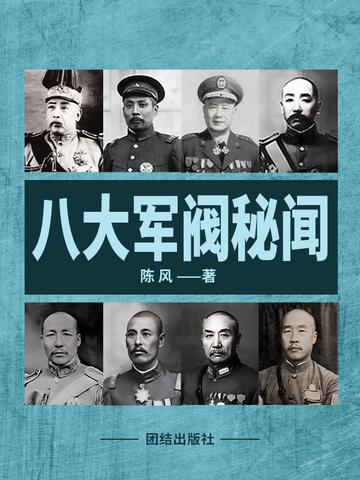
Modern warlordism began in 1895, when Yuan Shikai trained troops at the Xiaozhan camp in Tianjin. Among the Eight Great Warlords, Yuan Shikai made himself Emperor Hongxian; Duan Qirui clung to power but not wealth; Wu Peifu was the most committed to “righteousness” and swore he would never become a traitor; Zhang Zuolin, though he valued his “conscience,” died at the hands of the Japanese; Sun Chuanfang had a talent for maneuvering but ultimately died in a Buddhist monastery; Yan Xishan excelled at handling people and situations; Han Fuju came from humble origins; and Bai Chongxi was known as “Little Zhuge”...
Liang Qichao: “Warlords pride themselves on their strength, but in the end they are bound to become indecisive and bring about their own ruin. They are strong on the outside but weak within, firm at the top and yielding below. That is the sign.”
Chen Duxiu: “Warlords... are ignorant and incompetent, a breed of bandit-like, beggar-like villains who specialize in meddling in politics and undermining the law.”
Tan Pingshan: “Our country has become the private preserve of the military, and our politics have become a monopoly of the military. Thus, soldiers have gained a special kind of power in society, become a special class, and formed a special system. That is what we call ‘warlordism.’”
Hu Shi: “In fact, how can one speak of ‘cliques’ among China's military? They are simply soldiers running amok. When Beijing students raised their arms and shouted, the military panicked and lost their composure. This is a clear example of the power of civilian governance. The reason that power has become ineffective today is that most of its leaders have become lapdogs. They have lost their own foundations and rely on government posts or slogans for a living, so they cannot clean up politics or restrain the military... Were not all the warlord conflicts of the past twenty years stirred up and created by useless politicians?”
John King Fairbank: “The divisions and chaos created by the warlords provided an ideal opportunity for changing ideas and spreading anti-traditional tendencies... In those years, Chinese intellectuals fiercely debated how China could modernize and become prosperous and powerful. In part, this was a response to the crimes of warlord rule.”
It's worth reading, but you can skip some parts.
Life lasts only a hundred years, and no matter how glorious the past is, after many years it will be nothing more than a pastime for others.
Able to have a more comprehensive understanding of the magnificent life of the warlord
Based on history and seeking truth from facts, I like it very much!
This book tells the story of the rise and fall of the eight major warlords in modern Chinese history in the form of vivid stories. The author's writing style is concise and clear, and his writing style is smooth, allowing readers to easily understand complex historical plots. The storyline is rich and varied, and each warlord has a unique personality and experience, making it very interesting to read. At the same time, the book also quotes many celebrities' evaluations of warlords, which adds to the book's ideological depth. All in all, this is a history book worth reading.
The old book is nice and interesting to learn about history and culture.
Not bad
Huhuhuhuhu
Good book, very exciting, learn about these influential figures in the past,
I like it, I understand that period of history