A little over thirteen hundred years ago, in 627, the first year of Emperor Taizong of Tang’s Zhenguan era, a young monk named Xuanzang left the capital, Chang’an, at the age of just twenty-five and traveled alone to Tianzhu, or India, to study. Setting out from Chang’an, he passed through Central Asia, Afghanistan, and Pakistan, overcoming countless hardships before finally reaching India. He studied there for more than two years and was praised for serving as the principal speaker at a major Buddhist doctrinal debate.
In 645, the nineteenth year of the Zhenguan era, Xuanzang returned to Chang’an with 657 Buddhist scriptures. His Journey to the West had taken nineteen years and covered tens of thousands of miles. It was a legendary expedition that caused a sensation at the time. Xuanzang later dictated what he had seen and heard on his journey, and his disciple Bianji compiled it into the twelve-volume Records of the Western Regions of the Great Tang. The book mainly described the histories, geography, and transportation of the countries he had passed through, and contained few stories. His disciples Huili and Yanzong, however, wrote The Biography of the Tripitaka Master of the Great Ci’en Temple of the Great Tang, which added many mythical elements to Xuanzang’s life. From then on, the story of Tang Sanzang’s Journey to the West began spreading widely among the people.
During the Southern Song dynasty, there was The Tale of the Great Tang’s Tripitaka Master’s Journey for Scriptures. In the Jin dynasty, there were theater scripts such as Tang Sanzang and the Peach Banquet. Yuan dynasty zaju plays included Wu Changling’s Tang Sanzang’s Journey to the Western Heaven for Scriptures and the anonymous Erlang Shen Locks Up the Great Sage. All of these laid the groundwork for the creation of Journey to the West. Building on folk legends, storybooks, and theatrical works, Wu Cheng’en undertook a painstaking process of creative reworking to complete this great work, a source of pride for the Chinese people.
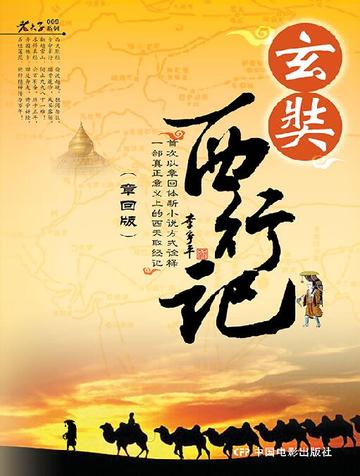








This book describes Xuanzang's journey to India, where he was not afraid of hardships and dangers, and was determined to travel westward. He overcame many difficulties and finally achieved success. The plot is vivid, the writing is smooth, and the language is concise. It is a rare good article. Worth reading.
Master Xuanzang was determined and forbearing, had lofty goals, and was not afraid of the hardships and dangers of the journey. He went west to obtain Buddhist scriptures, and then returned to the East to the Tang Dynasty. He never forgot to preach Buddhism. As long as people are determined and practice it with one heart, they will definitely achieve extraordinary results. Master Xuanzang became famous throughout his life. He translated scriptures and passed them on to future generations, which moved future generations to admire him.
Wow, this book "Xuan Zang's Journey to the West" gave me a deeper understanding of Xuanzang! His experience is simply a legend. Just like those great countries in "The Rise of the Great Powers", Xuanzang went abroad, absorbed diverse cultures, and made great contributions to Chinese culture. His spirit is really admirable! This reminds me of Tang Seng in "Journey to the West". They all have firm beliefs and a spirit of not being afraid of difficulties. Xuanzang's spirit is really an example that we should learn from! 💪
Wonderful life, moved by Xuanzang's spirit
Well written and interesting
Very good, well written
The wonderful performance is impeccable and I support you👍🏻Come on⛽⛽⛽⛽
Good book, worth owning.
Tang Xuanzang's spirit reminds me of the origin of marathon
This book is very good, it can be called a classic of a hundred words in classical Chinese!