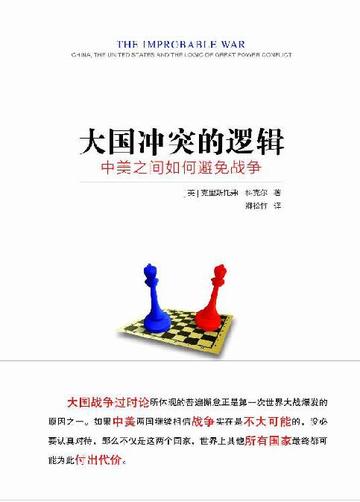
In 1914, it was thought that there would be no war between the great powers, but it eventually broke out. We can only learn from history, and although the analogy to World War I is common, the lessons we draw from its outbreak are often wrong. One such mistake is the tendency to overestimate human rationality.
All major power conflicts in the past 300 years have been related to the norms and institutions of the international system. Specific to China and the United States, two "exceptional" powers with completely different values have emerged in the world. Among them, China is trying to challenge the existing order. The "Thucydides Trap" - in which major powers maintaining the existing order face challenges from rising powers - may also add fuel to hostility between the two sides.
To avoid getting stuck in an avoidable war, Beijing and Washington need a coherent strategy, something both countries lack. History also tells us that war is constantly evolving. The next global conflict is likely to occur in cyberspace and outer space and, like all wars before it, will have devastating consequences. Such a war between China and the United States may seem unlikely, but it is still possible, which is why we need to discuss it now.
Reader comments
From the logical perspective of great power conflict, this book demonstrates the conflicts between great powers in history and the relationship between China and the United States, and draws several suggestions on how China and the United States can avoid conflicts: first, neither China nor the United States should believe in their ability to make sustained rational decisions; second, strengthen cultural communication and deepen understanding of each other's values; third, avoid arms races in the navy and space. At the end, the author criticizes the view that a relationship between China and the United States is impossible because of the high cost, and does not agree with the view that China and the United States will inevitably fall into the Thucydides Trap. The relationship between China and the United States depends on the two countries' strategic judgments about each other.
The author of this book is very sober, and I cannot agree with some of his views. But it's still very objective.
It is a fairly objective book, but as the author said, he is not a Sinologist and looks at China from a Western perspective in some aspects. When the book was written, it was 9 years before modern times. The balance of power between China and the United States has undergone new developments. It cannot be fully applied to reality, and some of its views have lost their reliability.
This book is a good choice to look at Sino-US issues from another perspective.

From the logical perspective of great power conflict, this book demonstrates the conflicts between great powers in history and the relationship between China and the United States, and draws several suggestions on how China and the United States can avoid conflicts: first, neither China nor the United States should believe in their ability to make sustained rational decisions; second, strengthen cultural communication and deepen understanding of each other's values; third, avoid arms races in the navy and space. At the end, the author criticizes the view that a relationship between China and the United States is impossible because of the high cost, and does not agree with the view that China and the United States will inevitably fall into the Thucydides Trap. The relationship between China and the United States depends on the two countries' strategic judgments about each other.
The author of this book is very sober, and I cannot agree with some of his views. But it's still very objective.
It is a fairly objective book, but as the author said, he is not a Sinologist and looks at China from a Western perspective in some aspects. When the book was written, it was 9 years before modern times. The balance of power between China and the United States has undergone new developments. It cannot be fully applied to reality, and some of its views have lost their reliability.
This book is a good choice to look at Sino-US issues from another perspective.
Strong rationality and abundant evidence.