Stats
Tags
Synopsis
Reader comments
In booklists 14
Books That Students Should Read, In-Volume Essentials
Mathematics, Chinese, English, chemistry, physics, biology, geography, history, ancient poetry...
A Book That Can Help You Learn and Increase Your Knowledge
Knowledge that can increase (useful, practical), interesting and not boring

Why Not Read Classics?
Recommend some good books that are meaningful, influential and well-written.
Learning Books
It's the kind that has depth and can be seen through.

I Want to Study (Internal Volume), Please Recommend a Book
Learning Books
If you are tired of reading romance, just read it to learn. Everything is OK. Focus on learning! ! !
Learning Books
Pure Learning Book
They stayed up late looking at their mobile phones, and I stayed up late reading study books, which kept them busy! ! !

A Book for Late-Night Study
A Must Read to Change Yourself
I want to read something similar to "Record of a Change of Destiny". Easy to understand, very good
Please Give Me Inspirational Articles to Wake Me up from Not Studying😭

A Book on Self-Discipline and Learning Methods
A book on self-discipline and learning methods



Looking for Books Suitable for Students in the Second and Third Grade of Junior High Schoolᶻz ₍^_ ̫ _^₎
Now that I'm in my second year of junior high school, I'll look for some academic or literature books, which cover all subjects, preferably ones that junior high school students can understand.
A Book About Learning Methods.
I want to read a book like "Efficient learning never depends on endurance". Books about learning methods, such as how to enhance memory? Books like how to improve your grades?
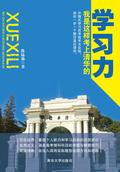
Not bad, I haven't read it yet, so I'll comment first. Summary of learning methods: 1 Palace memory method: Use your mind to imagine a familiar space and put the knowledge into it. Keep recalling and deepening your memory. 2 Five-sense learning method: Use the various senses of touch, smell, hearing, vision, and taste related to the knowledge you are learning to learn. Metaphor: compare the learned knowledge to other things, which can be concrete things or imaginative things. In short, use your imagination to make knowledge no longer empty and distant. 3-Column task learning method: List the knowledge that needs to be learned in detail, and use plans to promote learning, but do not have too many tasks. Generally, there are only a few tasks a day. Several tasks can be subdivided, but whether to subdivide them depends on your own situation. At the same time, learn to reward yourself every time you complete a task, so that you can have the pleasure of completing the task. 3. Distracted thinking and focused thinking learning methods: Use concentration and shifting attention to learn, focus first, and then shift. Remember to review the knowledge you have learned within one day. (Including self-summary, self-description, self-reflection) Then review it every few days, review it every few weeks, and review it every few months. This way, the memory will be much deeper and it will no longer be easy to forget. 4 Knowledge chunk construction method: Let knowledge take root and thrive in the mind from multiple aspects, angles, and levels, forming a systematic structure of this type of knowledge. 5 Cross-learning method: cross-learning and training with different aspects of a type of knowledge, and cross-learning and training with different knowledge. At the same time, you can try to connect them. Note: 1. You can prepare some food when studying to replenish the energy consumed by brain operation. 2. When studying, you can take a walk or do some exercises to put yourself in a relaxed and happy state, which is more conducive to learning. For the time being, there are only these few learning methods.
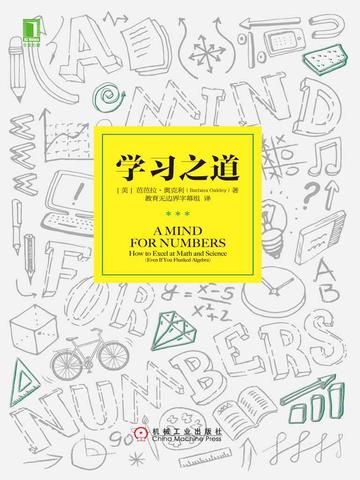
This is a reference book that specifically talks about how to learn. It not only contains the psychological principles behind learning, but also provides good learning methods. It is at the top of the reference books I have read. The author primarily teaches mathematics learning, but the methods he teaches are effective in other areas as well. If applied in practice, it will be of great benefit. First of all, it starts from two modes of thinking - focused mode vs. Divergent mode. It uses imagination and analogy to compare them to pinball machines and light beams. It constantly switches the two into the best learning state, which makes me enlightened. Furthermore, the author teaches how to build knowledge chunks (macro learning vs. Micro learning). Micro-learning is a bottom-up building block with four major steps. The blocks are gradually solidified through continuous practice. Here, the author visually reveals the importance of feedback in learning through the shapes and colors of puzzle pieces. The so-called macro refers to checking and filling in the gaps within the established framework, and filling in the missing blocks through listening to lectures and other methods. Learning in this way reduces the burden on memory and makes knowledge more solid. Finally, the author elaborates on the benefits of developing long-term habits, asking others for advice, and teamwork. I will not go into details one by one. Interested book friends can browse by themselves.
It's better to overthink than to overthink. Everything can be practiced.
The learning methods in the book are well worth a try
A method manual for learning how to learn. I have read many learning books on Tomato, and this book can still bring new understandings, such as the focus mode and divergence mode emphasized in the book. Too often we get stuck in focus mode, trying to overcome a problem, but sometimes we get stuck; The divergent mode allows us to think about problems from different angles in a relaxed state, leading to unexpected breakthroughs. The book also introduces the chunk learning method, which packs knowledge into chunks for easy memory and application; through constant repetition and understanding, new knowledge is connected to the existing knowledge system to form a powerful knowledge network. We should be brave enough to face the difficulties in learning. We should not be afraid of making mistakes. Mistakes are opportunities for learning. Only by learning from mistakes can we continue to make progress. Learning is a skill that can be developed. As long as you master the correct method, everyone can become an efficient learner. [Three core questions] 1. Why do some people have difficulty learning? : It may be due to using the wrong learning methods, such as rote memorization instead of understanding concepts; it may also be due to lack of focus and perseverance, and being easily disturbed and distracted by the outside world. (Some students just memorize formulas mechanically when learning mathematics without understanding their derivation process and application scenarios, resulting in being unable to start when encountering slightly more complex questions) 2. How to improve learning efficiency? : Spaced repetition, active recall, multi-sensory learning and other methods can be used, while creating an environment conducive to learning and reducing interference. (Efficient students will often look for suitable learning methods, including preview, review and testing, and then check for omissions and fill in the gaps. They can also actively recall what they have learned by explaining it to others.) 3. What impact will setbacks in learning have? : It may make people feel frustrated and lost, or even give up on learning, but it can also be an opportunity for growth, allowing people to reflect on learning methods and attitudes, so as to study harder. (Similarly, if you are not satisfied with the exam, you can think of it as frustration and dejection, or it can also be understood as exposing more of your own lack of knowledge) Content Sharing 1. There is no secret to becoming a top player, but a deeper understanding of what may be basic skills. 2. Procrastination is like taking a tiny dose of poison. The impact may not be visible for a while, but over time, it will cause great harm. 3. The occurrence of learning activities includes what happens in your brain and your behavior. We all know that behavior can change the brain, and the brain can also change behavior. 4. The focused mode and the divergent mode play a role in all learning activities, but they work in different ways. 5. In thinking, we are used to focusing on one point like a flashlight, but the divergent mode will let the light shine in all directions to find new inspiration and solutions.
It is indeed a good book with good methods in it. In addition, "Deliberate Practice" is also worth watching
I haven't finished reading it yet, but! My procrastination is very bad, but the solution to procrastination discussed in this book is not very comprehensive, but it has solved all the problems I encountered. Thank you, thank you [shy]
I'm confused when I see it
Interesting, interesting
It is a very beautiful and easy-to-use book. It is worth reading and studying again and again. I recently listened to Tsinghua University teacher Zixian's explanation on learning ability. It is mutually confirmed with many ideas in the book. It is very useful. You can improve your use of your mind no matter which one you use. It is highly recommended. Thank you to the great author and teacher.
The learning methods described in the book are really effective, and there is a stop and review after each chapter, setting up a scene, which basically makes people recall and retell, which is a highlight.
This book provides many practical learning methods, and these methods are scientifically based and easy to understand and apply. The author's experience is also very inspiring, letting me know that everyone can succeed in different fields as long as they master the correct learning methods. I think this book is not only suitable for students, but also for housewives like me. I recommend it to everyone!
The book starts from the focus-divergence dual mode of the brain and explains the principles behind methods to improve learning efficiency. Some principles are also mentioned in other similar books, but those similar books mostly focus on "learning" - acquiring and mastering a skill, and the feature of this book is that it supplements the part of "learning" - learning to stabilize the knowledge structure. And the book talks about the principle of learning, just like the points that make up a line. These points are strung together with different emphasis in each learning method to form their own characteristic templates. After reading this book, everyone can create a set of exclusive templates for themselves based on the principles and their own actual situation. It's OK to borrow and apply other templates, but the problem is that each set of templates will have its own operational deformation due to various reasons. After constant feedback and adjustments, the result will either become an exclusive template or simply give up. There is no problem in following various teachers and traditional methods. Originally, there are only three axes in learning methods. The ones on the market are all differences in details and execution, and there is no essential difference. The problem of all failure to learn lies in the final implementation. Theory serves practice. What cannot be tested in practice can only be called yy and empty talk. If you want to create an exclusive template for yourself, this book will not give you a ready-made template. It will just tell you the elements needed to build an exclusive template. The amount and focus of use will vary from person to person. Another benefit from this book is that it deepened my understanding of the concept of learning. My mother once asked my sister what composition books she should read to improve her composition score. My answer was to read extracurricular books. My high score in composition has never been judged by looking at written documents. It was cultivated by reading various casual books. The same goes for learning. When you focus on a certain problem but can't find the answer, you should look for content other than the problem to expand your cognitive scope. Daily life materials, hobby materials, and professional knowledge materials are all materials for solving problems. Learning is not only the study of professional knowledge that can be called learning, just like not only professional problems in life can be called problems. Many things are similar, just like the ABZ model I mentioned - poor study is not necessarily a problem of the child's lack of progress, failure in falling in love is not necessarily a problem with the person he meets, not being able to speak is not necessarily a problem of emotional intelligence... And so on. Cognition solves the problem of knowing or not, and the biggest benefit of learning is to expand the cognitive scope, making it easier to jump out of the problem and see the real problem.
I hope that more colleagues who love learning, struggle and are unwilling to accept the status quo will see that it is indeed helpful to me at present. Thank you to the author. Good luck in the future.
Holy book, I rely on him to win the second place in the provincial key high school!
Nice and useful book
This is my favorite type of book.
Learned a lot about study skills
Study hard and make progress every day
Good book, benefited a lot
The part about memory is more useful, especially the memory palace.
How to learn math and science better and enhance your brain's memory training methods
Thank you, this is the first time I choose a book with complete reading notes
I have benefited a lot, I still need to read more to consolidate it.
After reading this book, the world is one step closer to evolution
I learned a lot and I will probably continue to learn and review in the future.
The principle of deconstructive learning is closer to reality and has certain operability.
Concentration is fast. When you are stuck, use the divergent mode and module, also called the holistic learning method. To improve concentration, use the Pomodoro learning method. Review is the key, also called interval learning.
This book is the best method I have seen so far. It's very practical, helps me a lot, and breaks traditional ways of thinking.
I read a few chapters and read them with interest. The writing is still very good, and most of the methods in the book can be applied in practice. This book is still very good and worth reviewing.