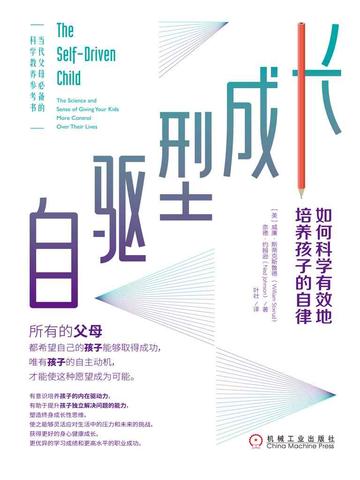
This book also covers the deep scientific background behind the feeling of control. Significant research on feelings of control has been done on living animals, such as rats and dogs, and the conclusions are not limited to any particular race or culture. Physiological studies in rats show that a sense of control has a powerful influence on the brain itself, because being able to control the experience of stressful situations can effectively enhance the functionality of the prefrontal cortex, reduce stress levels, and actively shape the brain to a certain extent to protect it from the negative effects of stress. In line with this, other research in the field of neuroscience has shown that low levels of control can make people feel extremely nervous - which contributes to the worsening of mental health problems.
Everyone who has ever suffered from anxiety has experienced the feeling that things were out of control, and anyone who has been depressed has experienced the feeling of losing control of their life. The indisputable fact is that no matter where people come from or how they grow up, when there is a lack of control, there will be stress. We have repeatedly emphasized that a good sense of control leads to good changes. We must believe that we can make choices that are crucial to our lives, and we must also believe that we are not helpless in the face of external influences.
Reader comments
If as a parent, you take over all the things that should be done by your children, then those children will lose their independence and self-discipline and become a giant baby who does not know how to be independent. "What parents have to do is to find the boundary between themselves and their children. Let the child make the decision on his own matters. If he is not yet capable of making the decision, guide him to practice with small things first. The child will have his own life. Only by letting the child be responsible for his own affairs can he be responsible and his abilities can be developed in practice."
When we feel stressed, the control of the brain gives way to instinct, making it easy for us to make mistakes and fail to achieve our goals. There are four main sources of stress: novelty, unpredictability, threats to self, and lack of control. If you want your children to be able to do their own things well, you need to partially delegate power to your children so that they can control their own lives. Of course, there are safety boundaries here. When children gain a sense of control, they can decide their own behavior and complete their own affairs instead of being pushed around. This process can be painful for parents, because we often see our children doing things we don't like, but we can't stop them. This requires children to try and verify the results of their own behavior, and through this process they have completed their own growth.
So far, I have only read the preface. Overall, I feel that the core focus of this book is on the word self-driving. For children, it is self-awareness, for parents, it is self-discipline. I especially like a sentence in the preface. Parents should not be overly anxious, but should learn to let go, give their children space and freedom, and let them pursue their own success and bear their own failures.
The core point is that this book covers both macro and micro aspects. The micro aspect is neuroscience and psychology, and the macro aspect is based on cases. It introduces parents in simple terms how to achieve this method of making children self-conscious and parents self-disciplined, that is, the degree of letting go. This kind of letting go does not mean completely ignoring it, but changing the way of managing it and continuing to learn.
Very good. In terms of education, what the public always thinks is correct is actually wrong. I hope more people understand and learn from it.
Read it carefully. These are common mistakes made by parents. It is very helpful for cultivating children's self-driving force and for parents to realize what their real responsibilities are. I plan to practice the methods in the book and test whether the methods in the book are effective for my own children.
There are some points in the book that answer my own doubts, and how people should develop self-motivation, instead of always relying on the outside world, but pushing themselves forward and achieving their own goals. There are also what parents should do for their own children and the existing educational issues between parents and children.
This book is great! It made me understand that children's self-discipline cannot be cultivated by force, but by giving them a sense of control. As the book says, the sense of control has a great impact on the brain. I also like the real-life stories in the books, which help me better understand how children are thinking. I believe that as long as we give our children enough trust, they can make important choices in life. This book really taught me a lot!
He gave me a lot of suggestions and new ideas, which I can use for my own use and teach my children!
The previous content is helpful for guidance!
Scientific parenting, reasonable introduction, and reasonable assistance are qualified parents.
Everyone takes advantage of their strengths and it varies from person to person.
Very practical, my mood has stabilized a lot
A very good book, very accurate about the psychology of children and adults. In order to no longer raise giant babies, you must learn to let go
I think it's a must-see for moms
Good, good, good, good
Very good, worth reading
Refresh your knowledge and continue reading
A very good book
Clear up doubts and gain enlightenment
Very enlightened and warned
Book recommended by Shude Middle School.
Open a new cognitive model
A good book worth owning
Can learn a lot
I can't understand it, it really feels like it's not new.
It is to stimulate control, belonging, and interest.
Practical and recommended to all parents, educators and teens
I read it again and became more convinced that my educational direction and philosophy are correct. [Love]
We need to learn how to get along with our children.
Especially helpful for mothers with children at home
It has refreshed my own understanding and has very important guiding significance for educating children. I hope all parents will read this book and love their children as nourishment for their growth.


If as a parent, you take over all the things that should be done by your children, then those children will lose their independence and self-discipline and become a giant baby who does not know how to be independent. "What parents have to do is to find the boundary between themselves and their children. Let the child make the decision on his own matters. If he is not yet capable of making the decision, guide him to practice with small things first. The child will have his own life. Only by letting the child be responsible for his own affairs can he be responsible and his abilities can be developed in practice."
When we feel stressed, the control of the brain gives way to instinct, making it easy for us to make mistakes and fail to achieve our goals. There are four main sources of stress: novelty, unpredictability, threats to self, and lack of control. If you want your children to be able to do their own things well, you need to partially delegate power to your children so that they can control their own lives. Of course, there are safety boundaries here. When children gain a sense of control, they can decide their own behavior and complete their own affairs instead of being pushed around. This process can be painful for parents, because we often see our children doing things we don't like, but we can't stop them. This requires children to try and verify the results of their own behavior, and through this process they have completed their own growth.
So far, I have only read the preface. Overall, I feel that the core focus of this book is on the word self-driving. For children, it is self-awareness, for parents, it is self-discipline. I especially like a sentence in the preface. Parents should not be overly anxious, but should learn to let go, give their children space and freedom, and let them pursue their own success and bear their own failures. The core point is that this book covers both macro and micro aspects. The micro aspect is neuroscience and psychology, and the macro aspect is based on cases. It introduces parents in simple terms how to achieve this method of making children self-conscious and parents self-disciplined, that is, the degree of letting go. This kind of letting go does not mean completely ignoring it, but changing the way of managing it and continuing to learn.
Very good. In terms of education, what the public always thinks is correct is actually wrong. I hope more people understand and learn from it.
Read it carefully. These are common mistakes made by parents. It is very helpful for cultivating children's self-driving force and for parents to realize what their real responsibilities are. I plan to practice the methods in the book and test whether the methods in the book are effective for my own children.
There are some points in the book that answer my own doubts, and how people should develop self-motivation, instead of always relying on the outside world, but pushing themselves forward and achieving their own goals. There are also what parents should do for their own children and the existing educational issues between parents and children.
This book is great! It made me understand that children's self-discipline cannot be cultivated by force, but by giving them a sense of control. As the book says, the sense of control has a great impact on the brain. I also like the real-life stories in the books, which help me better understand how children are thinking. I believe that as long as we give our children enough trust, they can make important choices in life. This book really taught me a lot!
He gave me a lot of suggestions and new ideas, which I can use for my own use and teach my children!
The previous content is helpful for guidance!
Scientific parenting, reasonable introduction, and reasonable assistance are qualified parents.
Everyone takes advantage of their strengths and it varies from person to person.
Very practical, my mood has stabilized a lot
A very good book, very accurate about the psychology of children and adults. In order to no longer raise giant babies, you must learn to let go
I think it's a must-see for moms
Good, good, good, good
Very good, worth reading
Refresh your knowledge and continue reading
A very good book
Clear up doubts and gain enlightenment
Very enlightened and warned
Book recommended by Shude Middle School.
Open a new cognitive model
A good book worth owning
Can learn a lot
I can't understand it, it really feels like it's not new. It is to stimulate control, belonging, and interest.
Practical and recommended to all parents, educators and teens
I read it again and became more convinced that my educational direction and philosophy are correct. [Love]
We need to learn how to get along with our children.
Especially helpful for mothers with children at home
It has refreshed my own understanding and has very important guiding significance for educating children. I hope all parents will read this book and love their children as nourishment for their growth.