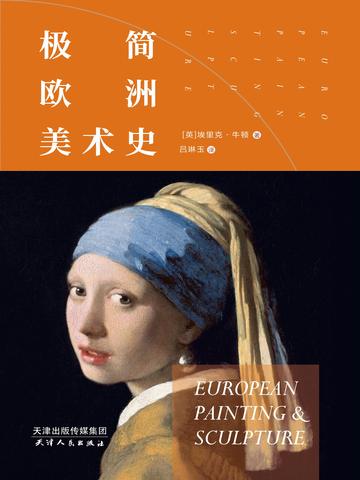
"Minimalist European Art History" is a classic work by the famous British art historian Eric Newton to popularize European art history and art appreciation knowledge to the public. "Minimalist European Art History" uses time as the latitude and region as the longitude, either giving a positive interpretation, or digging out the stories behind it, and also comparing the similarities and differences between Eastern and Western art, and recounting the past millennia of European art. The author Eric Newton uses concise and popular words to take us on a journey through the thousands of years of European art. With "A Brief History of European Art", he opens a window to the world for us.
Reader comments
What is art? The author points out at the beginning that it should not be an object that is inaccessible to ordinary people; on the contrary, a stamp or a cartoon can be called art along with drama, ballet, etc.; Although this book only talks about European painting and sculpture art, behind each work of art is the author's hope The craftsmanship spirit of the artist that he hopes to convey is the change of style and the constant pursuit under the historical evolution; even if any art historian can master a complete set of theoretical knowledge of the subject through the technical vocabulary, the essence of art is only to spread the classics to more people and be accepted by more people.
The origin of world art lies in Europe, and the development of European art still lays the foundation for the ancient Greek and Roman periods. This is an introductory book to the study of European art and fine arts. This book aims to introduce the main developments and important artists in the history of European art in a concise way, helping readers have a preliminary understanding of the evolution and diversity of European art. From there, we can start from the art of ancient Greece and Rome, learn about representative works and artists from different art periods such as the Middle Ages, Renaissance, Baroque, and Impressionism, and learn more perspectives and methods for appreciating and understanding art.
The master's classic work is like a spring breeze when read, as if you are swimming in the long river of colorful art. This is a masterpiece of European art aesthetics and art appreciation. It spans time and space, and integrates in-depth interpretations of art works, the twists and turns of the stories behind the creators, and an appreciation of the similarities and differences between Eastern and Western art cultures. The insights are all-encompassing and highly collectible. Even a layman who doesn't understand art will be attracted by the magnificence and enthusiasm of this book. This is a fairy tale world that depicts beauty and retains it for years. For example, the book's outline of the Renaissance is grand and profound. What kind of unknown story does Leonardo da Vinci's "Mona Lisa" hide? I think this is the charm of this book. It takes us into the artistic truths hidden deep in the years.
I have always been interested in art history and art schools, but I have never systematically understood the history of European art. I accidentally discovered this general reading. After reading it, I immediately gained a systematic understanding of the entire art and art history story of Europe. Why did the ancient Greeks like to create nude sculptures so much? Why is Leonardo da Vinci's "Mona Lisa" rated so highly? After reading this book, I will understand the above issues. The entire book uses region as the longitude and time as the latitude, either giving a positive interpretation or digging into the stories behind it, while also comparing the similarities and differences between Eastern and Western art, and narrating the millennium past of European art.
What is art? The author points out at the beginning that it should not be an object that is inaccessible to ordinary people; on the contrary, a stamp or a cartoon can be called art along with drama, ballet, etc.; Although this book only talks about European painting and sculpture art, behind each work of art is the author's hope The craftsmanship spirit of the artist that he hopes to convey is the change of style and the constant pursuit under the historical evolution; even if any art historian can master a complete set of theoretical knowledge of the subject through the technical vocabulary, the essence of art is only to spread the classics to more people and be accepted by more people.
It was a little boring when I first read it, but the more I read it, the more interesting it became, and I couldn't put it down until the end. This book uses time as the latitude and region as the longitude to tell readers the thousand-year history of European art in a comprehensive and systematic way. The author has extremely solid writing skills. Based on a thorough study of historical materials, he not only provides a positive interpretation of relevant historical events, but also explores the stories behind them. In addition, the author will also summarize and compare the differences and similarities between Eastern and Western art to help readers have a deep and comprehensive understanding of European art history.
I have always been interested in art history and art schools, but I have never systematically understood the history of European art. I accidentally discovered this general reading. After reading it, I immediately gained a systematic understanding of the entire art and art history story of Europe. Why did the ancient Greeks like to create nude sculptures so much?
Why is Leonardo da Vinci's "Mona Lisa" rated so highly? After reading this book, I will understand the above issues. The entire book uses region as the longitude and time as the latitude, either giving a positive interpretation or digging into the stories behind it, while also comparing the similarities and differences between Eastern and Western art, and narrating the millennium past of European art.
The author's writing is concise and easy to understand, and is interspersed with many interesting stories. And he will also teach us how to appreciate art, so that we are no longer just spectators, but real receivers. Even people like me who know little about art can learn something from this book.
Because this is my first time reading art history, many things feel very fresh. The interpretation brought by the pictures is unquestionable. I wonder how other art histories are written? You have to watch more to compare.
I tried reading hard, but I still didn't understand.





What is art? The author points out at the beginning that it should not be an object that is inaccessible to ordinary people; on the contrary, a stamp or a cartoon can be called art along with drama, ballet, etc.; Although this book only talks about European painting and sculpture art, behind each work of art is the author's hope The craftsmanship spirit of the artist that he hopes to convey is the change of style and the constant pursuit under the historical evolution; even if any art historian can master a complete set of theoretical knowledge of the subject through the technical vocabulary, the essence of art is only to spread the classics to more people and be accepted by more people.
The origin of world art lies in Europe, and the development of European art still lays the foundation for the ancient Greek and Roman periods. This is an introductory book to the study of European art and fine arts. This book aims to introduce the main developments and important artists in the history of European art in a concise way, helping readers have a preliminary understanding of the evolution and diversity of European art. From there, we can start from the art of ancient Greece and Rome, learn about representative works and artists from different art periods such as the Middle Ages, Renaissance, Baroque, and Impressionism, and learn more perspectives and methods for appreciating and understanding art.
The master's classic work is like a spring breeze when read, as if you are swimming in the long river of colorful art. This is a masterpiece of European art aesthetics and art appreciation. It spans time and space, and integrates in-depth interpretations of art works, the twists and turns of the stories behind the creators, and an appreciation of the similarities and differences between Eastern and Western art cultures. The insights are all-encompassing and highly collectible. Even a layman who doesn't understand art will be attracted by the magnificence and enthusiasm of this book. This is a fairy tale world that depicts beauty and retains it for years. For example, the book's outline of the Renaissance is grand and profound. What kind of unknown story does Leonardo da Vinci's "Mona Lisa" hide? I think this is the charm of this book. It takes us into the artistic truths hidden deep in the years.
I have always been interested in art history and art schools, but I have never systematically understood the history of European art. I accidentally discovered this general reading. After reading it, I immediately gained a systematic understanding of the entire art and art history story of Europe. Why did the ancient Greeks like to create nude sculptures so much? Why is Leonardo da Vinci's "Mona Lisa" rated so highly? After reading this book, I will understand the above issues. The entire book uses region as the longitude and time as the latitude, either giving a positive interpretation or digging into the stories behind it, while also comparing the similarities and differences between Eastern and Western art, and narrating the millennium past of European art.
What is art? The author points out at the beginning that it should not be an object that is inaccessible to ordinary people; on the contrary, a stamp or a cartoon can be called art along with drama, ballet, etc.; Although this book only talks about European painting and sculpture art, behind each work of art is the author's hope The craftsmanship spirit of the artist that he hopes to convey is the change of style and the constant pursuit under the historical evolution; even if any art historian can master a complete set of theoretical knowledge of the subject through the technical vocabulary, the essence of art is only to spread the classics to more people and be accepted by more people.
It was a little boring when I first read it, but the more I read it, the more interesting it became, and I couldn't put it down until the end. This book uses time as the latitude and region as the longitude to tell readers the thousand-year history of European art in a comprehensive and systematic way. The author has extremely solid writing skills. Based on a thorough study of historical materials, he not only provides a positive interpretation of relevant historical events, but also explores the stories behind them. In addition, the author will also summarize and compare the differences and similarities between Eastern and Western art to help readers have a deep and comprehensive understanding of European art history.
I have always been interested in art history and art schools, but I have never systematically understood the history of European art. I accidentally discovered this general reading. After reading it, I immediately gained a systematic understanding of the entire art and art history story of Europe. Why did the ancient Greeks like to create nude sculptures so much? Why is Leonardo da Vinci's "Mona Lisa" rated so highly? After reading this book, I will understand the above issues. The entire book uses region as the longitude and time as the latitude, either giving a positive interpretation or digging into the stories behind it, while also comparing the similarities and differences between Eastern and Western art, and narrating the millennium past of European art.
The author's writing is concise and easy to understand, and is interspersed with many interesting stories. And he will also teach us how to appreciate art, so that we are no longer just spectators, but real receivers. Even people like me who know little about art can learn something from this book.
Because this is my first time reading art history, many things feel very fresh. The interpretation brought by the pictures is unquestionable. I wonder how other art histories are written? You have to watch more to compare.
I tried reading hard, but I still didn't understand.